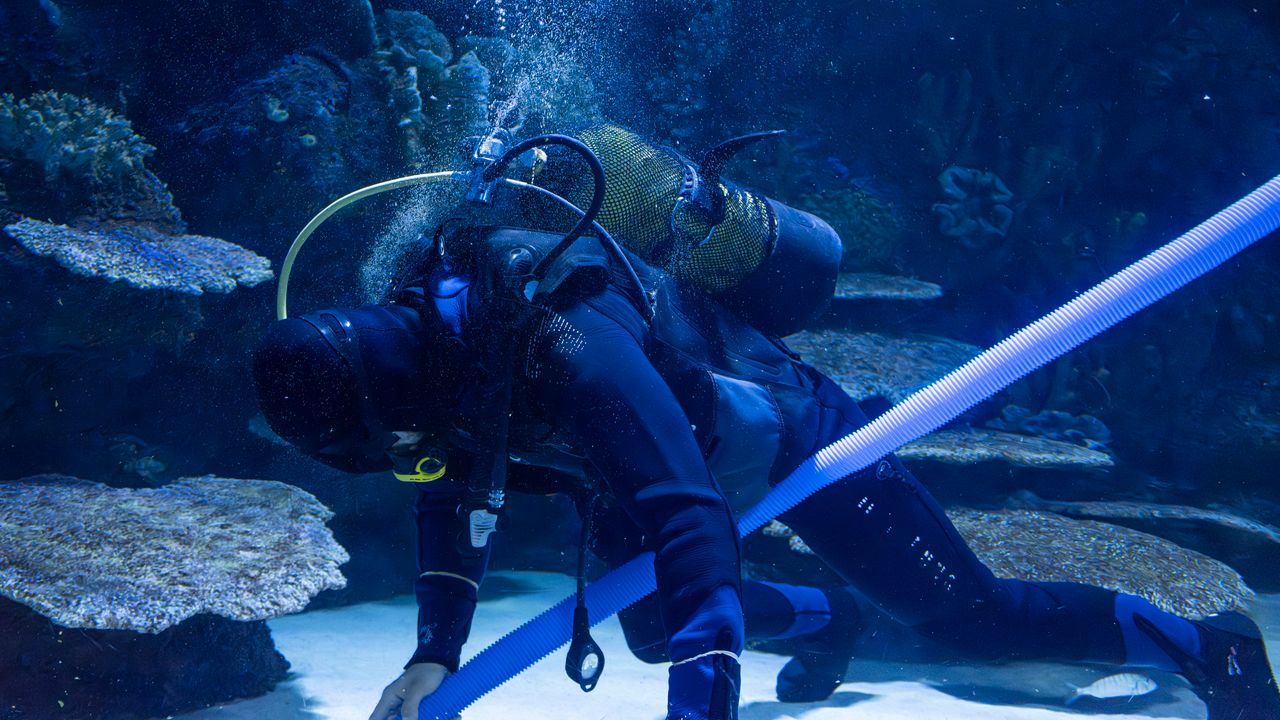
Your first dive briefing can sound like a different language. This guide to scuba diving terms for beginners explains the words you will hear on the boat, in the pool and in your course book, grouped by theme so they make sense together.
It is written for anyone booking a first try dive or an Open Water course, and for new divers who still nod along when someone says “check your NDL.” The definitions follow PADI, the Professional Association of Diving Instructors, and each one links to a longer guide where we have one.
Which scuba diving terms for beginners matter most on a first dive?
Quick answer: Learn ten words first: BCD (the vest that controls buoyancy), regulator, octopus (the backup second stage), SPG (your air gauge), NDL (the no-decompression limit), safety stop, buoyancy, equalizing, SMB (a surface marker buoy) and buddy check. Together they cover your gear, your air, your ears and the safety routine every dive follows.
The ten scuba diving terms beginners hear most
These words come up in almost every briefing. Learn them first and the rest of the vocabulary falls into place.
| Term | What it means | Where you meet it |
|---|---|---|
| BCD (buoyancy control device) | A vest with an air bladder that holds your tank and lets you add or release air | Gear setup, every descent and ascent |
| Regulator | The hoses and valves that turn high-pressure tank air into air you can breathe | Gear setup, breathing |
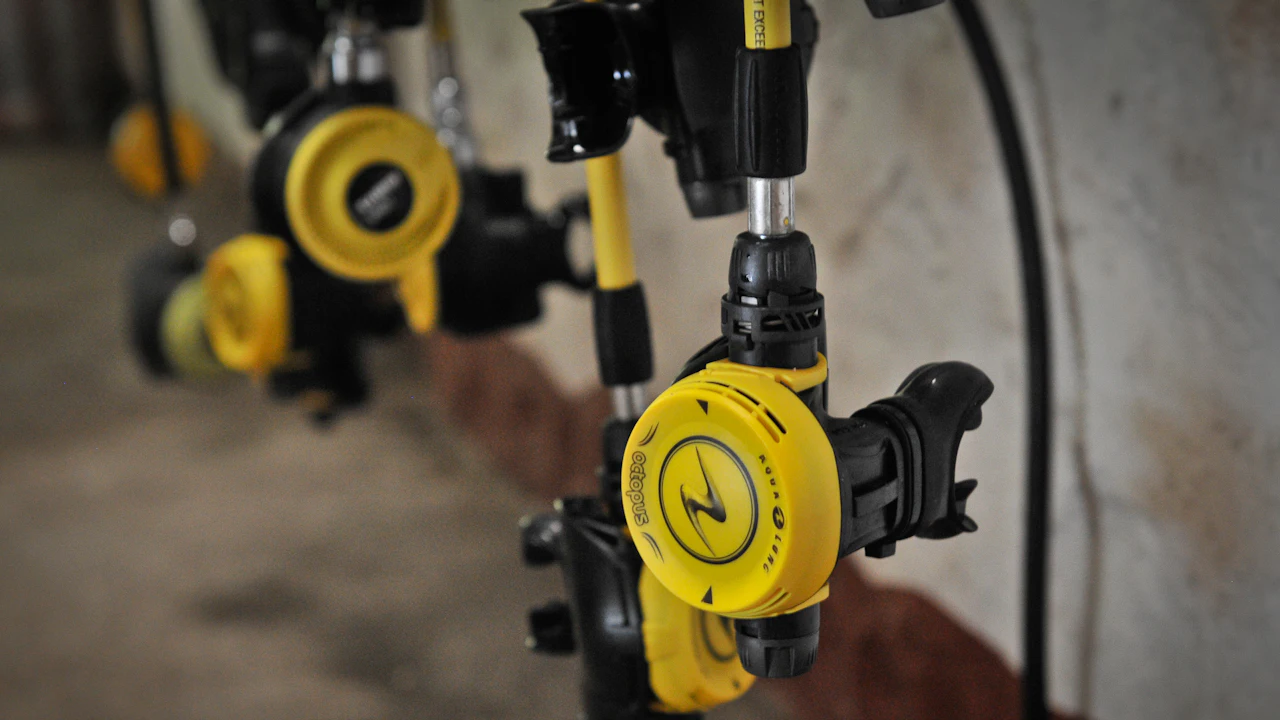
| Octopus (octo) | A backup second stage, often yellow, for a buddy who needs air | Buddy check, out-of-air drills |
| SPG (submersible pressure gauge) | The gauge that shows how much air is left in your cylinder | Air checks during the dive |
| NDL (no-decompression limit) | How long you can stay at a depth and still ascend without required decompression stops | Dive planning, dive computer |
| Safety stop | A pause of about three minutes at around 5 m (15 ft) near the end of a dive | Every ascent |
| Buoyancy | Whether you sink, float or hover; neutral buoyancy means hovering | The whole dive |
| Equalizing | Adding air to your ears and mask so pressure inside matches the water | Every descent |
| SMB (surface marker buoy) | An inflatable tube that shows boats where you are | Safety stop, surfacing |
| Buddy check | A pre-dive check of each other’s gear (BWRAF) | Before every entry |
Gear words: the scuba glossary for your kit
SCUBA itself is an acronym for self-contained underwater breathing apparatus. The rest of your kit has its own short names, and knowing them makes setup much less confusing.
- BCD or BC: PADI describes it as basically a vest with an air bladder. You add air to rise or float and release it to sink.
- First stage and second stage: the first stage clamps onto the tank valve and lowers the pressure. The second stage is the mouthpiece you breathe from, also called the demand valve.
- Octopus: the alternate air source, also called the occy or buddy regulator.
- Cylinder, not “oxygen tank”: recreational divers breathe air, which is only about 21 percent oxygen, so PADI asks divers to say tank or cylinder.
- Mask and fins: swimmers wear goggles; divers wear a mask that covers the nose. Divers wear fins, never “flippers.” Our guide on how to choose scuba fins for warm water explains the options.
- Dive computer: a wrist unit that tracks depth and time and counts down your NDL. Start with our dive computer guide for beginners.
Skill words you will practice in the pool
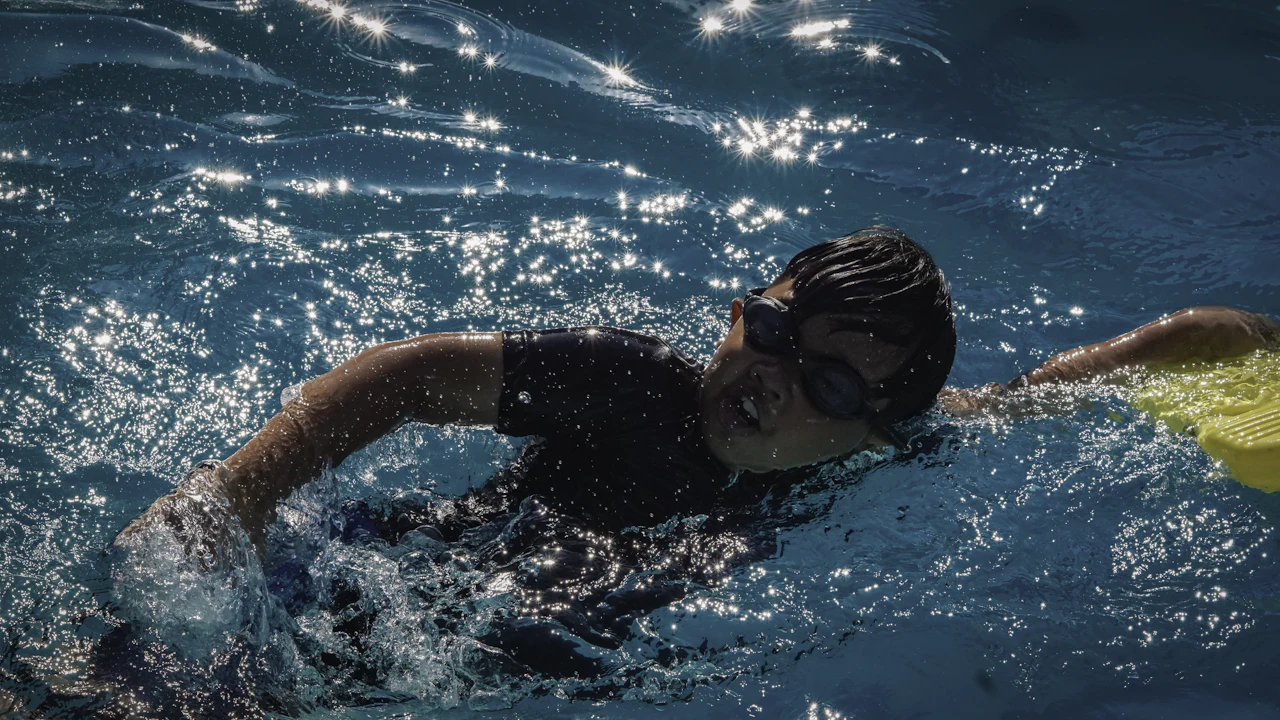
These terms describe things you do, not things you wear. You will practice most of them in shallow water first.
Buoyancy, trim and weighting
Buoyancy is whether you sink, float or hover. Neutral buoyancy, the goal, means you neither rise nor sink. Trim describes your body position, ideally flat and horizontal, and weighting is how much lead you carry on a belt or in BCD pockets. Our buoyancy control tips for divers go into each one.
Equalizing and mask clearing
Equalizing means gently adding air to your ears and mask as you descend so they feel comfortable. PADI’s advice is to equalize early and often and never force it. Mask clearing is blowing out water that leaks in. Read our step-by-step guide on how to equalize your ears when scuba diving.
Navigation and signals
Divers talk with hand signals, since you cannot speak with a regulator in your mouth. Learn the basics in our guide to scuba diving hand signals. Words like heading, bezel and kick cycle belong to navigation, covered in our guide to underwater navigation for divers.
Safety words and diving acronyms explained
Every briefing uses these safety terms, and many are acronyms.
- Buddy check (BWRAF): BCD, Weights, Releases, Air, Final check. You and your buddy check each other before every dive. See our pre-dive safety check walkthrough.
- Safety stop: PADI calls a three-minute stop at around 5 m (15 ft) best practice near the end of a dive. Our guide to the safety stop in scuba diving explains why.
- Ascent rate: PADI’s rule is to ascend no faster than 18 m (60 ft) per minute.
- SMB or DSMB: a surface marker buoy, or delayed SMB sent up from depth, lets boat traffic see exactly where you are.
- C-card: your certification card, showing your level and your instructor.
- DAN: Divers Alert Network, a dive safety organization that also offers dive accident insurance.
Physics words that explain how diving works
Open Water theory includes a little physics. These words explain why the safety rules exist.
- Pressure and ATA: according to PADI’s diving physics guide, pressure rises by one atmosphere (1 ATA) for every 10 m (33 ft) of seawater.
- Boyle’s law: as pressure rises, gas volume shrinks. That is why you equalize on the way down and add small puffs to your BCD.
- NDL and nitrogen: your body absorbs nitrogen at depth. NDLs and safety stops keep that load within safe limits.
- The bends: the nickname for decompression sickness. Read our guide to decompression sickness symptoms.
- Narcosis: a deep-water effect that can feel anything from euphoric to anxious. See our page on nitrogen narcosis symptoms.
- Refraction: PADI notes that objects look about 25 percent closer and 33 percent bigger underwater.
For the full list of words to say and avoid, PADI’s own scuba terminology guide on the PADI blog is a good companion to this page.

Learn the language with Elbert
White Sands Dive Shop is a 5 Star PADI Dive Facility on the beach in San Pedro, owned and operated by Elbert Greer, PADI IDC Staff Instructor. Our Discover Scuba Diving experience on Ambergris Caye includes basic knowledge, a pool session with gear and one open water dive, so you hear these words with the gear in your hands.
Ready to go further? Our guide to learning to dive on Ambergris Caye compares every course. Student Vivake K. Bhalla wrote that Elbert was “very friendly and fun, but equally very strict about safety.” Read more letters from students Elbert has taught, and see course times and current prices on our Water Sports page of dives and PADI courses.
Scuba diving terms for beginners: your questions answered
What does SCUBA stand for?
SCUBA stands for self-contained underwater breathing apparatus. Today most people write it as an ordinary word, scuba.
Do scuba divers breathe oxygen?
No. Recreational divers breathe compressed air, which is only about 21 percent oxygen, so PADI asks divers to say tank or cylinder rather than oxygen tank.
What is the octopus on a scuba regulator?
The octopus is a backup second stage, often yellow, that a buddy can breathe from if they run low on air. It is also called the alternate air source.
What does NDL mean in diving?
NDL is the no-decompression limit: how long you can stay at a given depth and still ascend without required decompression stops. Your dive computer shows it as a countdown.
Do I need to learn these terms before my course?
No. Your instructor explains every term as it comes up, but knowing the ten most common words beforehand makes the first briefing much easier to follow.
Ask Elbert before your first dive
Still puzzled by a word in your course book? Email Elbert at elbertgreer@fastmail.fm or phone 011 (501) 226 2405. Tell us your dates and experience, and we will help you plan your first dive.