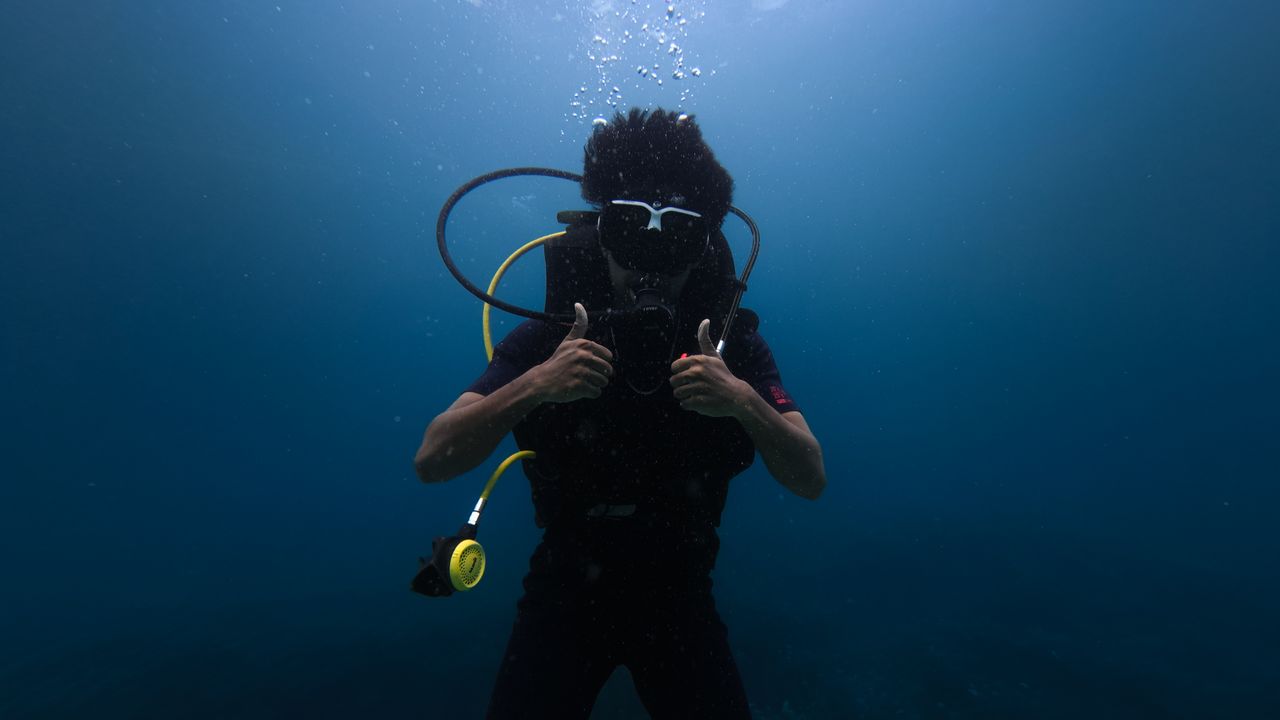
You cannot talk with a regulator in your mouth, so divers talk with their hands. A small set of scuba diving hand signals covers almost everything you need to say on a recreational dive: I’m OK, something’s wrong, let’s go up, I’m low on air. Learn them before your first dive and you will feel calmer from the moment you descend.
This guide is for beginners heading into a Discover Scuba Diving experience or an Open Water course, and for certified divers brushing up after a break. We cover the core signals, how to make each one clearly, where signals vary, and how to practice them.
What are the basic scuba diving hand signals every beginner should know?
Quick answer: Learn OK, something’s wrong, up, down, stop, slow down, look, buddy up and level off, plus the air signals: how much air, low on air and out of air. Most are shared across training agencies, but some vary, so always confirm them with your buddy and guide in the pre-dive briefing.
Why hand signals matter underwater
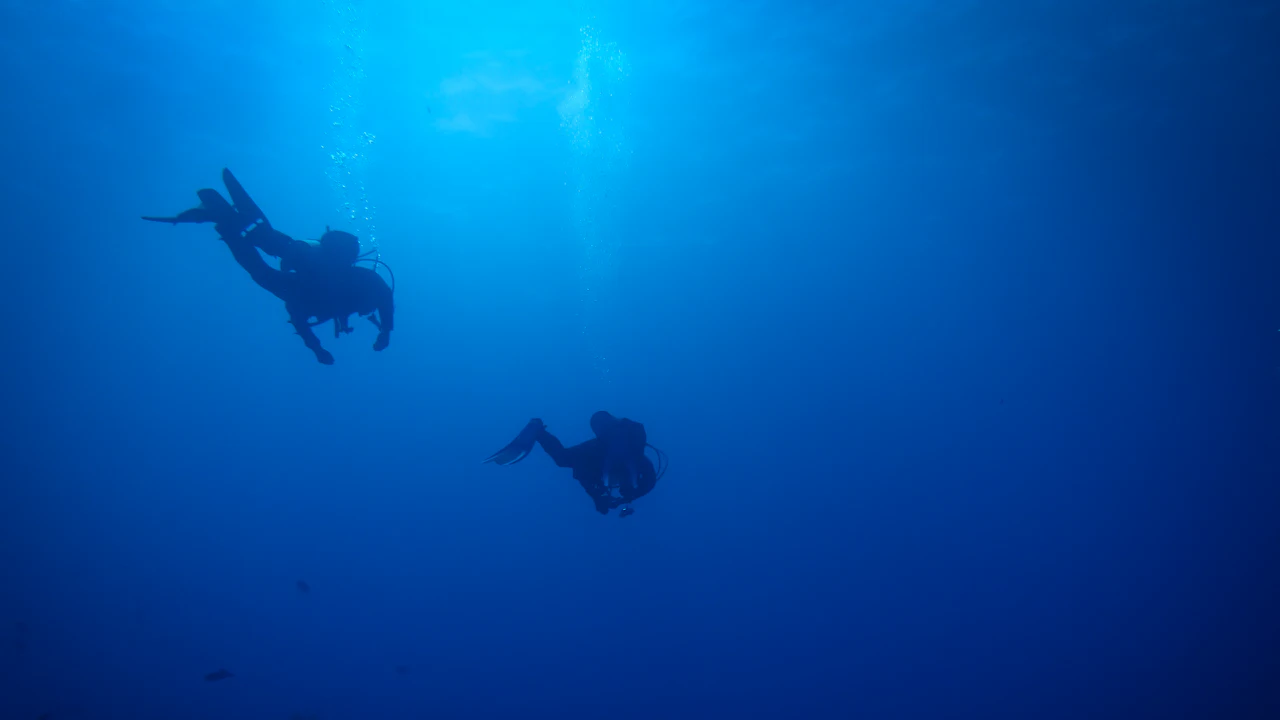
Sound travels well underwater, but speech does not, so hand signals are the most common way divers communicate. They let you check on your buddy, share what you see and raise a problem early, while it is still small. A fin strap that needs tightening and a mask that keeps flooding are both easy fixes if you can say so.
Signals also work in both directions. The PADI guide to scuba diving hand signals stresses that when your buddy asks “OK?”, you answer with “OK” or tell them what is wrong. Never leave a signal unanswered, because your buddy cannot tell whether you saw it.
The core underwater hand signals
These are the signals you will meet on almost every dive, described the way most instructors teach them. Practice each one on land until you can make it without thinking.
| Signal | What it means | How to make it |
|---|---|---|
| OK | I’m OK, or a question: are you OK? | Touch thumb and index finger in a circle, other fingers straight |
| Problem | Something is wrong | Hold a flat hand out and rock it side to side, then point to the problem |
| Up | Let’s go up, or end the dive | Make a fist with the thumb pointing up |
| Down | Let’s go down | Make a fist with the thumb pointing down |
| Low on air | My air is getting low | Hold a closed fist against your chest |
| Out of air | I have no air, I need to share yours | Move a flat hand across your throat in a slicing motion |
| Stop | Stop and hold your position | Show a flat hand, palm facing your buddy, fingers up |
| Slow down | Move more slowly | Hold a flat hand palm down and press it gently downward |
| Look | Look at this | Point two fingers at your eyes, then point at the thing |
| Buddy up | Stay close together | Hold two index fingers side by side |
| Level off | Stay at this depth | Hold a flat hand palm down and move it slowly side to side |
The thumbs up trap
On land, a thumbs up means “great”. Underwater it means “go up”, and PADI’s own guide shows it as the ascend signal. If you flash a happy thumbs up at your guide, the dive may end early, so use the OK circle to say you are fine.
Air and emergency signals in more detail
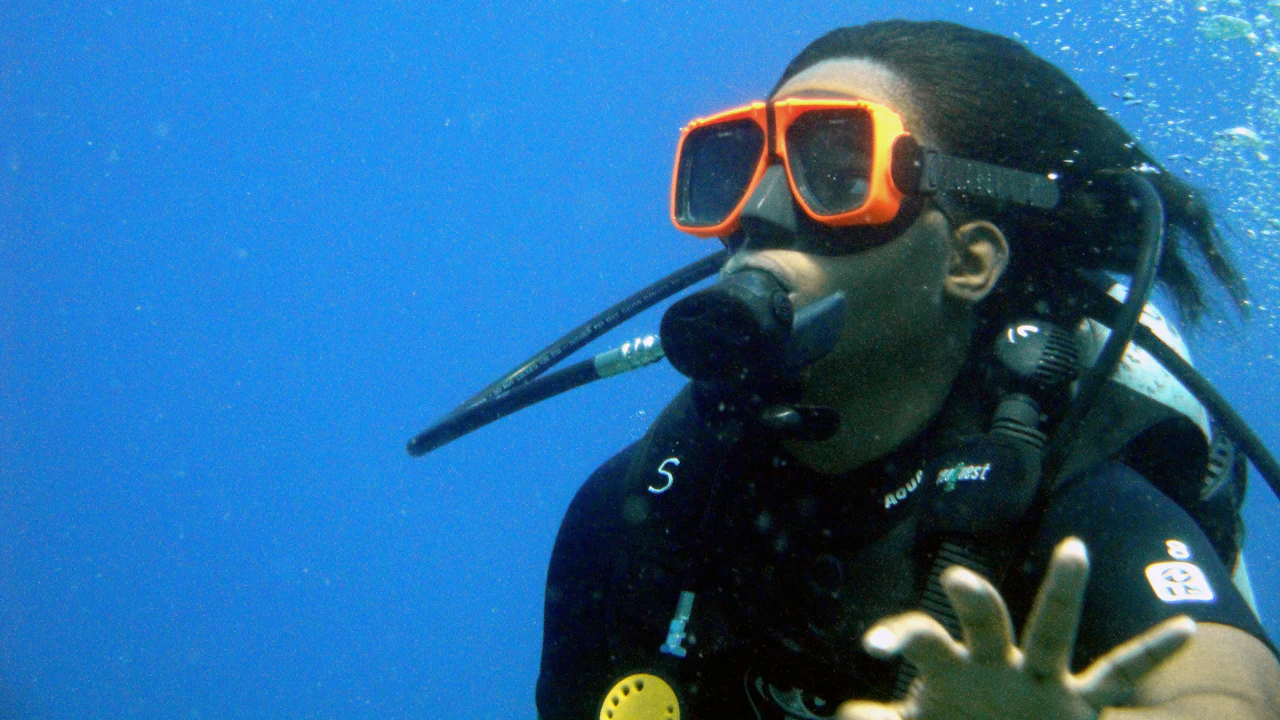
Air signals are the ones that matter most for safety, and they are also the ones that vary most. Divers Alert Network notes that air pressure and emergency signals are not fully standardized, so the same gesture can mean different things to different divers.
- How much air do you have? Usually two fingers tapped on the palm of the other hand or on your gauge. Your buddy answers with fingers or by showing the gauge.
- Low on air: a closed fist held to the chest. It is a heads up, not an emergency, and it usually means it is time to head for the surface.
- Out of air: a slicing motion across the throat. DAN notes that some divers grasp the throat instead, or point to a buddy’s alternate air source to say they need air.
Since 2023, PADI courses also teach an “I don’t feel well” signal. Point your fingers toward yourself, then draw a large oval in front of your head and body. It lets you tell your buddy you feel physically unwell before it becomes a bigger problem.

Why dive signs vary, and why the briefing sets them
Most basic signals are the same across training agencies, but regional and personal versions exist. DAN describes divers who used a closed fist for OK, and three different ways of showing air pressure in numbers. Guides often add their own signals for animals, too.
That is why the pre-dive briefing and buddy check matter. PADI recommends recapping the basic signals during your buddy check, and DAN advises agreeing on them before you descend, especially with a new buddy. If a signal is ever unclear underwater, ask again rather than guess.
How to signal clearly, day and night
- Get your buddy’s attention first, and make sure they are looking at you.
- Hold your hand away from your body so it stands out against the water.
- Signal slowly, with clear, exaggerated shapes.
- Wait for an answer, ideally the same signal returned.
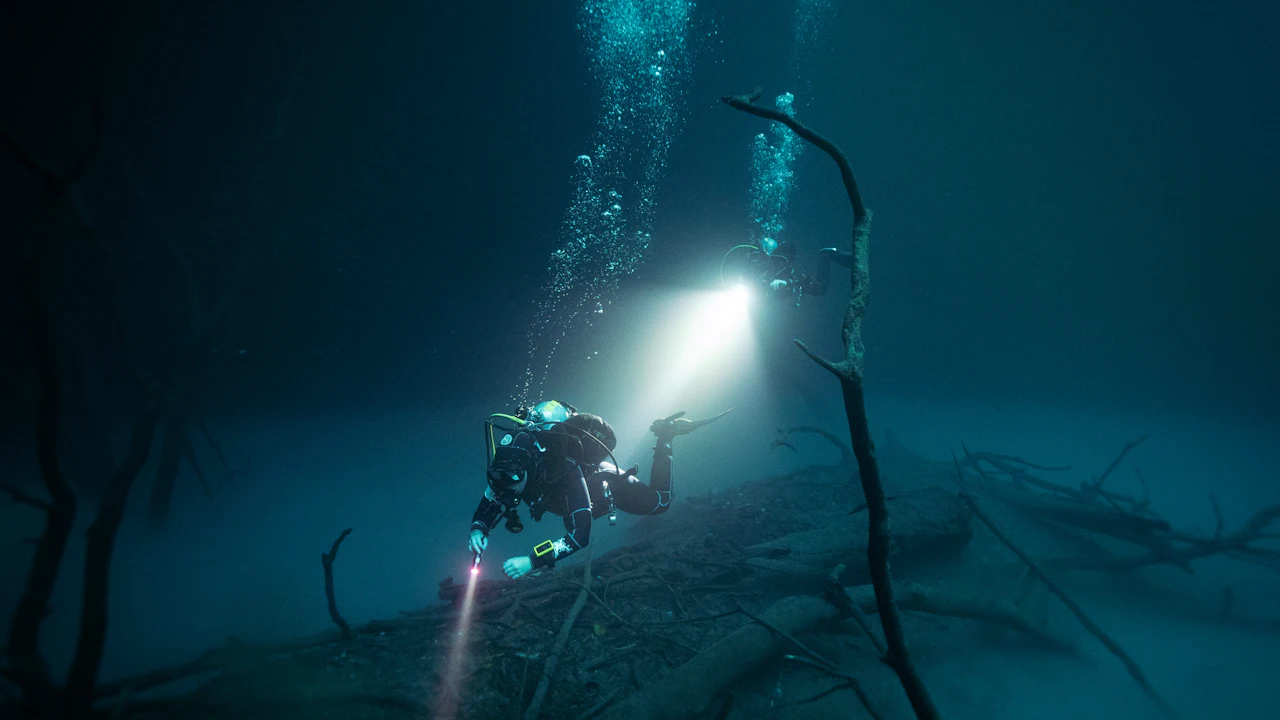
At night, shine your dive light on your own hand while you signal, never into your buddy’s eyes. On a night dive on Ambergris Caye, a light is not included in the trip, so bring or rent one.
Where you will learn and practice them
You do not need to memorize everything before you arrive. Our Discover Scuba Diving experience on Ambergris Caye includes basic knowledge and a pool session with gear before one open water dive. The PADI Open Water course on Ambergris Caye includes five classes and four open water dives over 3 to 4 days.
For more on getting started, see our guide to learning to dive on Ambergris Caye and our tips for your first open water dive. Course details and current prices are on our Water Sports page of PADI courses.

Learning with Elbert
White Sands Dive Shop is a 5 Star PADI Dive Facility on the beach in San Pedro, owned and operated by Elbert Greer, PADI IDC Staff Instructor. Several of the letters from his students describe arriving nervous and leaving as confident divers.
Minette Layne wrote: “I was so panicked and you really calmed me down and set me up for a wonderful couple of weeks of diving and snorkeling.” You can read more in our letters from students Elbert has taught.
Scuba diving hand signals: your questions answered
What does thumbs up mean in scuba diving?
Underwater, a thumbs up means go up or end the dive, not that everything is great. To say you are fine, use the OK signal made with a circle of thumb and index finger.
How do you signal low on air?
Most divers hold a closed fist against the chest. It tells your buddy your air is getting low and that it is time to plan your ascent.
Are hand signals the same for every training agency?
The basic signals are largely shared, but air pressure and emergency signals can differ between agencies, regions and individual divers. Confirm them with your buddy and guide before every dive.
How do you signal OK at the surface?
PADI shows divers touching the top of the head with one hand to signal OK at the surface, a shape that can be seen from a distance.
What should I do if I don’t understand a signal?
Don’t guess. Answer with the problem signal or a questioning look, ask your buddy to repeat it, and stay together until you are both sure.
Ask us before your first dive
Have a question about learning to dive, or want to book a course? Email Elbert at elbertgreer@fastmail.fm or phone 011 (501) 226 2405. Tell us your experience level and we will suggest the right place to start.