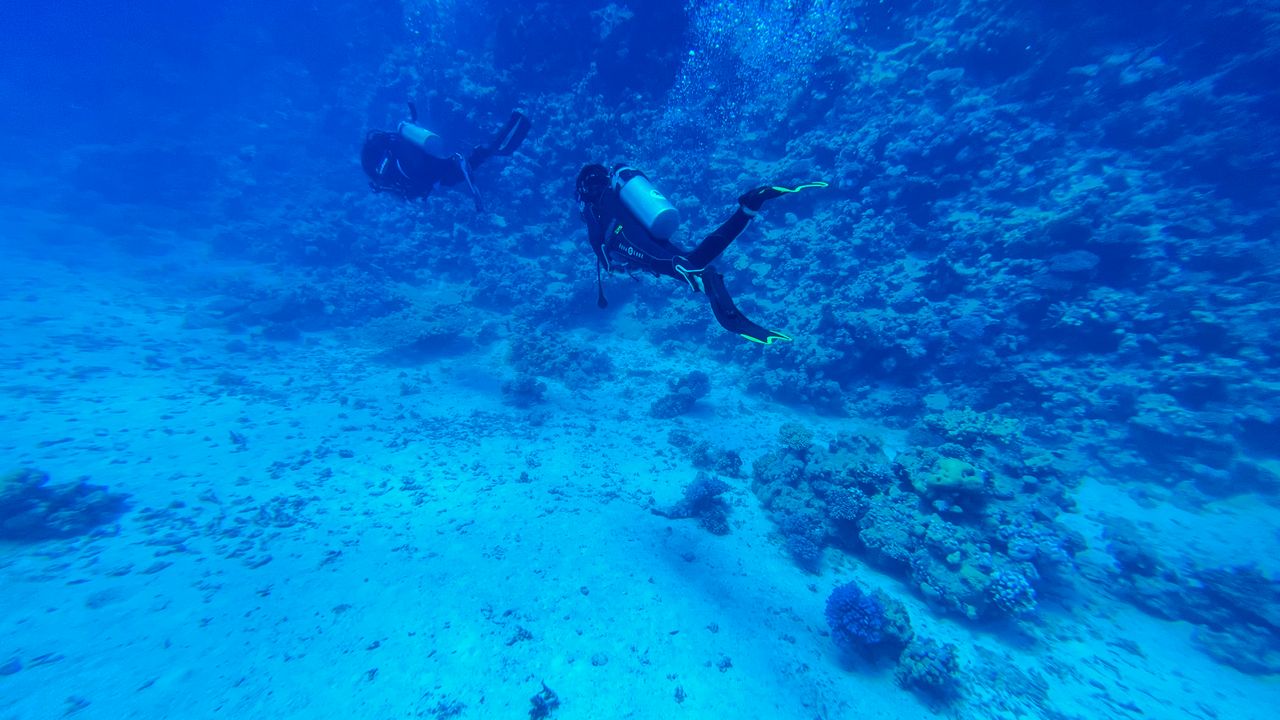
Surfacing a long swim from the boat is a rite of passage most divers would rather skip. Good underwater navigation for divers is less about gadgets than about habits: reading the reef, trusting a compass, counting kicks and sharing the job with your buddy.
This guide is for newly certified divers, students heading into Advanced Open Water, where navigation is one of the core dives, and anyone thinking about the PADI Underwater Navigator specialty. The techniques follow PADI’s published advice, and we point to our longer guides where they help.
How does underwater navigation for divers work?
Quick answer: Divers combine natural navigation (reef features, sand ripples, sunlight and depth) with a compass. Set a heading before you descend, swim to fixed landmarks along it, count kick cycles or watch time to judge distance, and return on the reciprocal heading, 180 degrees from the first. Plan the route and turnaround point with your buddy before the dive.
Plan first: the most useful navigation skill
PADI’s rule is simple: plan your dive, dive your plan. Before you get wet, agree with your buddy on the route, the entry and exit point and where you will turn around. On a shore dive, PADI suggests pointing your compass toward shore before you enter, so you know the way back even if you get turned around while descending.
Listen closely to the dive briefing as well. It is the best map you will get of the site, and the landmarks the guide mentions become your checkpoints underwater.
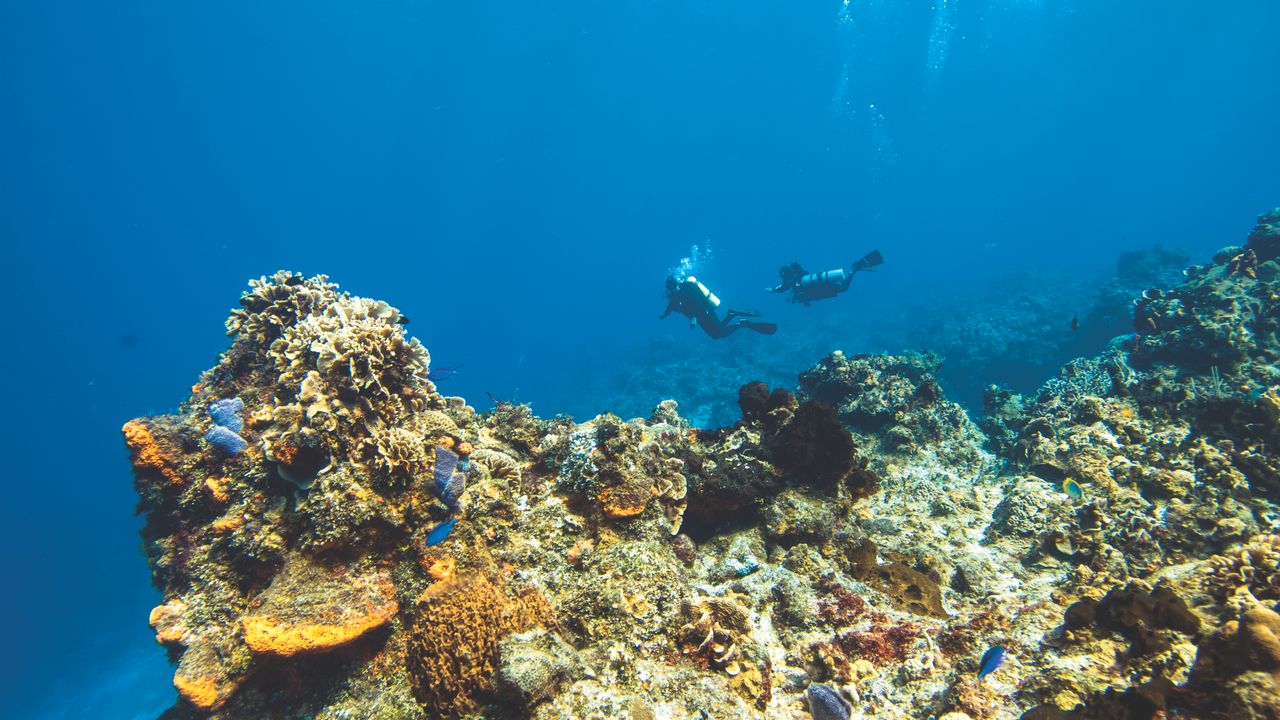
Natural navigation diving: reading the reef
Natural navigation means finding your way with what you can see and feel, without a compass. In clear tropical water it does most of the work, and PADI recommends pairing it with a compass rather than relying on either one alone.
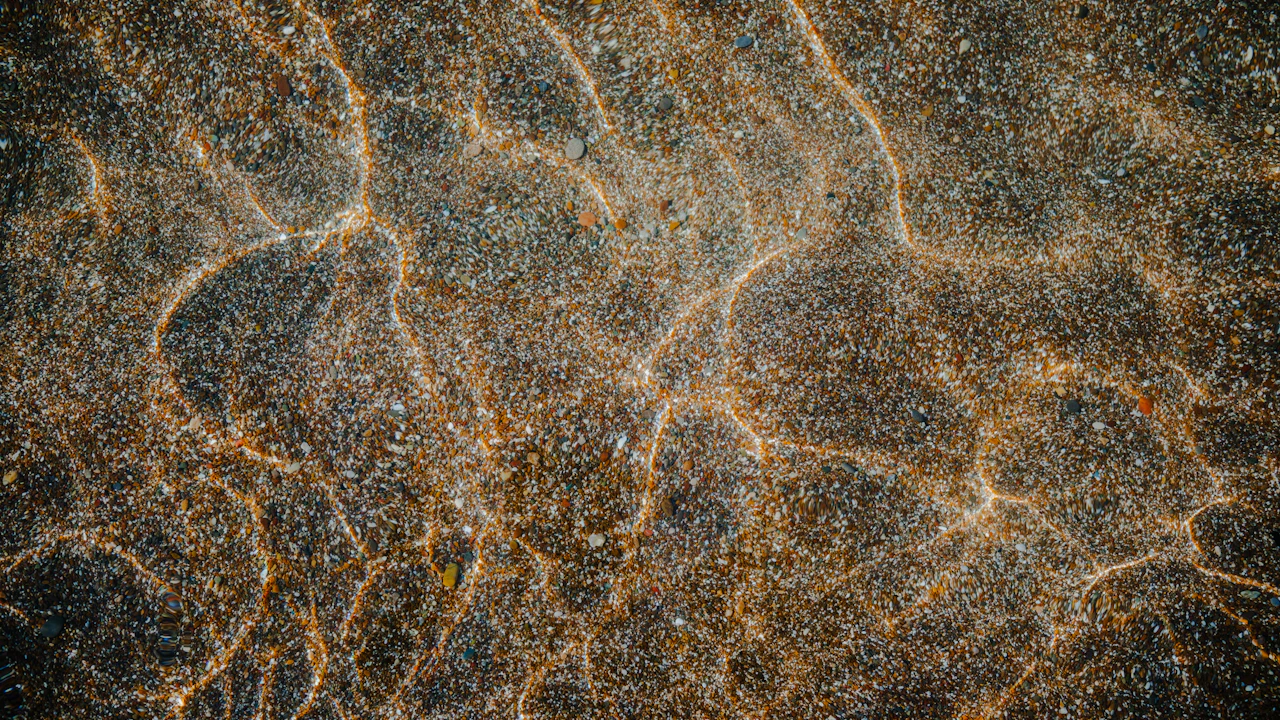
- Reef features: note a distinctive coral head, an odd rock or a sand channel on the way out. Seeing it again on the way back confirms you are on track.
- Sand ripples: PADI notes that ripples almost always run parallel to the shore, so swimming across them moves you toward or away from land.
- The sun: on a bright day, the direction of the light gives a rough heading. Morning light comes from the east and afternoon light from the west.
- Depth: the seafloor usually drops away from shore. Getting deeper suggests you are heading out; getting shallower while near the bottom suggests you are heading in.
- Current: on a non-drift dive you often swim into the current first, so it helps carry you home. On a drift dive it does the moving for you; see our drift diving tips for beginners.
How to use a dive compass
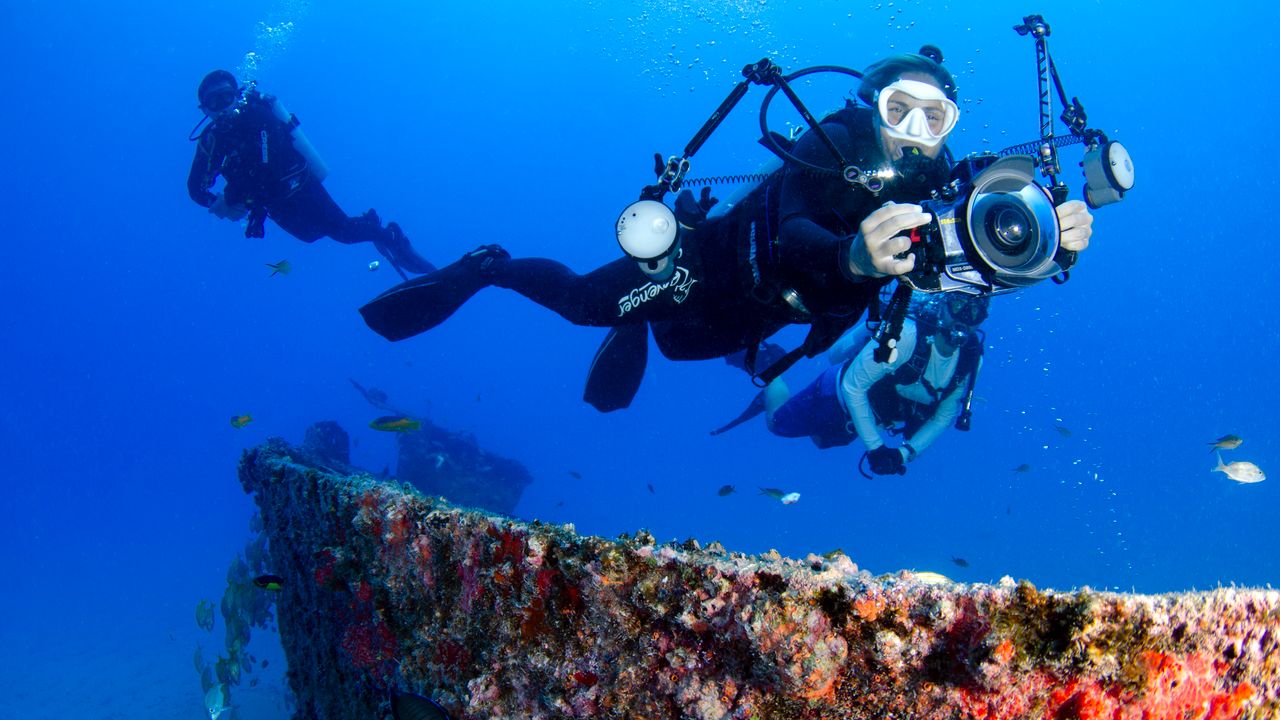
A dive compass has a lubber line, the fixed line that shows the direction you are facing, and a bezel, the ring you turn to mark a heading. Hold it level and straight in front of you, with the lubber line pointing where you want to go.
- Point the lubber line along your route and turn the bezel until its index marks frame the north needle.
- Pick a fixed object on that line, such as a coral head, and swim to it instead of staring at the compass.
- At each landmark, check the needle is still inside the index marks and pick the next object.
- To come back, turn the bezel 180 degrees. This is the reciprocal heading, and it leads back along your outbound line.
Out-and-back and square patterns
The out-and-back pattern is the simplest: one heading out, the reciprocal heading home. A square pattern uses four legs of the same length, turning 90 degrees each time, and brings you back to where you started. PADI’s underwater navigation tips on the PADI blog describe both.
Digital compasses in dive computers need calibrating from time to time, and even a correct compass can lead you off course in current. That is why the compass and the reef work best together.
Kick cycles: measuring distance underwater
PADI calls counting fin kicks the most common way recreational divers estimate distance. One kick cycle is a full kick with both legs. Swim a known distance at a relaxed pace, count the cycles, and you have your personal yardstick.
The method is not foolproof. Current, stress and poor buoyancy all change your kick rate, so cross-check with time on your dive computer. Steady, efficient kicking also helps, and our buoyancy control tips for divers make it easier.
| Method | Best for | Watch out for |
|---|---|---|
| Reef features | Clear water, sites with distinctive coral heads | Similar-looking formations, low visibility |
| Sand ripples and depth | Telling toward-shore from away-from-shore | Sites without sand or with a flat bottom |
| Sunlight | A rough heading on bright days | Cloud, deep water, the time of day |
| Compass heading | Straight lines, low visibility, open sand | Holding it off level, uncalibrated digital units |
| Kick cycles and time | Judging how far you have swum | Current and stress changing your pace |
Buddy roles on a navigation dive
PADI advises buddies to plan together and confirm navigation decisions together. A practical split is that one diver leads with the compass and counts kicks, while the other watches depth, time and air and keeps an eye on landmarks.
- Agree on the signals for “turn here” and “which way” before the dive. Our guide to scuba diving hand signals covers the basics.
- Swap roles on the way back so both of you practice.
- If either of you is unsure, stop, settle and look around before moving on.
New to words like bezel, heading and NDL? Our glossary of scuba diving terms for beginners explains them.
Navigation training: Advanced and the Underwater Navigator specialty
Our Advanced Open Water course on Ambergris Caye includes three core dives, Night, Deep and Navigation, plus two electives. It is the natural first step if you want structured practice with a compass.
Our Water Sports page also lists Navigation among the specialty certifications we offer. According to PADI, the Underwater Navigator specialty includes three dives and covers compass use, natural navigation, common patterns, multiple turns and estimating distance. See our guide to PADI specialty courses in Belize for how specialties fit together.
Learn to navigate with Elbert
White Sands Dive Shop is a 5 Star PADI Dive Facility on the beach in San Pedro, owned and operated by Elbert Greer, PADI IDC Staff Instructor. If you are just starting out, our guide to learning to dive on Ambergris Caye compares every course.
Student Minette Layne, who came to Elbert for a refresher, thanked him for his “caring teaching style.” Read more letters from students Elbert has taught, and see course times and current prices on our Water Sports page of dives and PADI courses.
Underwater navigation for divers: your questions answered
What is a reciprocal heading?
A reciprocal heading is the direction exactly opposite your original heading, 180 degrees away. On a dive compass you turn the bezel 180 degrees to set it and swim back along your outbound line.
Do I need a compass if the water is clear?
Natural navigation does a lot of the work in clear water, but PADI recommends pairing it with a compass. Similar-looking reef features are easy to confuse, and a compass gives you a reliable way home.
How do divers measure distance underwater?
Most recreational divers count kick cycles, after first measuring how many cycles cover a known distance. Time on your dive computer is a useful cross-check, especially in current.
Is navigation part of Advanced Open Water?
Yes. Navigation is one of the three core dives in Advanced Open Water, alongside Night and Deep, with two elective dives on top.
Plan your navigation dive
Want to build your compass skills on the reef? Email Elbert at elbertgreer@fastmail.fm or phone 011 (501) 226 2405. Tell us your certification level and dates, and we will help you choose the right course.