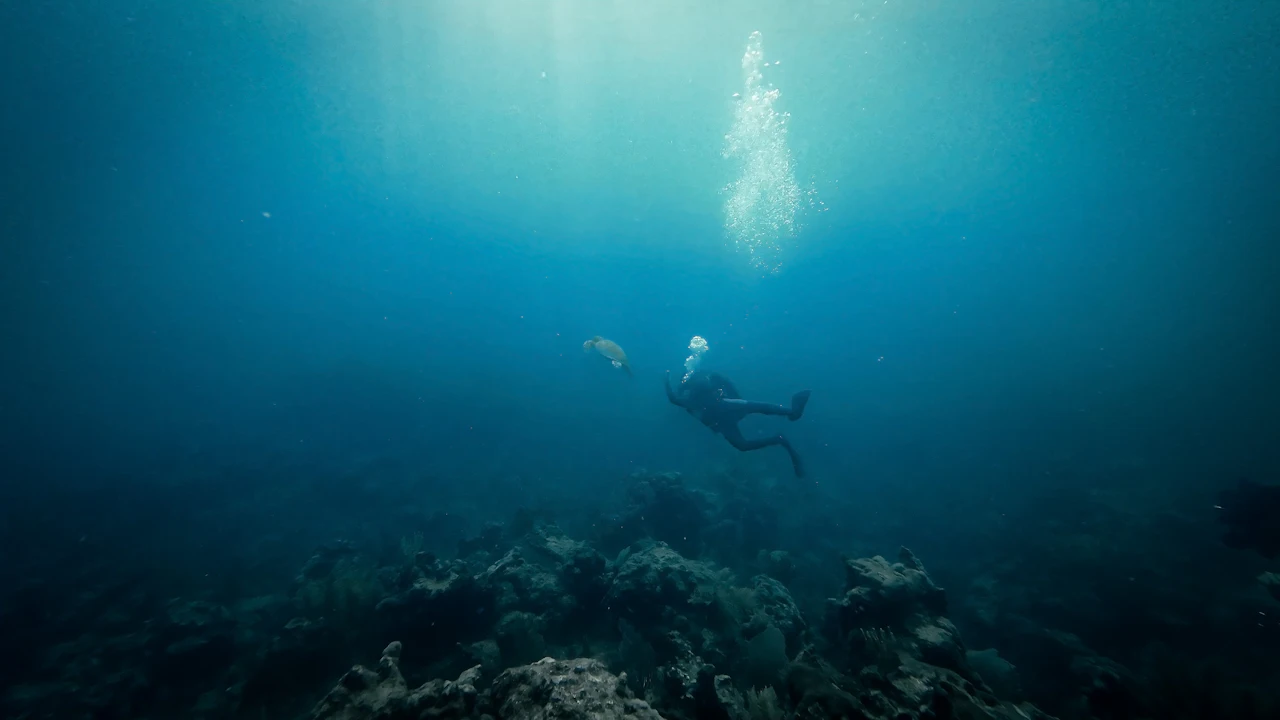
A drift dive feels a little like flying. The water does the work, the reef slides past, and you spend your energy on staying level instead of kicking. These drift diving tips are for certified divers who have a current dive coming up, or who are choosing electives for an Advanced course and wonder whether Drift is for them.
We walk through a drift dive in order, from the briefing to the pickup, using PADI’s own guidance.
What are the most important drift diving tips for a first current dive?
Quick answer: Agree on a clear plan before you get in, including what to do if you get separated. Do not fight the current or race ahead of the group. Keep your buoyancy neutral, tuck in loose gear, and carry a delayed surface marker buoy. PADI calls good buoyancy the most important skill for drift diving.
How a drift dive works
PADI defines drift diving simply: a current carries the diver from one point to the next. Most drift dives are done from a boat that follows the group, though shore drifts exist too. Because the water moves you, you can cover more ground than on a normal dive.
You give up some control over where you end up, so planning matters more than usual. In its guide to PADI’s drift diving tips for staying safe, the agency calls the plan the most important part of drift diving.
What the plan should cover
PADI lists the points every group should agree on before anyone rolls off the boat. Listen for each one in your briefing, and ask if any is missing.
- Where the entry and exit points are.
- The planned duration or distance of the dive.
- How strong the current is expected to be.
- The turn pressure, the tank reading at which you head up.
- What each diver does if someone gets separated.
PADI also notes that timing matters. Currents tend to be weakest around slack high and slack low tide, so the same site can feel very different at different hours.
Entry and descent on a drift dive
Entry and descent methods vary from site to site and day to day, so your dive leader’s briefing is the final word on how and when to get in. The most useful thing you can do is be completely ready before that moment comes, so you and your buddy start the dive together.
- Finish your buddy check on the boat, with mask, fins and computer on.
- Clip or tuck every hose and gauge so nothing dangles.
- Enter on the leader’s signal, right after the diver before you.
- Find your buddy at once and descend together, equalizing as you go.
For a refresher on the basics, our guide to learning to dive on Ambergris Caye covers the skills every course builds on.
Staying with the group in a current
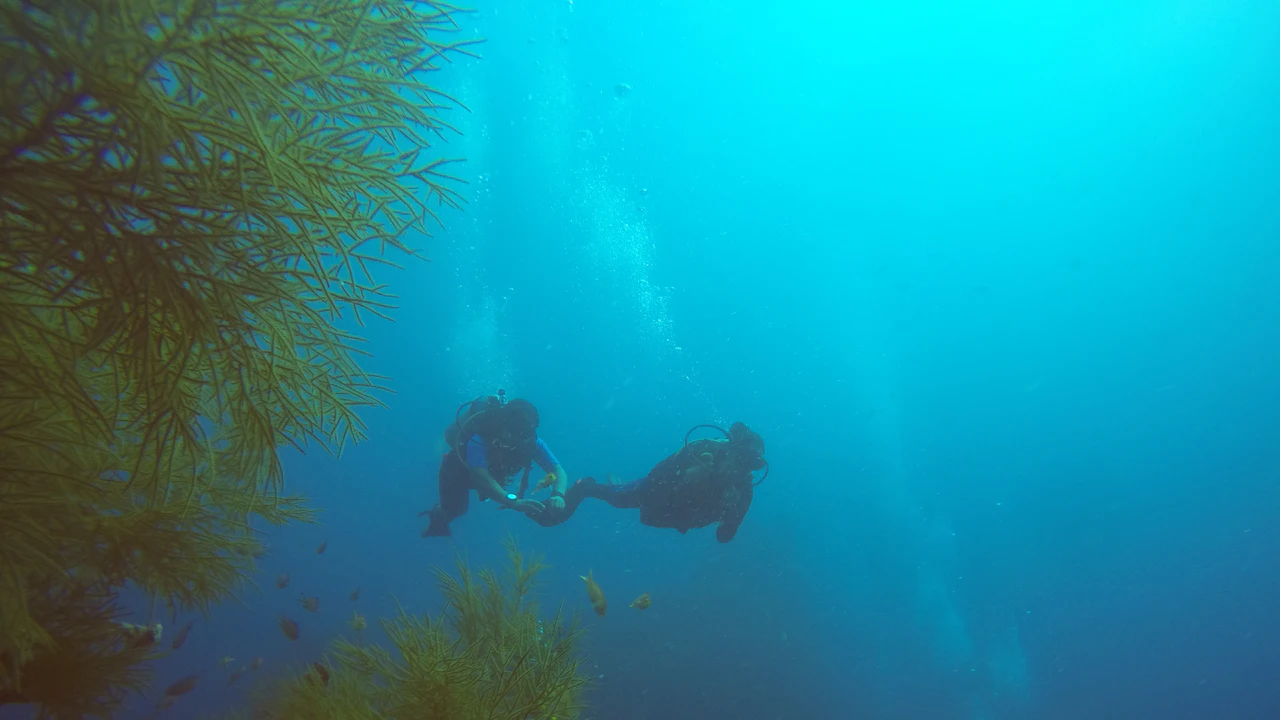
PADI’s advice has two halves. Do not swim against the current, because it will tire you out and burn air. Do not swim with the current either, because you may get separated from the group.
Instead, let the water carry you at the group’s pace and keep your buddy in sight. PADI points out that current is weakest close to the reef or the bottom, so staying a little lower, without touching anything, can help you hold your place. Streamline yourself and your gear so nothing snags on the reef.
If you lose your buddy
PADI’s guideline is to look around for no more than one minute. If you still cannot find your buddy, make a safe ascent, and your buddy should follow the same procedure.
Good communication prevents most separations. Review our scuba diving hand signals for buddy teams before the trip.
Buoyancy: the skill that makes drift diving easy
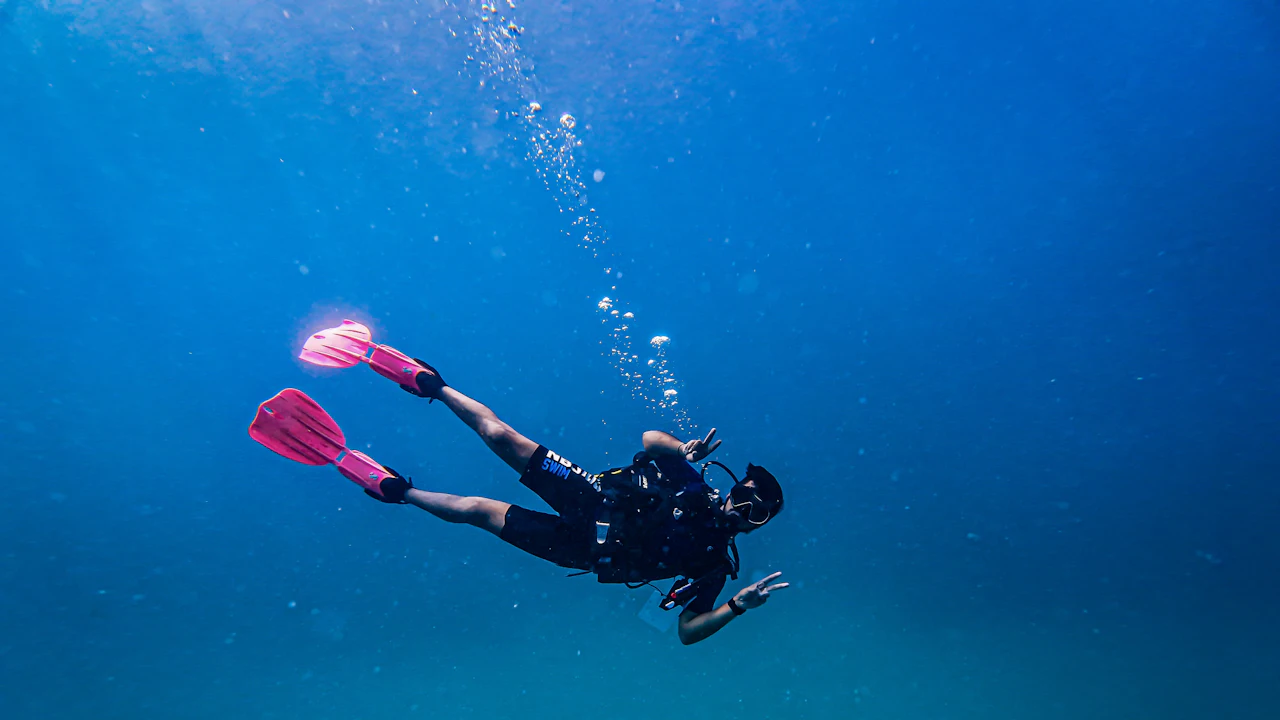
In its article on how to master drift diving from the PADI blog, PADI names buoyancy as the most important skill to master. Neutral buoyancy lets you drift without colliding with the reef or popping up toward the surface.
Breathe slowly, keep your legs still, and use your breath to rise a little over coral heads. Our buoyancy control tips for new divers go into the details.
| Situation | Common mistake | Better approach |
|---|---|---|
| Current feels strong | Kicking hard against it | Relax, drift with the group, stay a little lower near the reef |
| Group starts to spread out | Swimming ahead with the current | Hold your pace and keep your buddy in sight |
| Drifting toward coral | Grabbing the reef | Small breath or inflator adjustment to rise over it |
| Lost sight of your buddy | Searching for many minutes | Look for up to one minute, then ascend safely |
| Surfacing away from the group | Waiting in a strong surface current | Deploy your delayed SMB and follow the briefing plan |
Surface marker buoys and signaling the boat
On a drift dive the boat follows you, so it needs to know where you are. PADI says the dive leader should deploy a surface marker buoy (SMB), an inflatable tube that floats above the group. The other divers should each carry a delayed SMB that they can send up if they get separated.
A delayed SMB lets you signal the boat from underwater before you reach the surface. PADI also advises that if you surface and cannot see your boat, you should not wait in a strong surface current, but swim across it, toward shore if possible.
The PADI Drift Diver specialty
PADI calls its Drift Diver specialty the best way to learn the basics, and says it builds knowledge of currents, tides and lunar cycles. Drift is listed on our Water Sports page of PADI courses and current prices as one of the electives in Advanced Open Water and as one of the specialty certifications that count toward Master Diver.
If you want a taste first, a drift elective inside the PADI Advanced Open Water course on Ambergris Caye is a natural start. For the full specialty and the others we list, see our guide to PADI specialty courses in Belize.
Whatever you choose, record the dive while it is fresh. Our guide on how to log a dive in a paper or digital logbook shows what to write down, and current strength is well worth noting. For the trips we run, see our page on scuba diving on Ambergris Caye.
Learn with Elbert
White Sands Dive Shop is a 5 Star PADI Dive Facility on the beach in San Pedro, owned and operated by Elbert Greer, PADI IDC Staff Instructor. Local dive and snorkel trips leave at 9:00, with pickup at the dock of your hotel.
Nervous divers are in good hands. Minette Layne, who took a refresher with Elbert, wrote: “I was so panicked and you really calmed me down and set me up for a wonderful couple of weeks of diving and snorkeling.” Read more in our letters from students Elbert has taught.
Drift diving tips: your questions answered
Is drift diving hard for new divers?
It is less tiring than many dives because the current does the moving. The challenge is control, so solid buoyancy and a clear plan matter more than fitness.
Should I swim against the current on a drift dive?
No. PADI advises against fighting the current, which tires you and uses air, and against swimming ahead with it, which can separate you from the group.
Do I need my own surface marker buoy?
PADI says the dive leader should deploy an SMB and the other divers should carry delayed SMBs to use if they get separated.
What do I do if I lose my buddy on a drift dive?
PADI’s guideline is to look around for no more than one minute, then make a safe ascent. Your buddy should do the same.
Does the Drift Diver specialty count toward Master Diver?
Our Water Sports page lists Drift among the specialty certifications that count toward Master Diver, and as an elective in Advanced Open Water.
Ask us about drift diving and Advanced training
Want to build your confidence in currents, or plan an Advanced course around your trip? Email Elbert at elbertgreer@fastmail.fm or phone 011 (501) 226 2405. Tell us your certification level, your dates and how many dives you have logged.