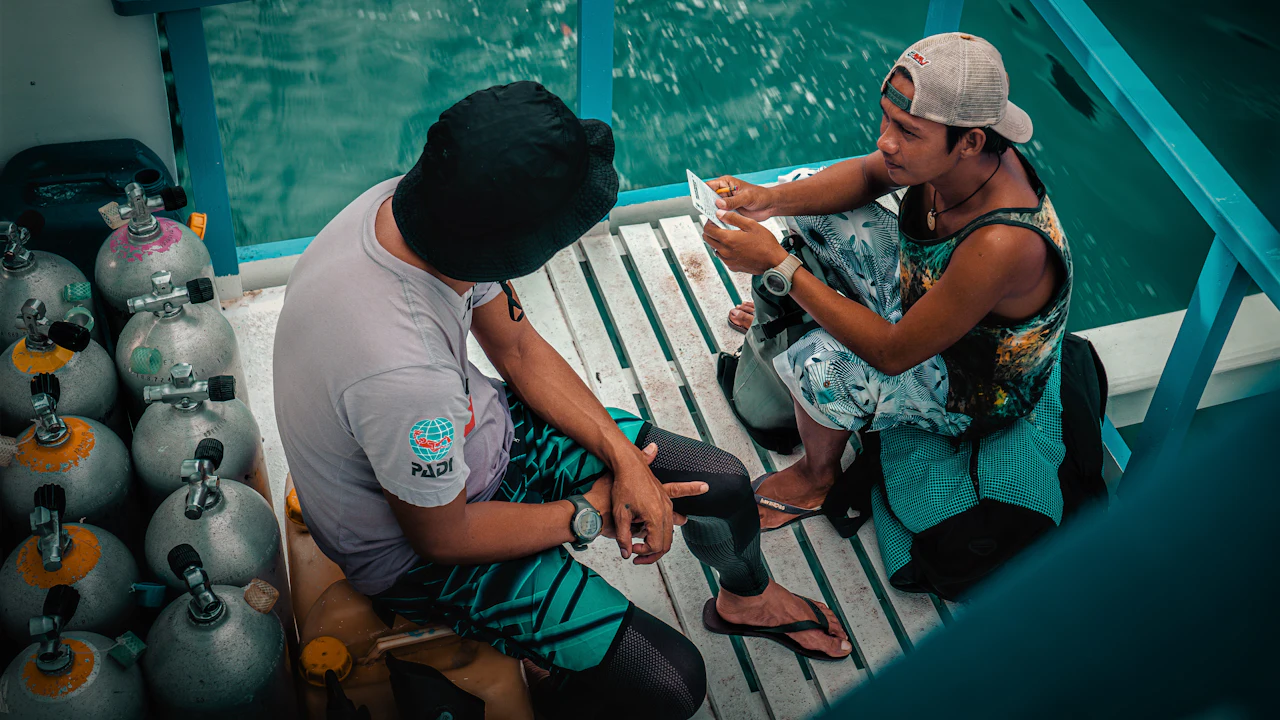
The pre dive safety check is the short routine you and your buddy run, fully geared up, just before you enter the water. It takes a couple of minutes and catches the small things that turn into big problems underwater: an air valve left closed, a missing weight pouch, a strap you cannot release.
This guide is for new divers in training, divers who just got certified, and anyone getting back in the water after a break. We walk through each step of BWRAF, what you and your buddy actually touch and test, and the misses we see divers talk about most.
What is the pre dive safety check, and how do you do it?
Quick answer: It is the buddy check PADI teaches as BWRAF: BCD, Weights, Releases, Air and Final OK. With all your gear on, you and your buddy test inflators and dumps, confirm weights are secure, locate every release, open the air and breathe both second stages while watching the gauge, then check each other head to toe.
Why the buddy check before diving matters
Most dive problems start at the surface, not at depth. The PADI guide to the BWRAF buddy check notes that diver error is a leading cause of diving accidents, and cites Divers Alert Network (DAN) as saying that five out of ten accidents could likely have been prevented by a pre-dive buddy check.
The logic is simple. A small problem is much easier to fix on the boat than underwater, and two people checking gear catch more than one. PADI also says the check belongs before every dive, including the second dive of the day after your surface interval.
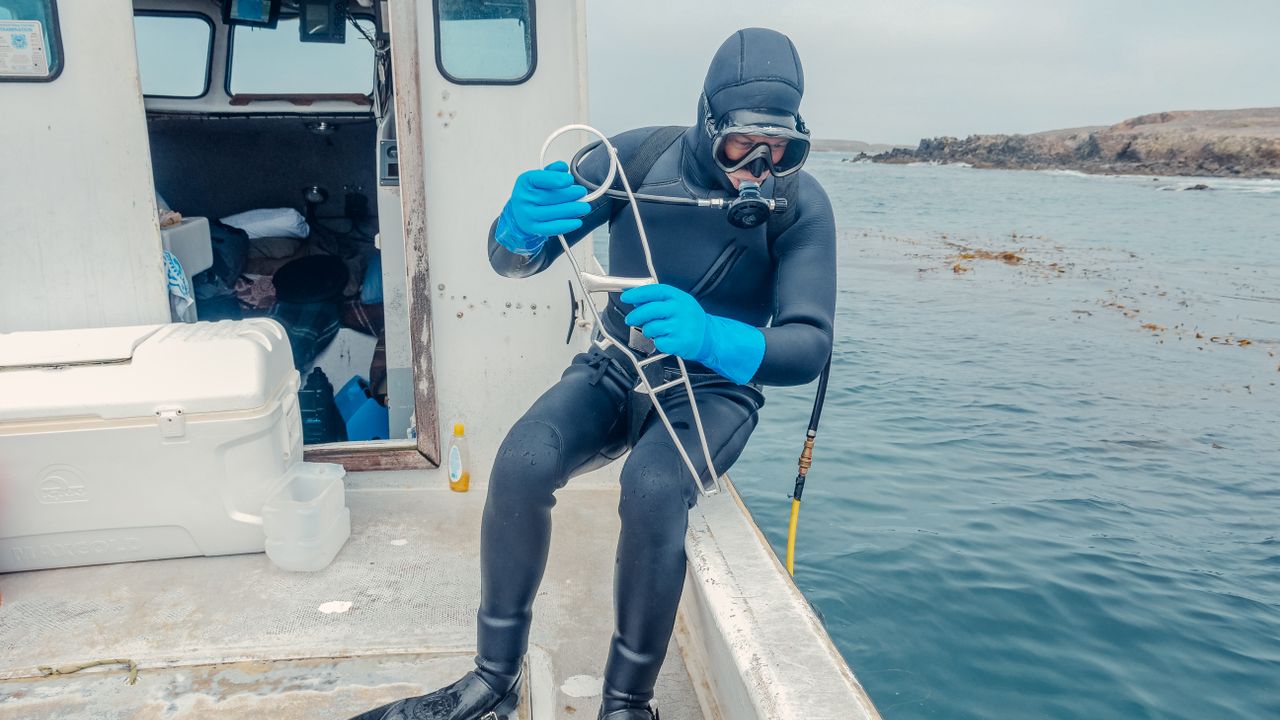
BWRAF scuba: the five steps of a pre dive safety check
BWRAF stands for BCD, Weights, Releases, Air and Final OK. PADI teaches it in the Open Water course, and divers remember it with silly phrases such as “Begin With Review And Friend” or “Burger With Relish And Fries”. Use whichever one sticks.
| Step | What you check | What your buddy watches for |
|---|---|---|
| B: BCD | Press the inflator, then test every dump valve, including the overpressure release | That the BCD fills and vents, and how your inflator and dumps work |
| W: Weights | Weights are on and secure; tug integrated pouches, check the belt and rear pockets | Where your weights are and how to drop them in an emergency |
| R: Releases | Tank band, shoulder, chest and waist straps are fastened; no hoses can snag | Which buckles open your gear, so they could get you out of it fast |
| A: Air | Valve fully open, gauge working, air tastes and smells normal; breathe both second stages | That the gauge needle stays steady as you breathe, and where your alternate air source sits |
| F: Final OK | Mask, fins, computer and any light or signal device are with you; hoses tucked in | A last head-to-toe look at you, then an OK signal both ways |
The air check deserves extra time
PADI is blunt here: a quick breath or two off the regulator is not enough. Breathe several times from your primary and your alternate second stage while you watch the pressure gauge or air-integrated computer. If the needle dips with each breath, the valve may be only partly open.
Buddy roles: what each of you does
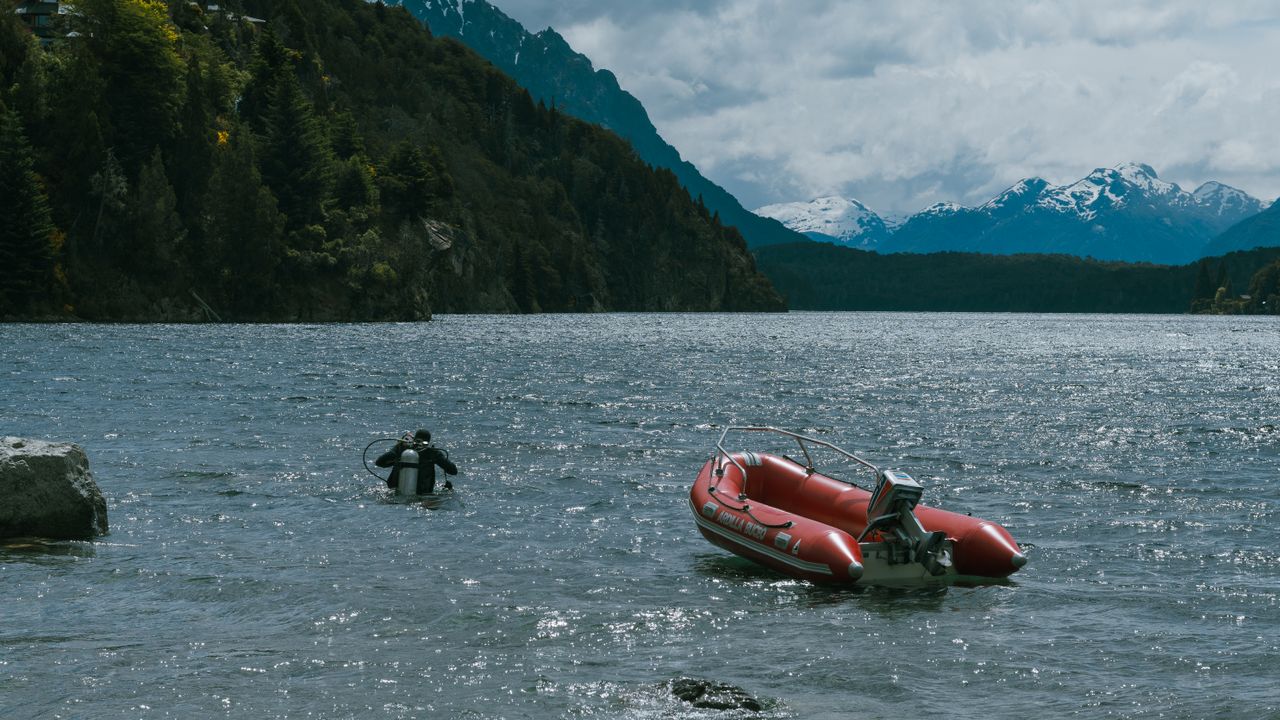
A good buddy check is a conversation, not a silent pat down. Take turns: one diver checks and talks, the other watches and asks. Then swap. If your buddy is someone you just met on the boat, talking through each step out loud matters even more, because you have never seen their gear.
- Agree who goes first, and face each other.
- Name each step as you check it, and show your buddy your inflator, weights and releases.
- Point out your alternate air source and tell them where it is clipped.
- Recap the basic scuba diving hand signals for beginners, especially OK, low on air and out of air.
- Swap roles, then finish with a Final OK both ways.
Diving with a guide does not replace the buddy check. The guide leads the dive, but your buddy is the person closest to you if something goes wrong, so you both need to know each other’s setup.
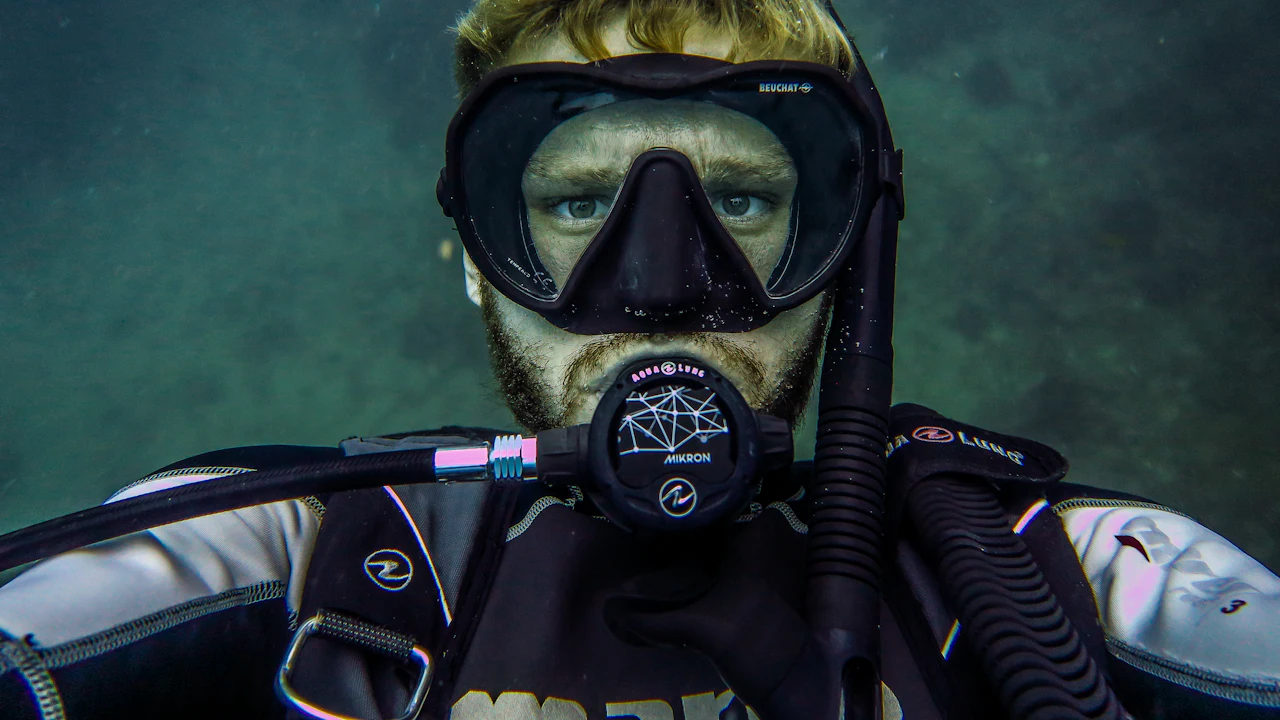
Common misses on the boat
PADI’s buddy check articles list the same slips again and again. Almost all of them come from rushing, or from assuming that gear which worked yesterday will work today.
- Air left off or only cracked open. The diver breathes fine at the surface, then struggles at depth.
- Weights forgotten. Pouches left on the bench after the surface interval.
- Minor gear issues ignored. A worn mask strap or a leaking O-ring can end the dive early.
- Skipping steps to get in first. The check only takes a minute or two, so there is no reason to hurry it.
- Silent checks. Not saying what you checked, so your buddy never learns your gear.
A calm, organized boat deck helps everyone check properly. Our guide to dive boat etiquette for new divers covers how to stow gear and stay out of the way while others kit up.
Where you learn and practice the check
You do not need to master it before you arrive. Our Discover Scuba Diving experience on Ambergris Caye includes basic knowledge and a pool session with gear before one open water dive. The PADI Open Water course on Ambergris Caye includes five classes and four open water dives over 3 to 4 days.
If it has been a while, a scuba refresher course on Ambergris Caye is a good way to rebuild habits like this one. For the bigger picture, see our guide to learning to dive on Ambergris Caye and our tips for your first open water dive. Course details and current prices are on our Water Sports page of PADI courses.

Learning safety habits with Elbert
White Sands Dive Shop is a 5 Star PADI Dive Facility on the beach in San Pedro, owned and operated by Elbert Greer, PADI IDC Staff Instructor. His students often mention the balance he strikes between fun and care.
Vivake K. Bhalla wrote that Elbert “was very friendly and fun, but equally very strict about safety”. You can read more in our letters from students Elbert has taught.
Pre dive safety check: your questions answered
What does BWRAF stand for?
BWRAF stands for BCD, Weights, Releases, Air and Final OK. It is the pre-dive buddy check taught in the PADI Open Water course.
How long does a pre dive safety check take?
PADI’s BWRAF checklist says the check takes only a minute or two. Take the full time on every dive rather than rushing to get in the water.
Do I need a buddy check if I dive with a guide?
Yes. The guide leads the dive, but your buddy is the person closest to you, so you both need to know each other’s gear and confirm it works.
What is the most commonly missed step?
The air check. PADI warns that a breath or two from the regulator is not enough; breathe from both second stages while watching the gauge to confirm the valve is fully open.
Should I repeat the check on the second dive of the day?
Yes. PADI says to do a thorough buddy check before every dive, including after a surface interval, since weights or gear may have been moved.
Ask us before you dive
Want to practice your buddy check with an instructor, or book a course? Email Elbert at elbertgreer@fastmail.fm or phone 011 (501) 226 2405. Tell us your experience level and when you arrive, and we will suggest the right place to start.