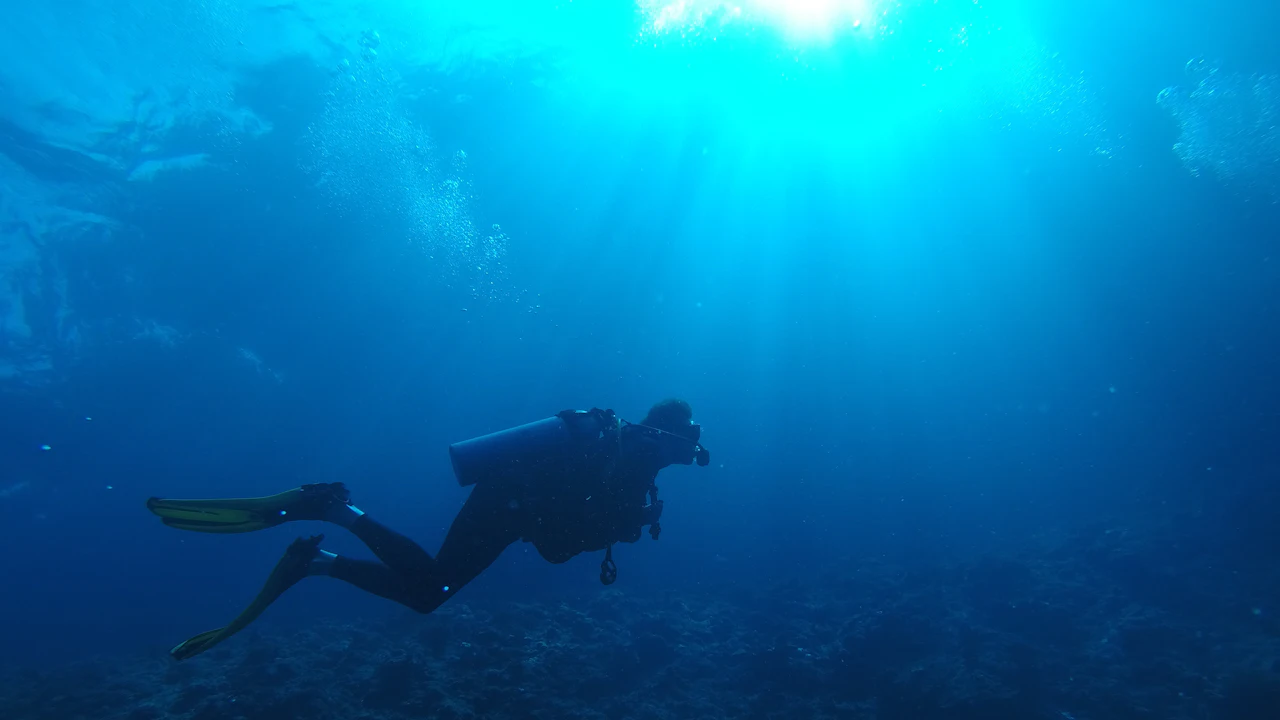
Learning how to descend scuba diving the right way makes the rest of the dive easier. A calm, slow start gives your ears time to adjust, keeps your group together and lets you arrive above the reef in control instead of landing on it.
This guide is for student divers, new divers and anyone coming back after a break who wants a clear refresher before a trip. We explain the five-point descent PADI teaches, how to keep the speed down, and what to do when your ears complain. Everything general here comes from PADI’s own guidance, in plain terms.
How to descend scuba diving safely: what are the steps?
Quick answer: Use PADI’s five-point descent: signal your buddy, orient yourself, switch to your regulator, note the time, then raise your BCD hose and let the air out to descend. Go down slowly and feet first, equalize early and often, and stop and rise a little if your ears hurt.
How to descend scuba diving: the five-point descent
PADI’s blog post on how to safely ascend and descend in scuba diving sums up the descent with the memory aid S-O-R-T-E-D. It is called a five-point descent because the first five letters are the checks you make on the surface, and the last letter is the descent itself.
- Signal. Agree with your buddy that you are both ready and agree to go down together.
- Orientation. Look around and pick a reference, such as the boat, the shore or the line, so you know where you are and where you are heading.
- Regulator. Swap your snorkel for your regulator and take a couple of normal breaths.
- Time. Note the time you start, or check that your dive computer is on and ready.
- Elevate. Raise your BCD inflator hose above your shoulder so air can escape from it.
- Descend. Let the air out slowly, breathe out and begin to sink.
PADI’s refresher checklist names the same letters, with “Elevate the BCD Hose” as the fifth point. You will hear it again in any course or scuba refresher course on Ambergris Caye, because the order matters: you check everything before you leave the surface.
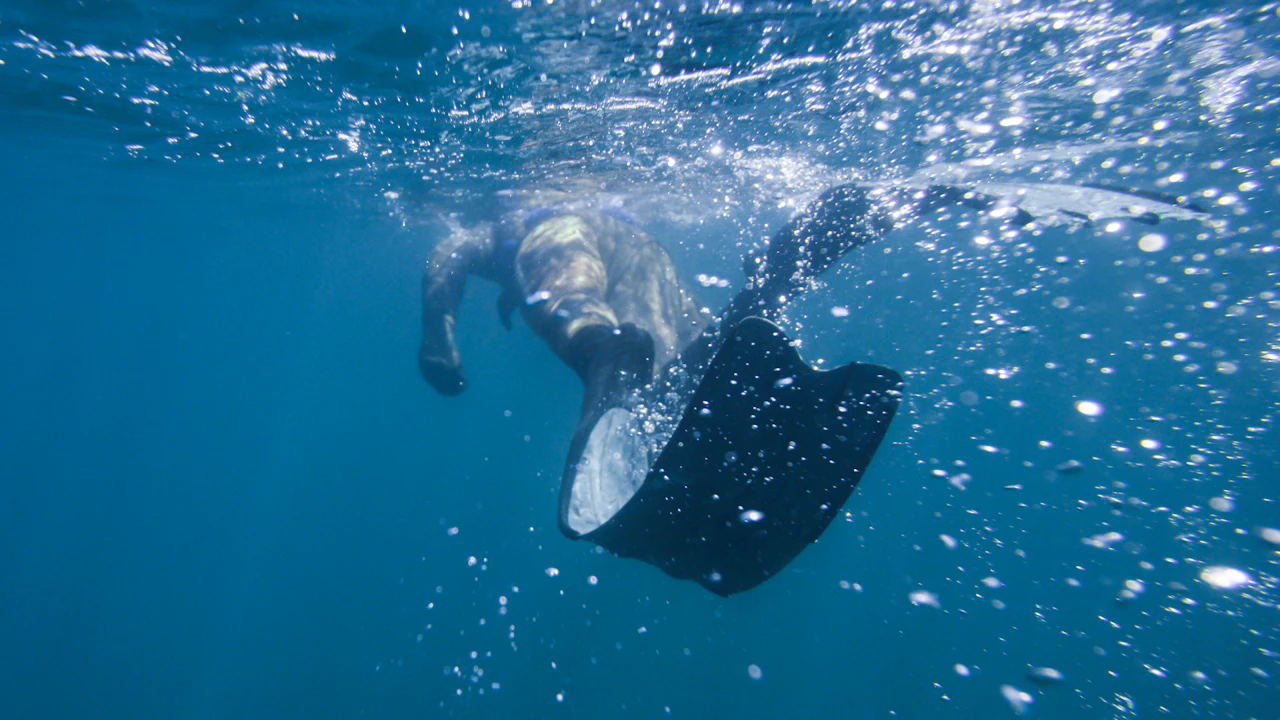
A feet first descent, slow and controlled
Once the air is out of your BCD, PADI’s advice is simple: stop kicking your fins, relax and breathe out naturally. Exhaling makes you less buoyant, so a long, easy out-breath helps you start sinking without any effort from your legs.
PADI’s guide to ear equalization and ear care recommends going down feet first. In that position air travels more naturally upward into the middle ear, which makes equalizing easier. A slow, upright start also lets you watch your buddy and the water below you.
Use a line or a visual reference
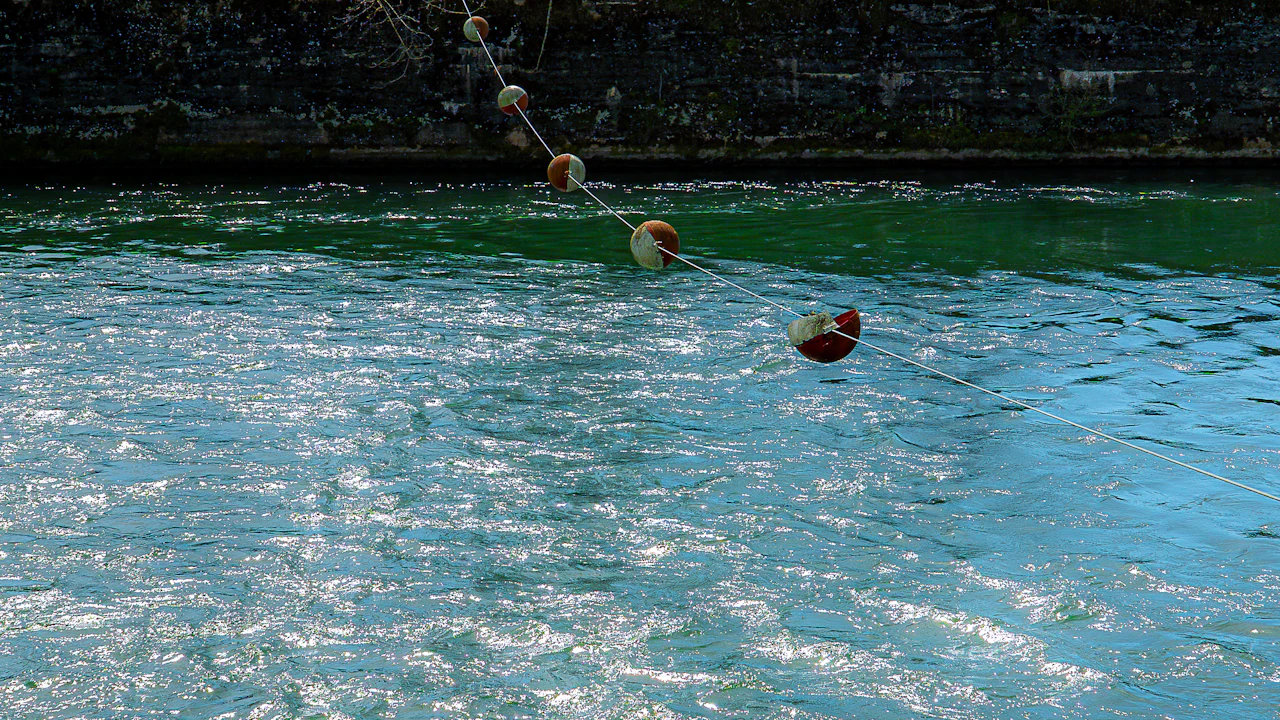
The same PADI guide suggests a descent line, because it helps you control your rate so you can equalize in good time. If there is no line, a sloping sand bottom or the reef edge can serve as a reference, so you notice when you start to sink faster.
Watch your depth gauge or computer as well as the reference. If you feel yourself speeding up, add a short puff of air to your BCD and let it settle before you carry on.
Equalize early and often
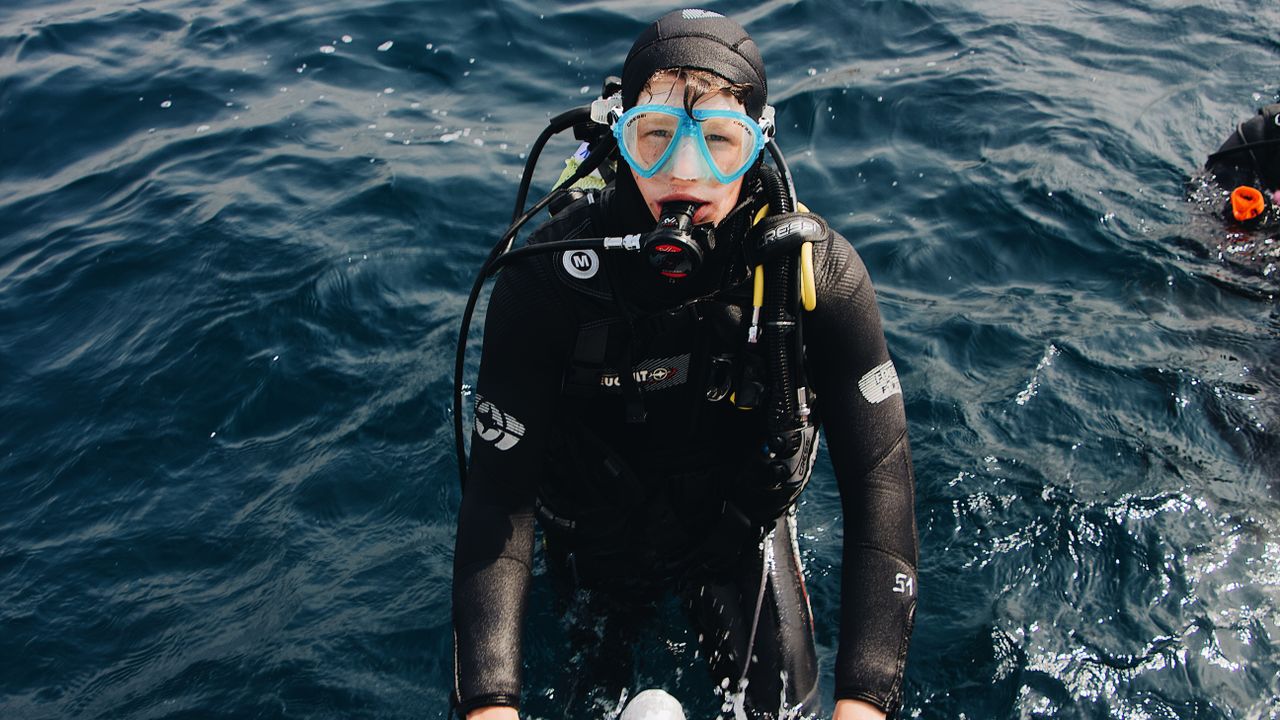
“Equalize early and often” is the key phrase PADI says you learn in the Open Water course. The ear guide suggests equalizing before you get in the water, again before your head goes under, and again just below the surface. After that, PADI says to keep equalizing on the way down, before discomfort builds.
Never force it. PADI’s ascent and descent article says that if you cannot equalize, you should ascend slightly or try another technique. Our guide on how to equalize your ears when scuba diving walks through the common methods.
Stop if your ears hurt
PADI’s ear guide is clear: stop if you feel discomfort, ascend until the pressure goes away, then try equalizing again. If you still cannot equalize, end the dive. It also advises seeking medical advice if your ears hurt after diving, so check with a doctor rather than diving on.
Descending too fast and crashing into the reef
PADI warns that being overweighted can make you sink too quickly, and that crashing into the reef is a risk during descent. A related PADI post adds that if you are dropping like a lead balloon on your descents, chances are you are carrying too much weight. Our guide to how much weight you need for scuba diving explains the weight check.
As you near the bottom, add small bursts of air to your BCD to slow down, and level out well above the coral. Good buoyancy, PADI notes, helps you avoid damaging reefs and marine life. Our buoyancy control tips for divers and reef etiquette for divers cover the next steps.
| Descent problem | Likely cause | What helps |
|---|---|---|
| You cannot get down | Air left in the BCD, holding your breath, or kicking | Raise the hose, empty the BCD, breathe out and stay still |
| You sink like a stone | Too much weight, or no air added on the way down | Small puffs of air in the BCD; review your weighting |
| Ear pressure or pain | Equalizing too late or descending too fast | Stop, rise until it eases, equalize, continue slowly |
| Losing your buddy | No signal or reference before going down | Complete every point of S-O-R-T-E-D together |
| Landing on the reef | No control near the bottom | Slow down early and stop well above the coral |
The descent has a partner skill at the end of every dive. Our guide to a controlled ascent in scuba diving covers the five-point ascent, the rate and the safety stop.

Learn descents with Elbert
White Sands Dive Shop is a 5 Star PADI Dive Facility on the beach in San Pedro, owned and operated by PADI IDC Staff Instructor Elbert Greer. Our guide to learning to dive on Ambergris Caye explains the courses, and you can see current course prices on our Water Sports page.
Nervous starts are common, and patience helps. Minette Layne wrote that “I was so panicked and you really calmed me down” before her refresher, and you can read more in the letters from Elbert’s dive students.
How to descend scuba diving: your questions answered
What is the five-point descent in scuba diving?
It is the PADI checklist remembered as S-O-R-T-E-D: Signal, Orientation, Regulator, Time, Elevate the BCD hose, then Descend. You complete the five checks on the surface with your buddy before letting the air out.
Should you descend feet first?
PADI recommends descending feet first because air travels more naturally upward into the middle ear, which makes equalizing easier. It also helps you control your speed and watch your buddy.
What should I do if my ears hurt on the way down?
Stop, ascend until the pressure goes away, then try equalizing again. PADI says that if you still cannot equalize, you should end the dive, and see a doctor if your ears hurt afterwards.
Why do I sink too fast when I descend?
PADI says divers who drop like a lead balloon are usually overweighted. Adding small puffs of air to your BCD on the way down also helps you slow down.
Does a descent line help?
Yes. PADI suggests a descent line because it helps you control your rate, which gives you time to equalize.
Questions before your dive? Talk to Elbert
If descents worry you or your ears have given you trouble before, tell us when you get in touch and we can talk it through. Email Elbert at elbertgreer@fastmail.fm or call 011 (501) 226 2405.