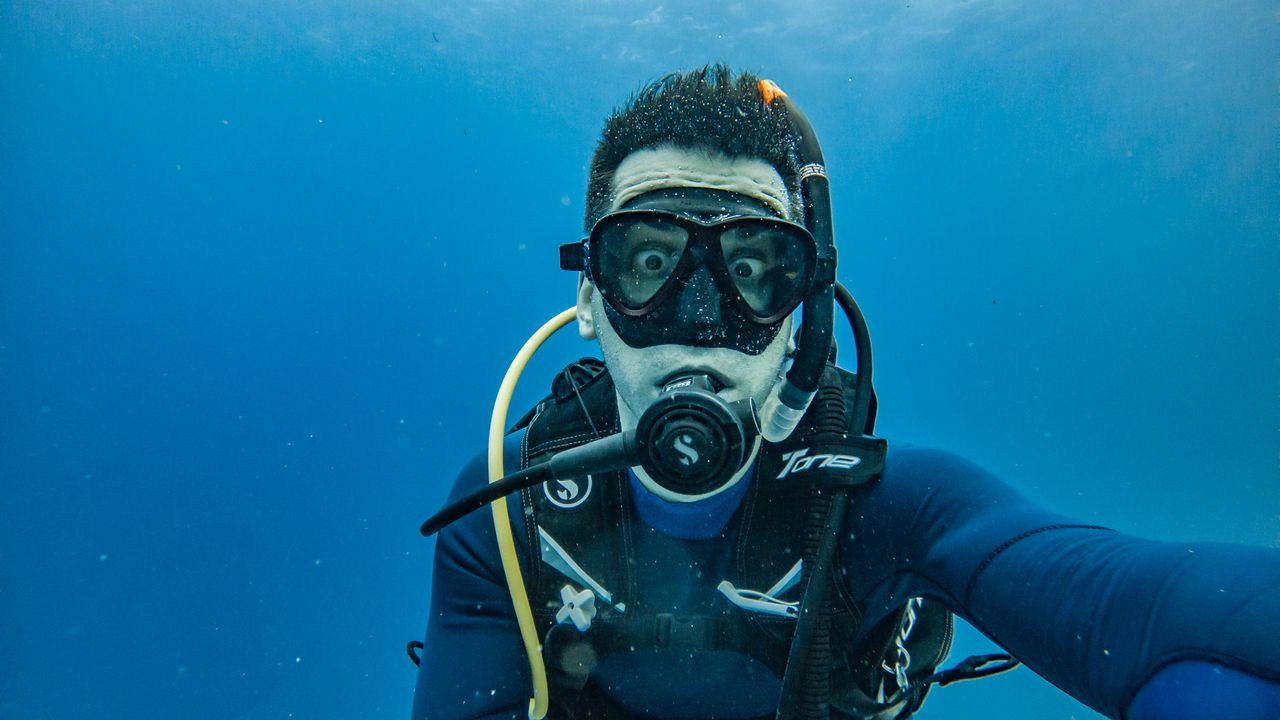
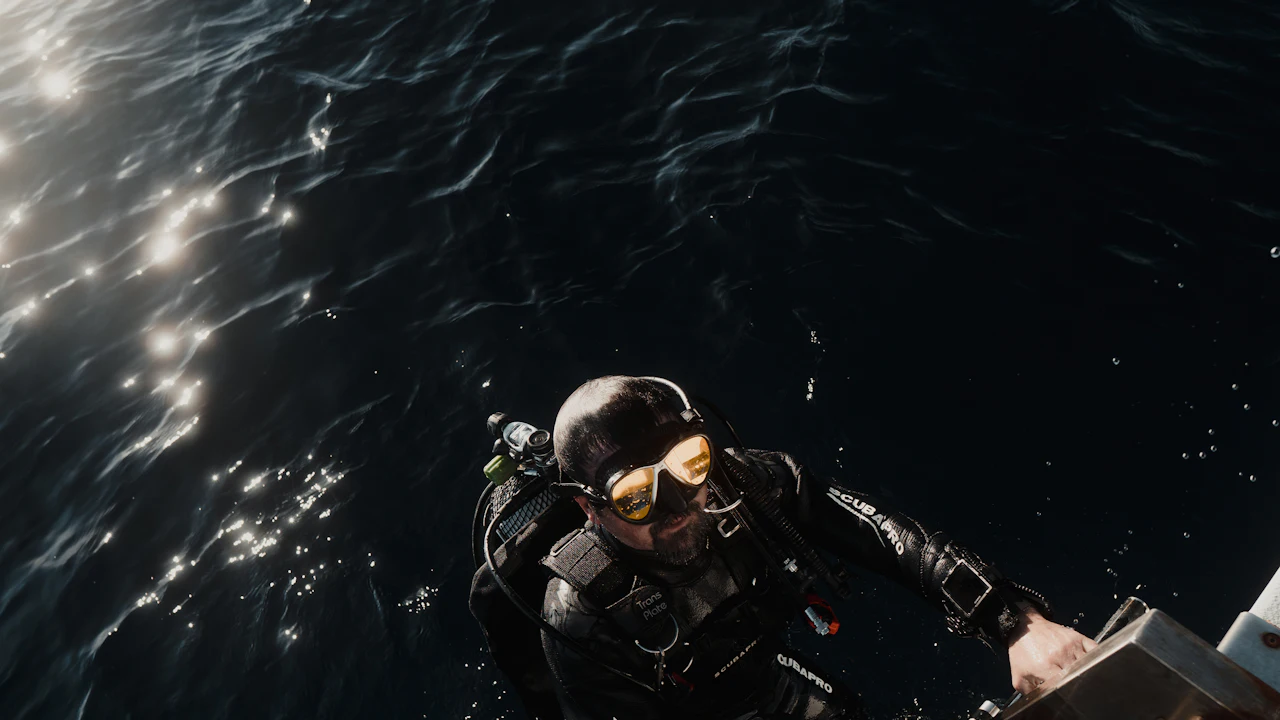
A controlled ascent in scuba diving is the quiet skill that ends every good dive. You come up slowly, breathing normally, with your buddy beside you and a clear path to the surface. Done well, it barely feels like a skill at all.
This guide is for student divers, new divers and certified divers who want a refresher before a trip. We explain the five-point ascent PADI teaches, the ascent rate exactly as PADI states it, the safety stop, and why the speed of your ascent matters for your body. The general facts here come from PADI’s own guidance.
What does a controlled ascent in scuba diving involve?
Quick answer: Signal your buddy, note the time, hold your BCD hose up, look up and rise slowly, no faster than 18 m (60 ft) per minute, as PADI states. Breathe normally and never hold your breath, vent air from your BCD as it expands, and make a three-minute safety stop at about 5 m (15 ft).
Controlled ascent scuba diving: the five-point ascent
PADI’s blog post on how to safely ascend and descend in scuba diving gives the ascent as the memory aid S-T-E-L-A. It mirrors the five-point descent you use at the start of the dive, and each letter is a check before or during the trip up.
- Signal. Give your buddy the “go up” sign and wait for the same sign back, so you ascend together.
- Time. Note the time, or check your dive computer, so you can track your rate and your safety stop.
- Elevate. Raise your BCD inflator hose so you are ready to let air out. PADI’s article pairs this step with equalizing.
- Look up. Check what is above you, including boats and other divers, so your path is clear.
- Ascend. Rise slowly, breathing normally, while you keep looking up and turning slowly to see around you.
If you have not read it yet, our guide on how to descend when scuba diving covers the start of the dive with the same step-by-step approach.

Ascent rate: how fast to ascend when diving
PADI’s golden rules of scuba diving say to ascend slowly from every dive, at a rate of no faster than 18 meters (60 feet) per minute. That is a limit, not a target, so slower is fine. PADI’s ascent article adds that the greatest pressure change is near the surface, so the final part of the ascent should be especially slow and steady.
PADI’s history of the safety stop explains where the number came from. The 18 meter rate began with the US Navy as a compromise between combat divers and commercial hardhat diving, and the Navy has since revised its own figure to a slower 10 meters (30 feet) per minute.
Let your computer help
A dive computer helps you track depth and time on the way up, so you can see whether you are keeping the pace gentle. Our guide to the dive computer for beginners explains how to read the display before your trip.
Venting your BCD and breathing normally
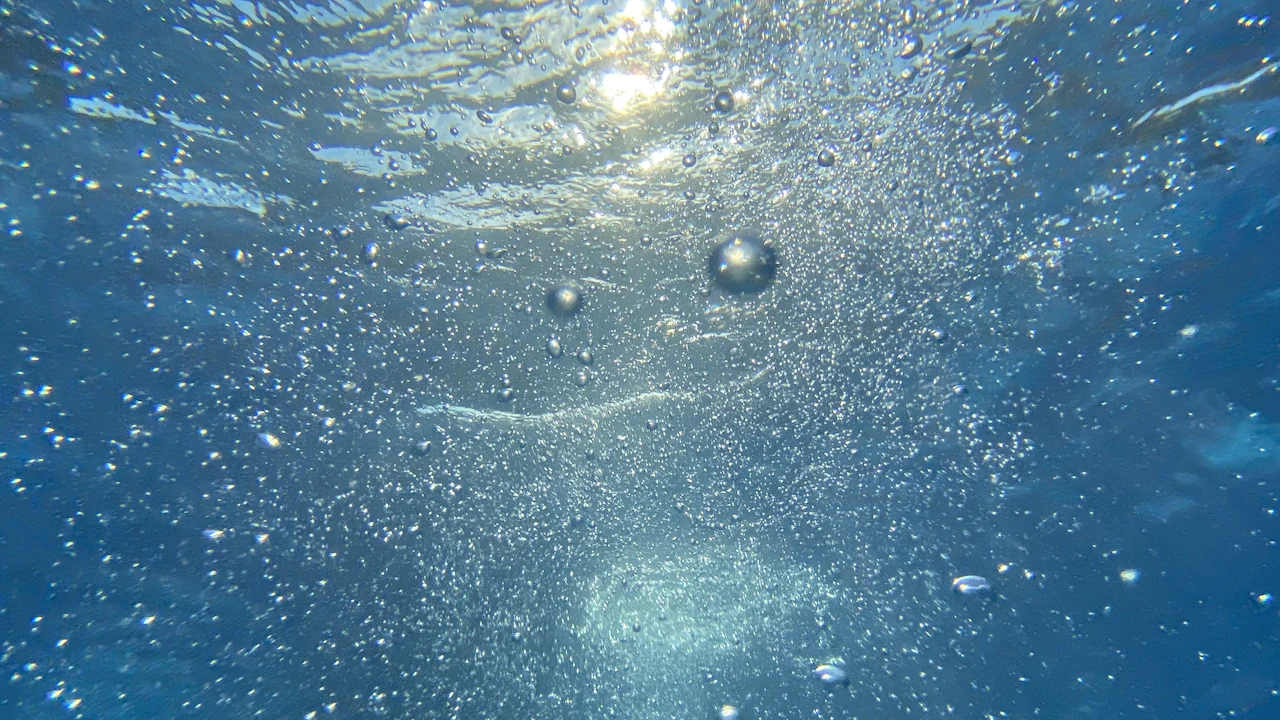
PADI’s surface habits advice is to keep your BCD inflator hose above your head to release air and control your ascent speed. Reaching up with the hose this way lets the air escape easily from the top of the BCD as you rise.
Like the air in your lungs, the air in your BCD expands as you rise, so you need to let a little out several times on the way up. If you notice yourself speeding up, vent some air, slow down and settle before you carry on. Steady buoyancy control tips for divers make this much easier.
Never hold your breath
PADI’s golden rules explain that the air inside your lungs expands when you ascend, and not releasing it can cause lung injuries. Breathing normally lets the expanding air escape, which PADI says helps prevent lung over-expansion injuries. Keep breathing slowly and continuously all the way up.
The safety stop
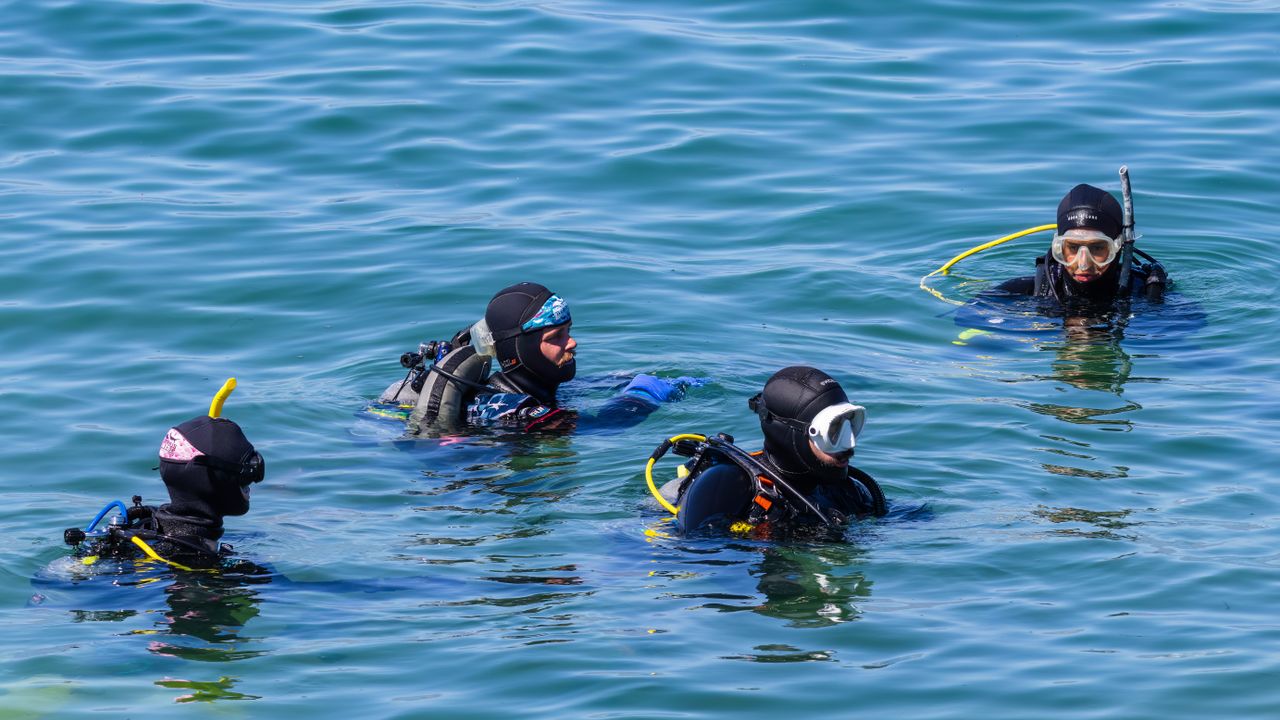
As an extra precaution on recreational dives, PADI’s golden rules say to make a safety stop at 5 meters (15 feet) for at least three minutes. PADI’s ascent article describes it as extra time for off-gassing and a chance to check your gear, your buddy and your surroundings.
PADI’s history of the safety stop notes a Doppler study in which divers who made safety stops had less bubble formation in their bloodstreams than those who did not. Our full guide to the safety stop in scuba diving covers how to hold it.
| Stage of the ascent | What to focus on | Why it matters |
|---|---|---|
| Before you leave the bottom | Signal, time, hose up, look up | You and your buddy start together with a clear path |
| Deeper part of the ascent | Rise no faster than 18 m (60 ft) per minute, breathing normally | A slow, steady ascent reduces the risk of decompression sickness |
| Safety stop at 5 m (15 ft) | Hover for at least three minutes | Extra time for off-gassing and a check of gear and buddy |
| Last few meters | Go especially slowly, vent the BCD, keep looking up | The greatest pressure change is near the surface |
| At the surface | Inflate the BCD and stay with your buddy | You float comfortably while you wait for the boat |
Why fast ascents matter
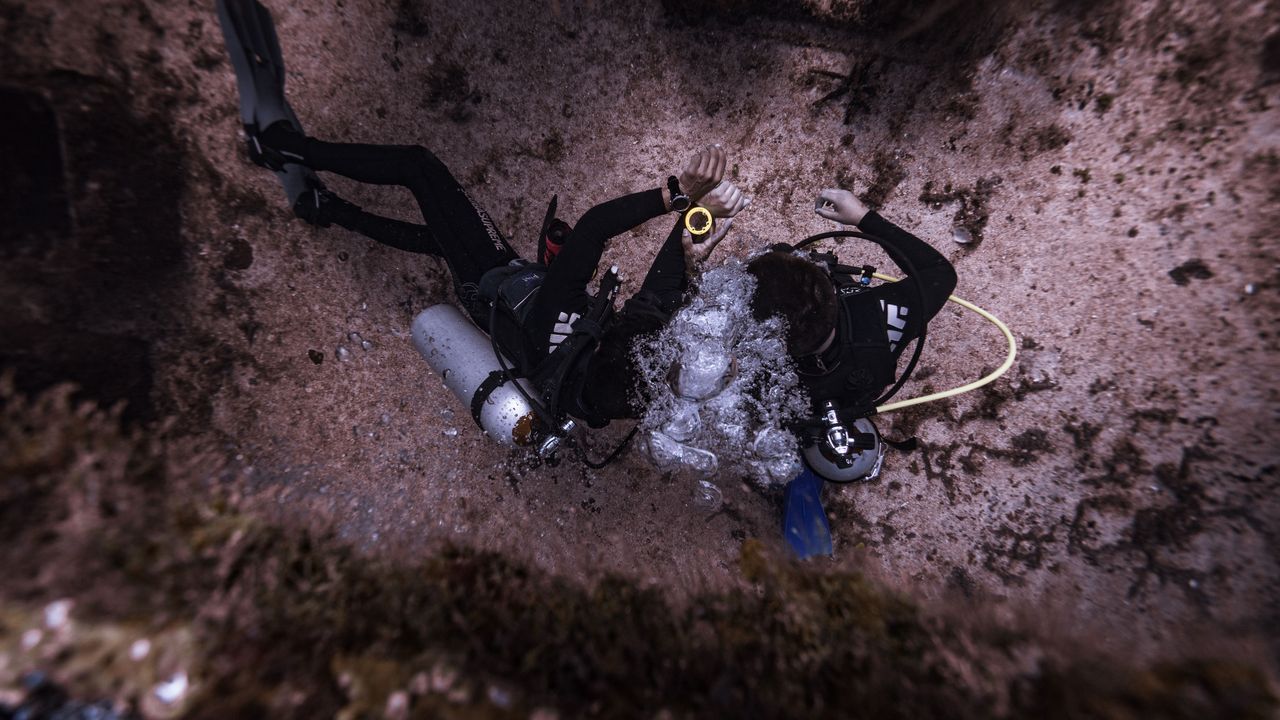
PADI ties a slow ascent to two risks. The first is decompression sickness (DCS), often called the bends: PADI says slow, controlled ascents reduce its risk, and that good buoyancy control helps you ascend slowly and steadily. Our guide to decompression sickness symptoms and what to do lists the signs to watch for.
The second is lung injury from expanding air when a diver holds their breath. Both risks are reasons to slow down, keep breathing and stay in control. If you ever feel unwell after a dive, seek medical help rather than waiting to see if it passes.
Practice ascents with Elbert
White Sands Dive Shop is a 5 Star PADI Dive Facility on the beach in San Pedro, owned and operated by PADI IDC Staff Instructor Elbert Greer. Our guide to learning to dive on Ambergris Caye explains the courses, and you can see current course prices on our Water Sports page.
Careful habits like these are part of how Elbert teaches. Vivake K. Bhalla called him “very friendly and fun, but equally very strict about safety”, and you can read more in the letters from Elbert’s dive students.
Controlled ascent scuba diving: your questions answered
What is a safe ascent rate in scuba diving?
PADI says to ascend no faster than 18 meters (60 feet) per minute, and to go especially slowly near the surface, where the pressure change is greatest. Slower than the limit is fine.
What are the five steps of a controlled ascent?
PADI uses the memory aid S-T-E-L-A: Signal, Time, Elevate the BCD hose, Look up and Ascend. Breathe normally the whole way up.
Why should you never hold your breath when ascending?
The air in your lungs expands as you rise, and PADI says not releasing it can cause lung injuries. Breathing normally lets the air escape.
Do I need a safety stop on every dive?
PADI recommends a safety stop at 5 meters (15 feet) for at least three minutes as an extra precaution on recreational dives. It also gives you time to check your gear and buddy.
What happens if you ascend too fast?
PADI links slow, controlled ascents to a lower risk of decompression sickness, and holding your breath while rising can injure the lungs. If you feel unwell after a dive, seek medical help.
Questions before your dive? Talk to Elbert
If you would like to brush up on ascents and other skills before your trip, tell us when you get in touch. Email Elbert at elbertgreer@fastmail.fm or call 011 (501) 226 2405.