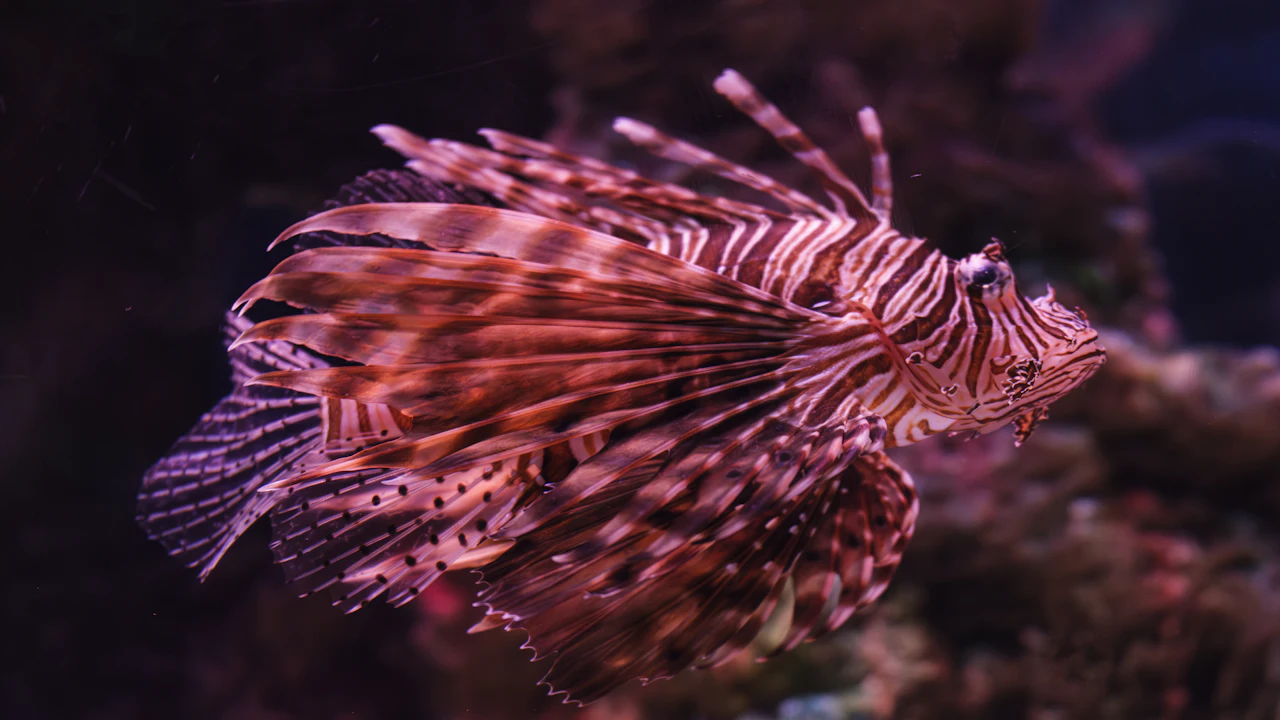
Spend a few days on a Caribbean reef and someone will point at a striped, frilly fish and say “lionfish.” Most people who look up lionfish in Belize want the same few answers: what they are, why reef scientists worry about them, and whether they are a danger to you.
This guide is for divers and snorkelers planning a trip with us at White Sands Dive Shop, and for anyone curious about the fish. It sticks to what NOAA, the US ocean and fisheries agency, has published, in plain words.
What should divers know about lionfish in Belize?
Quick answer: Lionfish are an invasive predator from the Indo-Pacific that NOAA reports is now established across the Caribbean. They eat young reef fish and the grazers that keep algae off coral. Their long spines are venomous, so look and photograph but never touch. Cleaned with the spines removed, the meat is safe to eat.
How lionfish reached the Caribbean
Lionfish are native to coral reefs in the tropical South Pacific and Indian Oceans. NOAA Fisheries says they were first detected off the Florida coast in the mid-1980s. The common name actually covers two closely related species that are nearly impossible to tell apart.
Nobody knows exactly how they got there, but NOAA’s National Ocean Service says people likely played a role by releasing unwanted aquarium lionfish into the Atlantic. From there they spread to reefs, wrecks and other habitats across the warm western Atlantic, the Gulf and the Caribbean.
That puts them in the same warm Caribbean waters as the barrier reef we dive every day. Our page on the Belize Barrier Reef Reserve System and its protected areas explains why this reef matters so much.
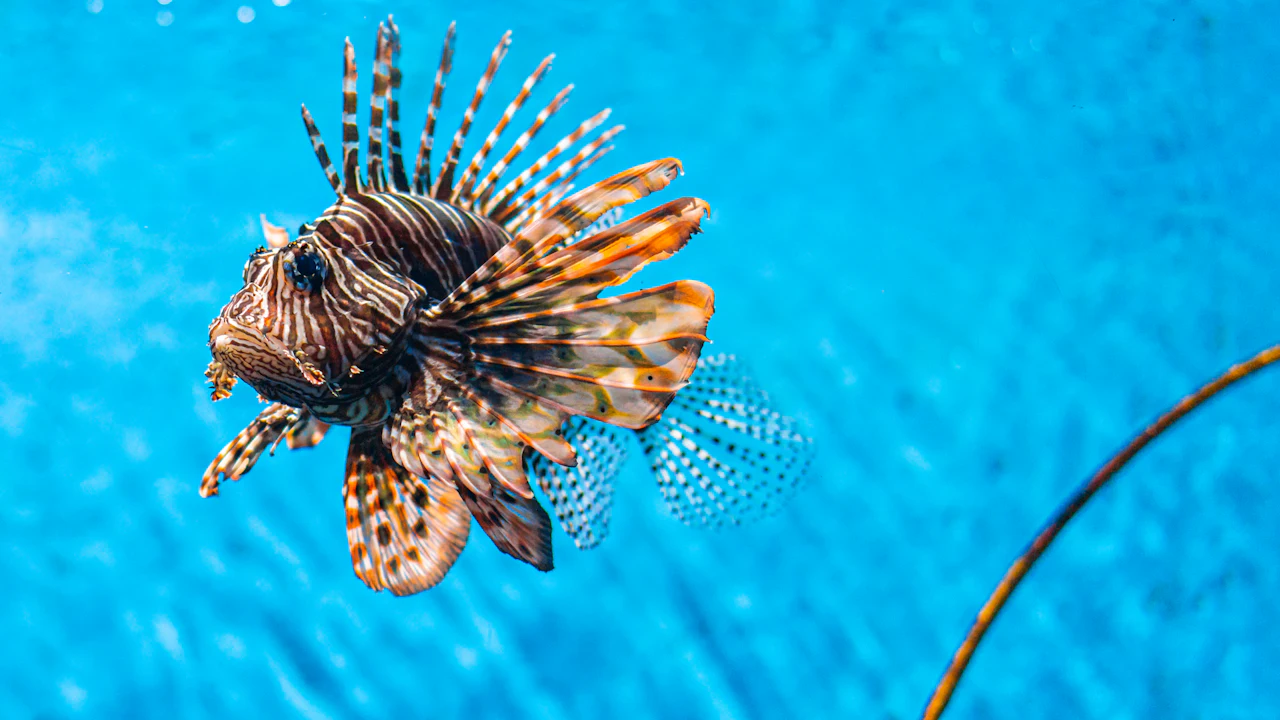
Lionfish invasion of the Caribbean reef: why it matters
Outside their home range, adult lionfish have few predators. NOAA says they breed year round, and a mature female can release roughly two million eggs a year. Numbers climb fast where nothing eats them.
They are also very good hunters. The NOAA National Ocean Service lionfish fact page notes that they eat more than 50 species of fish, using their wide fins to corner small prey. NOAA Fisheries reports that a single lionfish on a reef can cut the number of young native fish settling there by 79 percent.
The algae problem
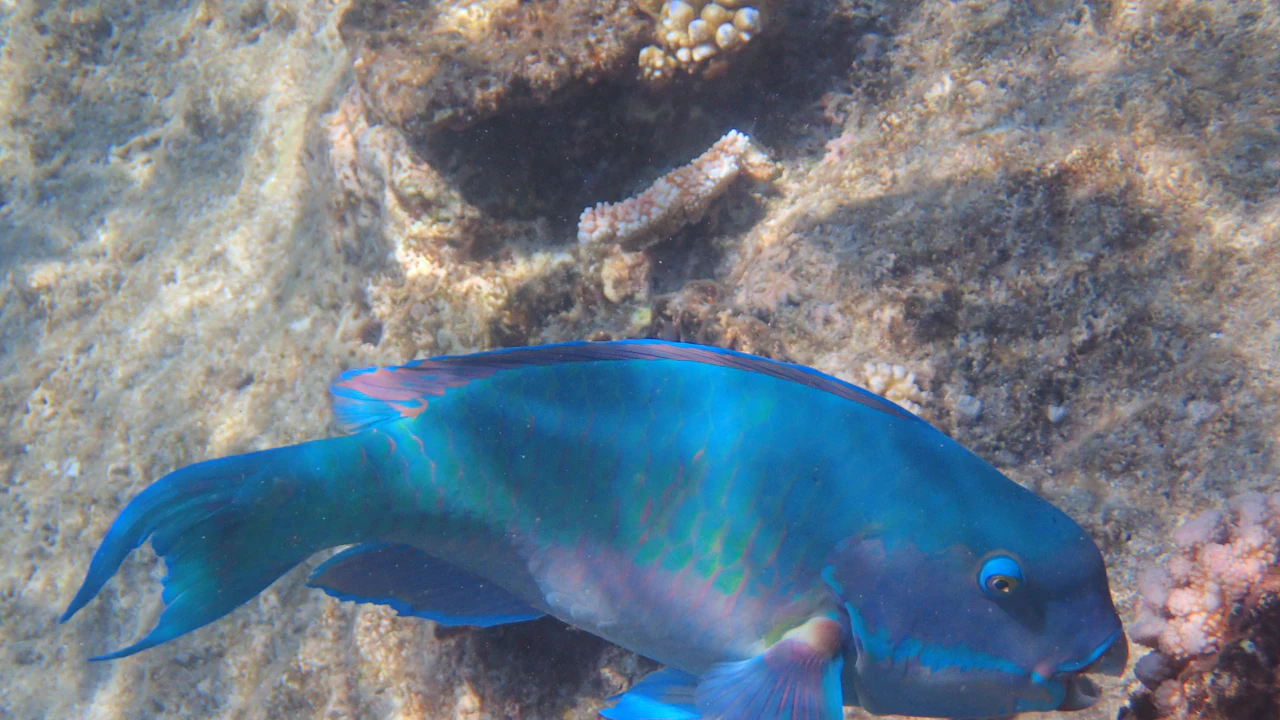
Some of what they eat are herbivores such as parrotfish, the grazers that keep algae from smothering coral. The NOAA Fisheries report on the impacts of invasive lionfish explains that without enough grazers, algae growth goes unchecked, which harms the health of the whole reef.
Lionfish also take prey that snapper and grouper would normally eat, so the problem reaches fishing as well as diving. For the native animals you hope to meet instead, see our guide to marine life you can see on Ambergris Caye dives.
How to recognise a lionfish underwater
Once you have seen one, you will spot them easily. NOAA describes a brown or maroon body with white bands, fan-like pectoral fins, fleshy tentacles above the eyes and below the mouth, and 13 long, separate spines along the back.
- Size: adults reach about 18 inches, while juveniles can be an inch long or less.
- Habitat: hard bottom, coral, seagrass, mangroves and wrecks, from about 1 foot to 300 feet deep, according to NOAA.
- Posture: they often hang almost still near ledges, fins spread wide.
- Timing: NOAA says they are thought to hunt mostly at night, though Atlantic divers often see them moving by day.
Keep that last point in mind on a night dive on Ambergris Caye, when a dive light can pick out their fins against the dark reef.
Venomous spines: look, don’t touch
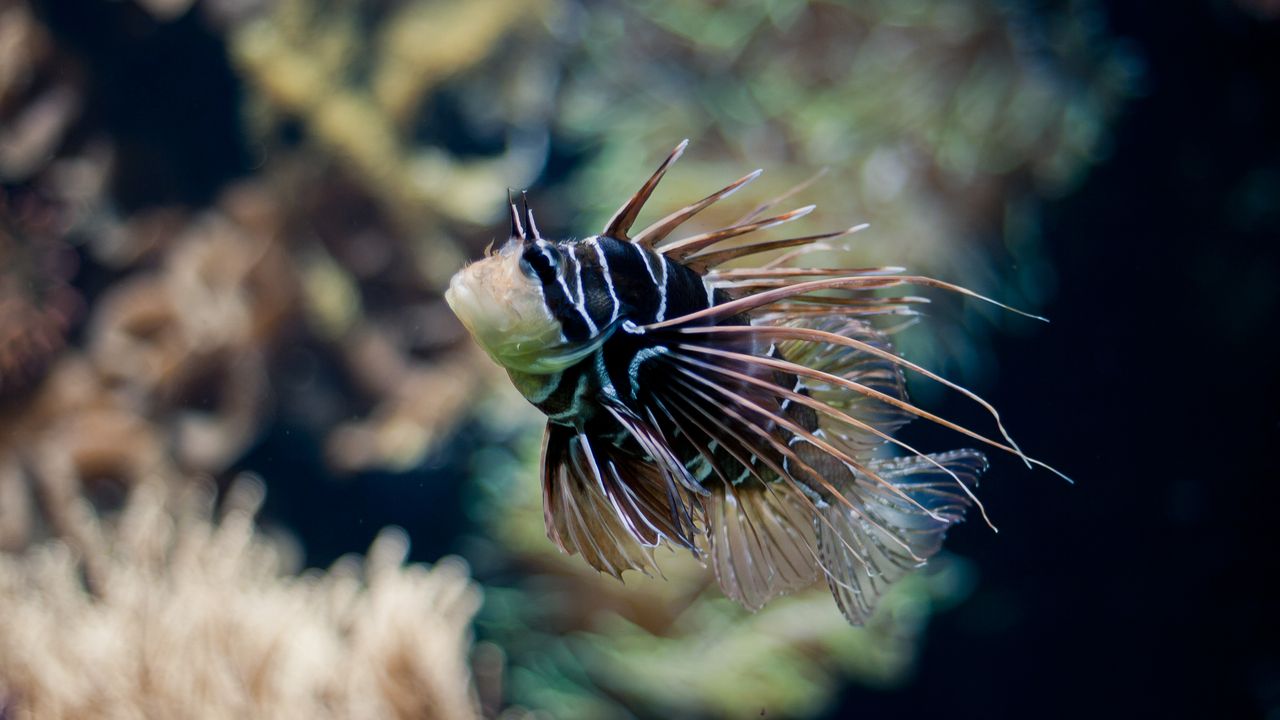
Those lovely fins hide the real hazard. The venom sits in glands along grooves in the spines, and NOAA says a sting can cause severe pain, sweating, breathing difficulty and even paralysis. The effects can last for days.
A sting needs contact between spine and skin, so the safest habit is simple distance. Keep these habits:
- Never try to pet, poke, herd or move a lionfish, even one that looks sleepy.
- Watch your hands and knees near ledges and overhangs, where they like to rest.
- Hold steady buoyancy so you never brush the reef, one of our reef etiquette tips for divers and snorkelers.
- If you are stung, signal your guide at once and end the dive. NOAA advises seeking medical attention immediately.
Spearing lionfish is a specialist activity with its own rules and training, and this guide does not cover it. To grow your reef skills after certification, see our overview of PADI specialty courses in Belize.
Lionfish facts at a glance
| Question | What NOAA reports | What it means on your dive |
|---|---|---|
| Where are they from? | Coral reefs of the Indo-Pacific | Any lionfish you see in the Caribbean is an invader |
| Are they venomous? | Yes, venom glands sit in the spines; stings can be severe | Look and photograph, never touch |
| What do they eat? | More than 50 fish species, plus crustaceans and reef grazers | Fewer small native fish where lionfish thrive |
| What eats them? | Few or no predators outside their home range | Their numbers keep rising without human control |
| How fast do they breed? | Year round, about two million eggs per female each year | One fish today can mean many more next season |
| Can you eat them? | Meat considered safe; ciguatera from lionfish is very rare | A good choice on a menu, cleaned by someone trained |
Eating lionfish: is it safe?
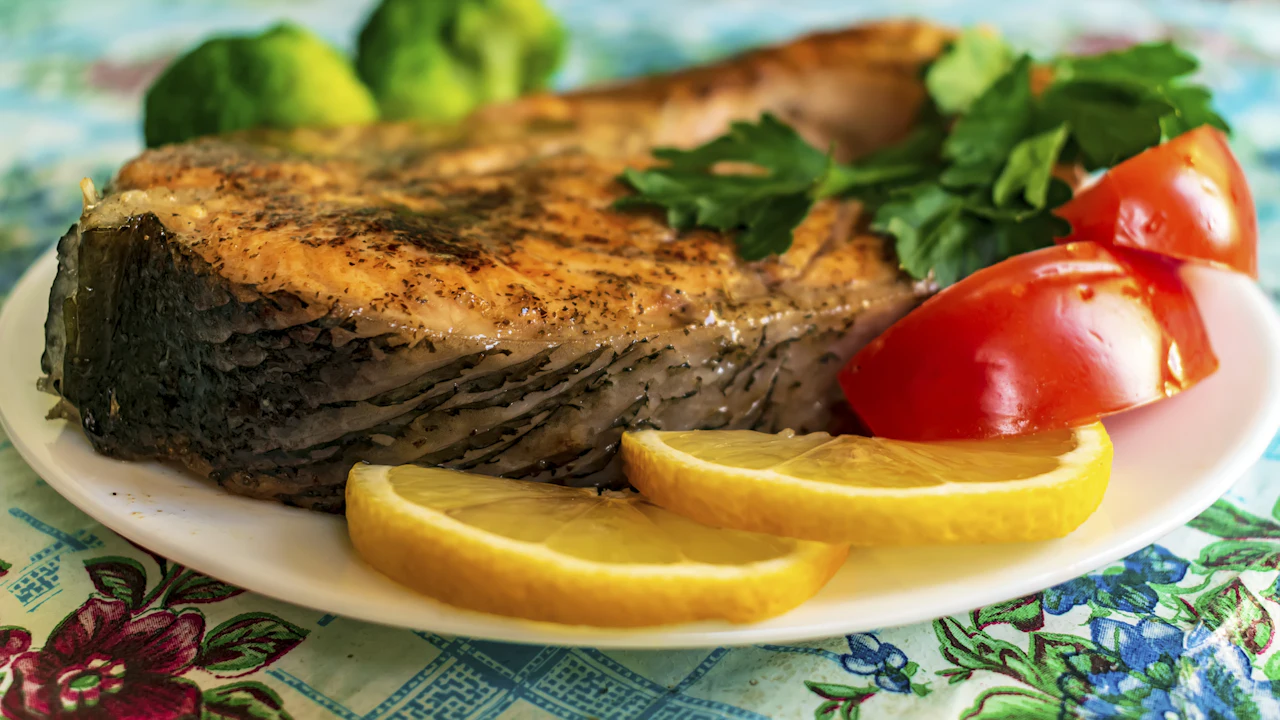
NOAA Fisheries says lionfish meat is considered safe to eat and that a small food market already exists, with some small-scale fishermen selling lionfish while helping control the invasion. NOAA has even promoted eating lionfish as one way to reduce their impact on reefs.
The venom is in the spines, not the flesh, which is why NOAA says the spines must be removed before the fish is cleaned and filleted. After that, it can be cooked like any other fish. NOAA also advises against eating fish from areas known for ciguatera, a toxin carried by some reef fish, though it calls ciguatera from lionfish very rare.
If you find lionfish on a menu during your stay, ordering it is a small way to help. Leave the catching and cleaning to trained hands.
Seeing the reef with White Sands Dive Shop
White Sands Dive Shop is a 5 Star PADI Dive Facility on the beach in San Pedro, owned and operated by PADI IDC Staff Instructor Elbert Greer. Local dive and snorkel trips leave at 9:00, with pickup at the dock of your hotel.
Our guide to diving and snorkeling on Ambergris Caye covers the trips we run, and current course prices are on our Water Sports page with every PADI course.
Susan wrote that her first dives with him stood out “partially because you pointed out so many cool things to look at, not to mention the manatee.” You can read her full note in our letters from Elbert’s dive students.
Lionfish in Belize: your questions answered
Are there lionfish in Belize?
NOAA reports that lionfish are established across the Caribbean, which includes the warm waters around the barrier reef. Treat any lionfish you see as an introduced species, not a native one.
How dangerous is a lionfish sting?
NOAA lists severe pain, sweating, breathing difficulty and even paralysis among the possible effects, which can last for days. Anyone stung should get medical attention right away.
Will a lionfish attack a diver?
Lionfish hunt small fish and crustaceans, not people. The risk comes from touching their venomous spines, so keep your hands and body well away.
Is lionfish good to eat?
NOAA says the meat is considered safe once the venomous spines are removed, and that ciguatera from lionfish is very rare.
Why are lionfish bad for coral reefs?
They eat young native fish and grazers such as parrotfish. With fewer grazers, algae can spread unchecked and crowd out coral, according to NOAA.
Questions before your reef trip?
To plan your dives or snorkel trips, write to Elbert at elbertgreer@fastmail.fm or call 011 (501) 226 2405. We are happy to talk about what lives on the reef.