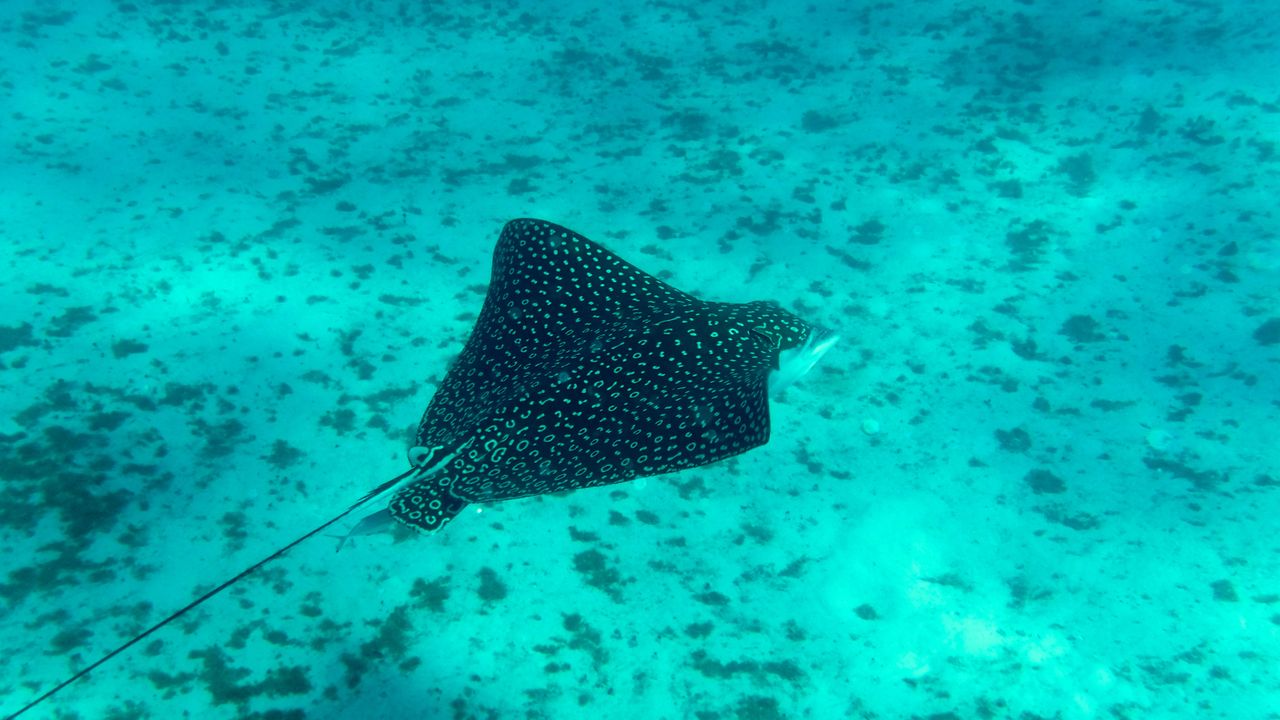
Ambergris Caye marine life is the reason many of our guests book a second week. On a single morning you might pass a turtle chewing on a sponge, a moray peering out of a ledge and a ray gliding over the sand. When you are not diving with sharks, turtles, rays and eels, the rest of the island waits.
This guide is for divers and snorkelers who want to know which animals live on the reef off San Pedro and which trip suits each one. We will not promise any sighting, because wild animals keep their own schedule. What we can do is tell you where to look and how to behave when you find them.
What Ambergris Caye marine life can you see diving or snorkeling?
Quick answer: The reef off the island is home to sharks, sea turtles, rays and eels, plus groupers and a wide spread of smaller reef fish. Our Hol Chan dive with the Shark Ray Alley snorkel, the barrier reef dives, the night dive and the full-day atoll trips each show a different mix. Sightings are never guaranteed.
Ambergris Caye marine life at a glance
The table pairs the animal groups our divers most often ask about with the trips where they tend to look for them. Treat it as a guide to your odds, not a checklist. The same site can feel crowded with life one morning and quiet the next.
| Animal group | Where to look | Trips to consider | Good to know |
|---|---|---|---|
| Sea turtles | Over coral heads and sponges | Barrier reef dives, Hol Chan dive, snorkel trips | Hawksbills are endangered; keep your distance |
| Sharks | Sand patches, channels and the reef edge | Hol Chan dive and Shark Ray Alley snorkel, atoll days | Watch calmly and never chase |
| Rays | Sandy bottoms beside the reef | Shark Ray Alley, reef dives | Give them room to settle back on the sand |
| Eels | Holes, ledges and crevices | Reef dives and the night dive | Look into the reef rather than reaching into it |
| Groupers | Near high coral and overhangs | Reef dives, atoll days | Nassau grouper are listed as threatened |
| Night animals | Across the reef after sunset | One-tank night dive | Bring or rent a dive light |

Sea turtles on the barrier reef
Turtles are the animal most guests ask about first. The hawksbill is the easiest to recognize once you know its features. The NOAA Fisheries profile of the hawksbill sea turtle describes a narrow, pointed, beak-like head and a shell with overlapping scutes and serrated edges.
NOAA says hawksbills feed mainly on sponges that grow on coral reefs, and that they rely on healthy reef habitat. The species is listed as endangered under the Endangered Species Act. If you spot one tearing at a sponge, hang back and let it carry on eating.
Sharks, rays and turtles on one trip
All three groups share the same reef, so one trip can show you all of them. That is why our homepage mentions sharks, turtles, rays and eels together. A mixed group of divers and snorkelers can usually share a boat and still see plenty.
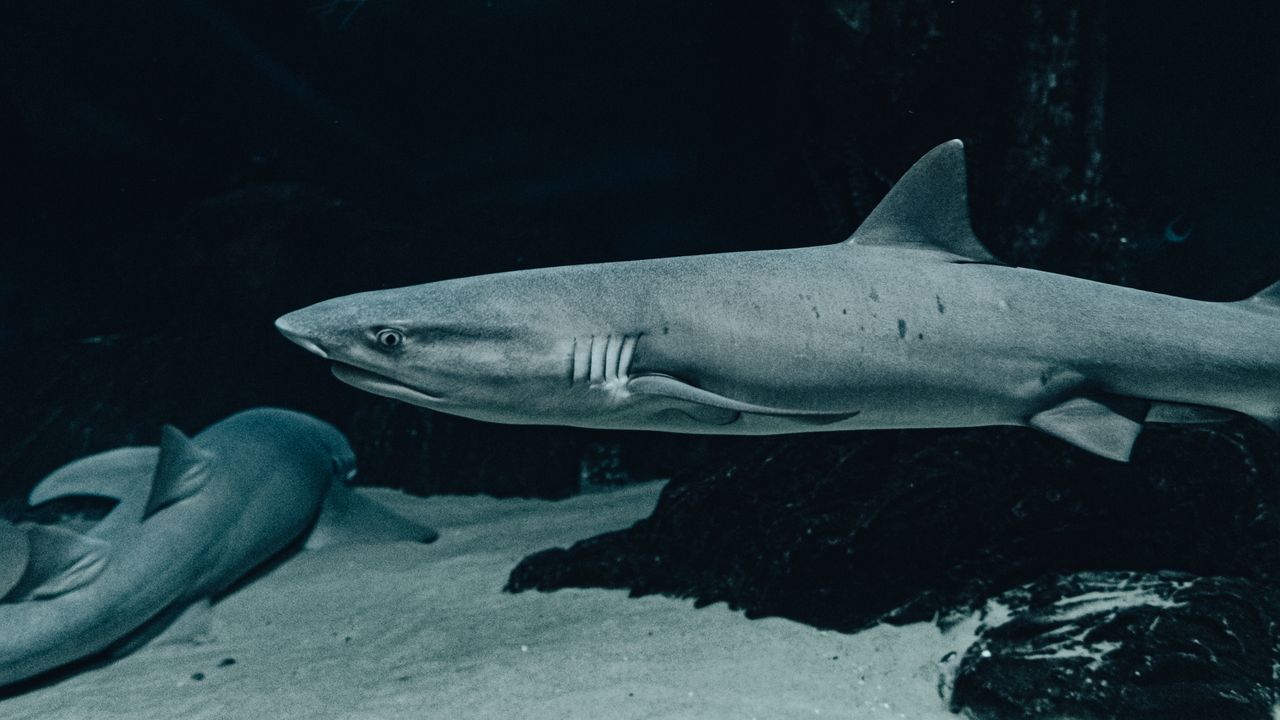
Sharks, rays and eels: what you see diving Ambergris Caye
The best-known shark and ray stop on our schedule is the reserve trip. We have a full write-up of the Hol Chan Marine Reserve dive and Shark Ray Alley snorkel, covering the zones, the reef and what lives there. Read it before you book, since we do not repeat it here.
Eels are a different kind of encounter. They are easy to swim past, so you find them by slowing down and looking into gaps. Give them space, keep your hands to yourself, and you can watch one for a whole minute without it moving.
- Swim slowly along the reef edge and scan the sand on both sides.
- Check ledges and overhangs at eye level instead of looking only down.
- Hold your position when a large animal approaches, and let it decide how close to come.

Groupers and the reef fish in between
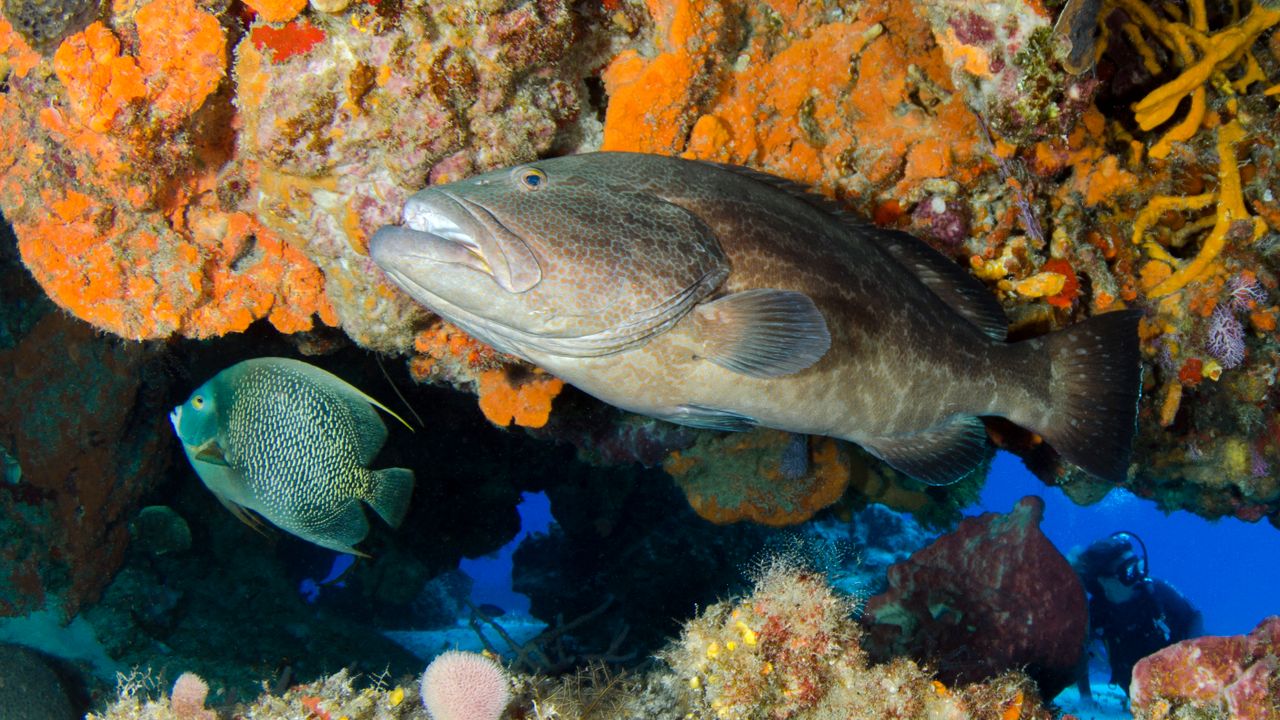
The big animals get the headlines, but most of a dive is spent among reef fish. Groupers are among the most rewarding to find. The NOAA Fisheries profile of the Nassau grouper describes a sturdy fish with large eyes, five dark brown vertical bars and a black blotch near the base of the tail.
NOAA lists the Nassau grouper as threatened and calls it an ambush predator that tends to stay in one spot. That habit makes it a patient subject for photographers. Approach low and slow, and it may let you watch it hold its ground beside the coral.
After dark and farther offshore
The reef changes shift at sunset, with a new cast of animals coming out. Our article on the night dive on the Ambergris Caye reef explains what to expect and what to bring. Remember that the dive light is not included, though you can rent one.
For open water and steep walls, the atoll trips are full days with three dives, plus breakfast, lunch, snacks and drinks. Choose between the Great Blue Hole day trip at Lighthouse Reef and a Turneffe Atoll dive trip from San Pedro. Former student Susan wrote of her Blue Hole day: “I looked back up at the boat and saw 6 reef sharks circling about.”
Snorkelers who prefer shallow coral gardens can join our Mexico Rocks snorkeling trip. Non-divers in your party can spend the same morning in the water as you.
How to watch marine life without disturbing it
Good manners give you longer, calmer encounters. NOAA’s hawksbill page asks people to admire sea turtles from a respectful distance and never to feed or touch them. The same habits work for every animal on the reef.
- Keep your buoyancy steady and your fins clear of the coral.
- Never feed, touch or chase an animal, however close it comes.
- Leave an animal an open path so it never feels cornered.
- Wear reef safe sunscreen for Belize trips or a rash guard on snorkel days.

Who points out the animals on your dive
White Sands Dive Shop is a 5 Star PADI Dive Facility, licensed by the Belize Tourism Board and owned and operated by Elbert Greer, a PADI IDC Staff Instructor. You can read Elbert Greer’s background as a PADI instructor and how he guides divers. Our complete guide to diving Ambergris Caye lists every local trip.
Susan wrote that her two dives with Elbert stood out “partially because you pointed out so many cool things to look at, not to mention the manatee.” More notes like hers are in our letters from Elbert’s dive students.
Ambergris Caye marine life: your questions answered
Will I definitely see sharks or turtles?
No one can promise a sighting, because wild animals move freely. The reef is home to sharks, turtles, rays and eels, and our guides will help you look in the right places.
Can snorkelers see marine life too?
Yes. Our Hol Chan and Shark Ray Alley snorkel and Mexico Rocks trips are built for snorkelers, and many animals live in shallow water.
What kind of sea turtle has a pointed beak?
That is likely a hawksbill. NOAA Fisheries describes its narrow, pointed, beak-like head and overlapping shell scutes, and lists it as endangered.
Can I touch the animals?
Please do not. NOAA asks people never to feed or touch sea turtles, and the same rule protects every animal on the reef.
Which trip is best for seeing a variety of animals?
A mix works best. Pair a reef dive with the Hol Chan dive and Shark Ray Alley snorkel, then add a night dive or an atoll day.
Plan your marine life dives with us
Tell us which animals you hope to see, your certification level and your travel dates, and we will suggest a mix of trips. Email Elbert at elbertgreer@fastmail.fm or call 011 (501) 226 2405. For current rates, see the dive and course price list on our Water Sports page.