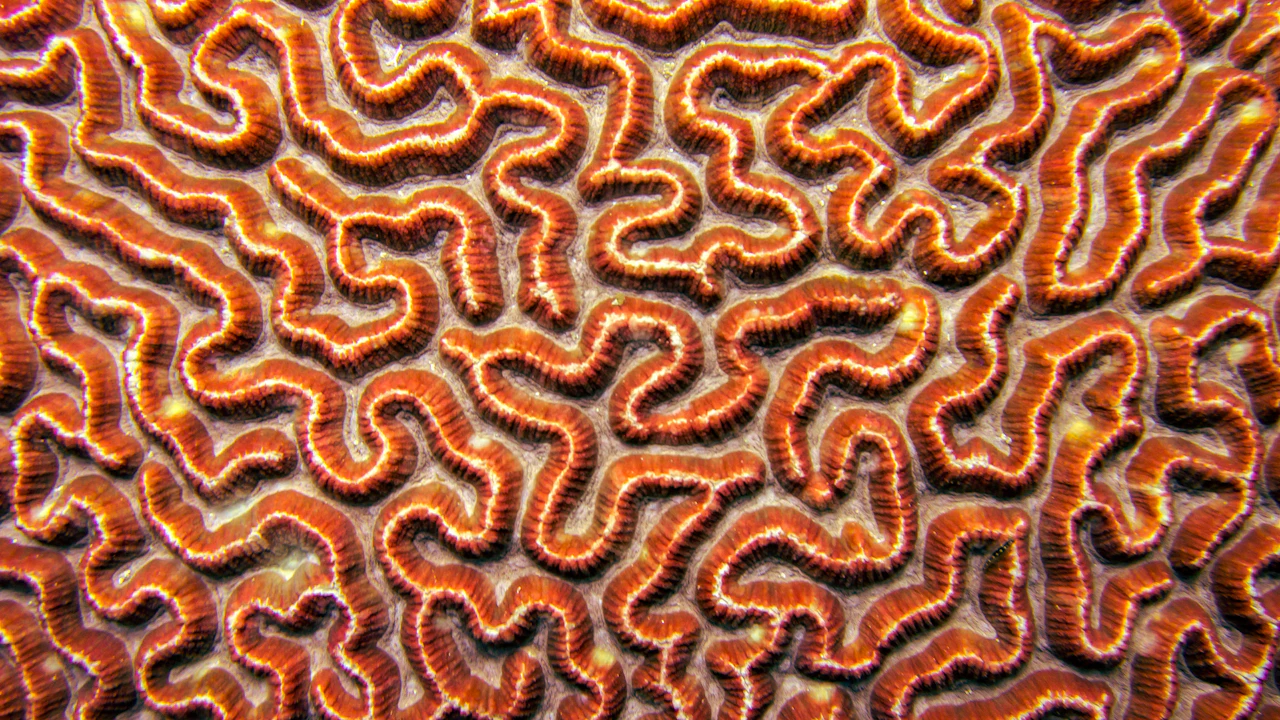
Brain corals are the big rounded heads with maze-like grooves that make almost every snorkeler point and stare. These brain coral facts answer the questions snorkelers and divers ask most: what they are, how old they get, how slowly they grow, and why they matter so much to a reef.
This guide is for snorkelers, divers and curious travelers. Every fact comes from NOAA’s National Ocean Service, the US government’s ocean science agency, so you get the real figures rather than the bigger numbers that float around online.
What are the key brain coral facts?
Quick answer: Brain corals are slow-growing hard corals named for their grooved, brain-like surface. NOAA says they can grow six feet tall and live for up to 900 years, often forming the foundations of reefs. Their closely linked polyps share nutrients, but that also lets disease spread through a colony quickly.
What are brain corals?
On its page What are brain corals?, NOAA points out that they have no brains at all, and that they are found in the Caribbean, Atlantic and Pacific Oceans. The name simply describes the rounded heads and their maze of ridges and grooves.
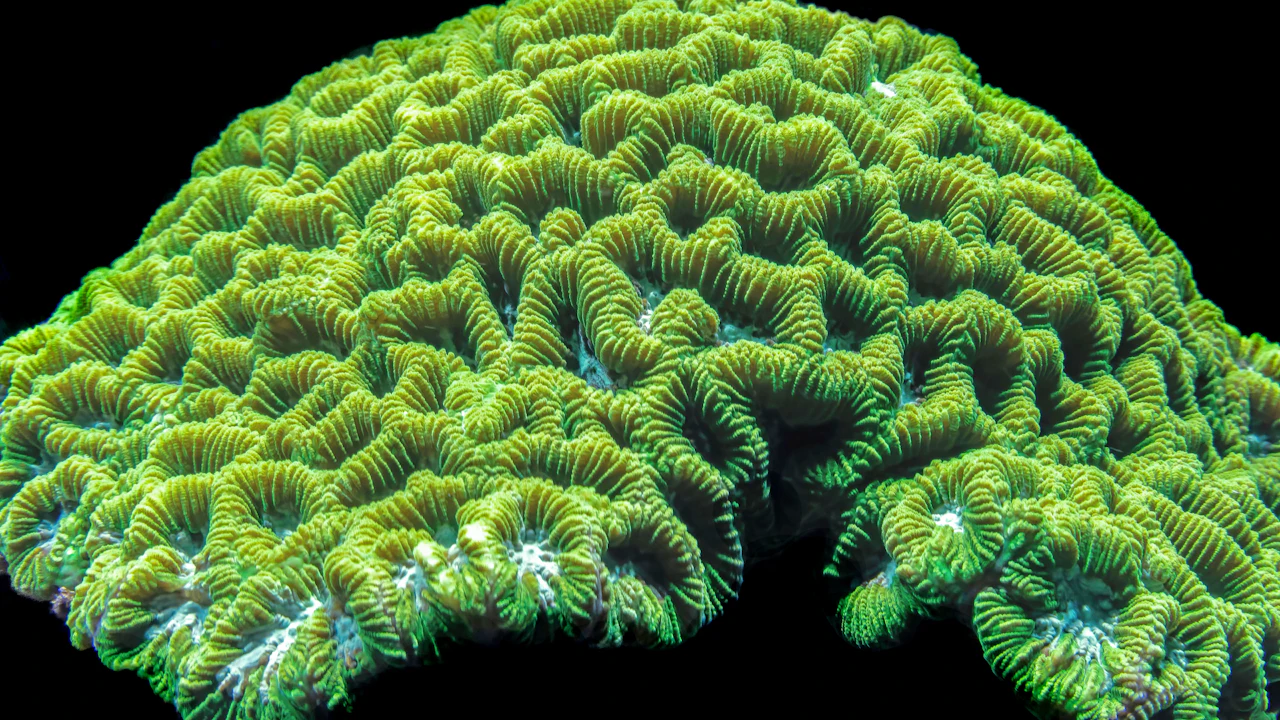
Each head is a colony of polyps, tiny animals that lay down a skeleton of calcium carbonate. NOAA notes that most stony coral polyps average only one to three millimeters across, and that a colony holds millions of them growing on the limestone left by earlier generations.
Polyps that share everything
What sets brain corals apart is how closely their polyps are joined. NOAA says the polyps are highly connected, with tissue that is not separated by skeleton, so they can share nutrients, hormones and oxygen across the colony.
That teamwork has a cost. If even one polyp gets sick, NOAA says, the pathogen can quickly spread to the rest of the colony. We come back to that under threats.
How old is brain coral, and how fast does it grow?
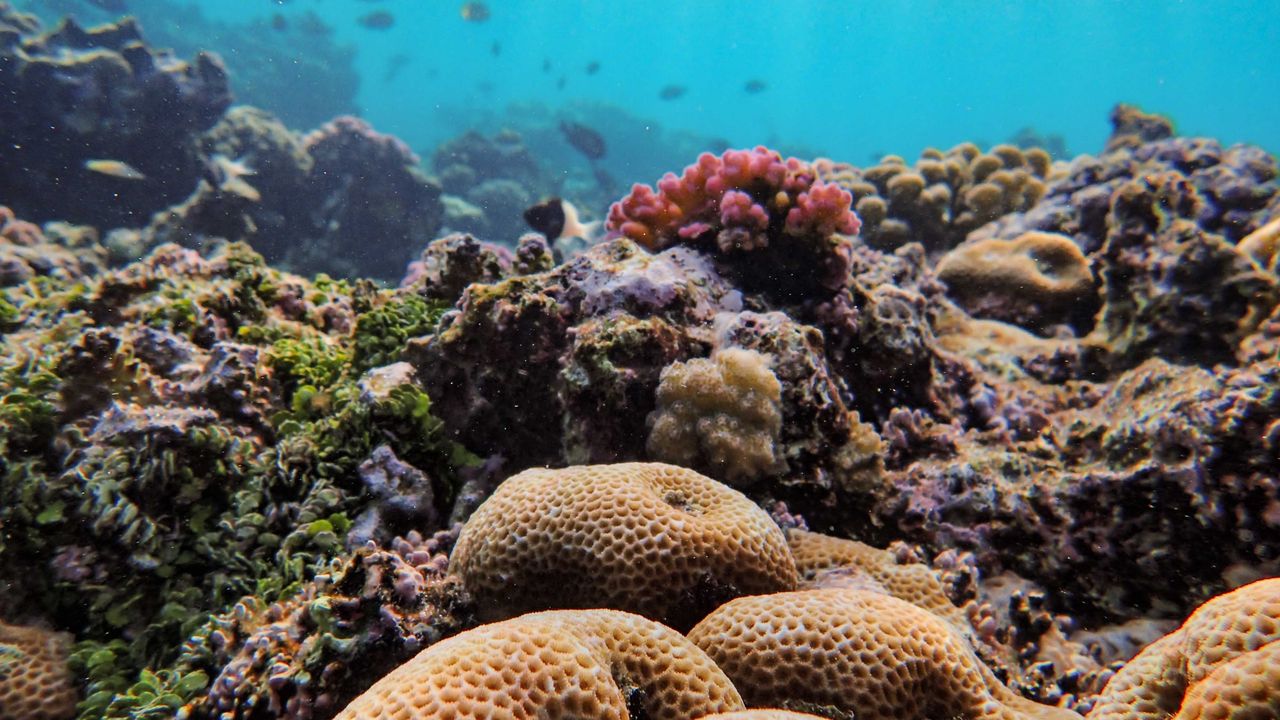
NOAA’s figure is clear: brain corals can grow six feet tall and live for up to 900 years. You will find bigger numbers on some websites, but they rarely cite a source, so we stick with NOAA’s.
That long life goes with slow growth. NOAA calls brain corals a slow-growing species, and its coral tutorial describes massive corals, the ball and boulder shapes, as relatively slow-growing. The same tutorial gives growth rates of 0.3 to 2 centimeters per year for massive corals. Under ideal conditions, NOAA adds elsewhere, some massive species can grow as much as 4.5 centimeters (1.8 inches) a year.
Boulder corals vs branching corals
Brain corals belong to the boulder group, which grows very differently from branching corals such as elkhorn. Our guide to elkhorn coral, a fast-growing reef builder covers the branching side.
| Feature | Massive corals (brain corals) | Branching corals |
|---|---|---|
| Shape | Ball or boulder shaped | Branching |
| Examples | Brain corals | Elkhorn and staghorn |
| Growth rate (NOAA tutorial) | 0.3 to 2 centimeters per year | Up to 10 centimeters per year |
| What NOAA highlights | Stable shape: strong waves rarely damage them unless they are knocked loose | Faster growth than massive corals |
| Brain coral figures | Up to six feet tall and up to 900 years old | See our elkhorn coral guide |
Why brain corals matter to the reef
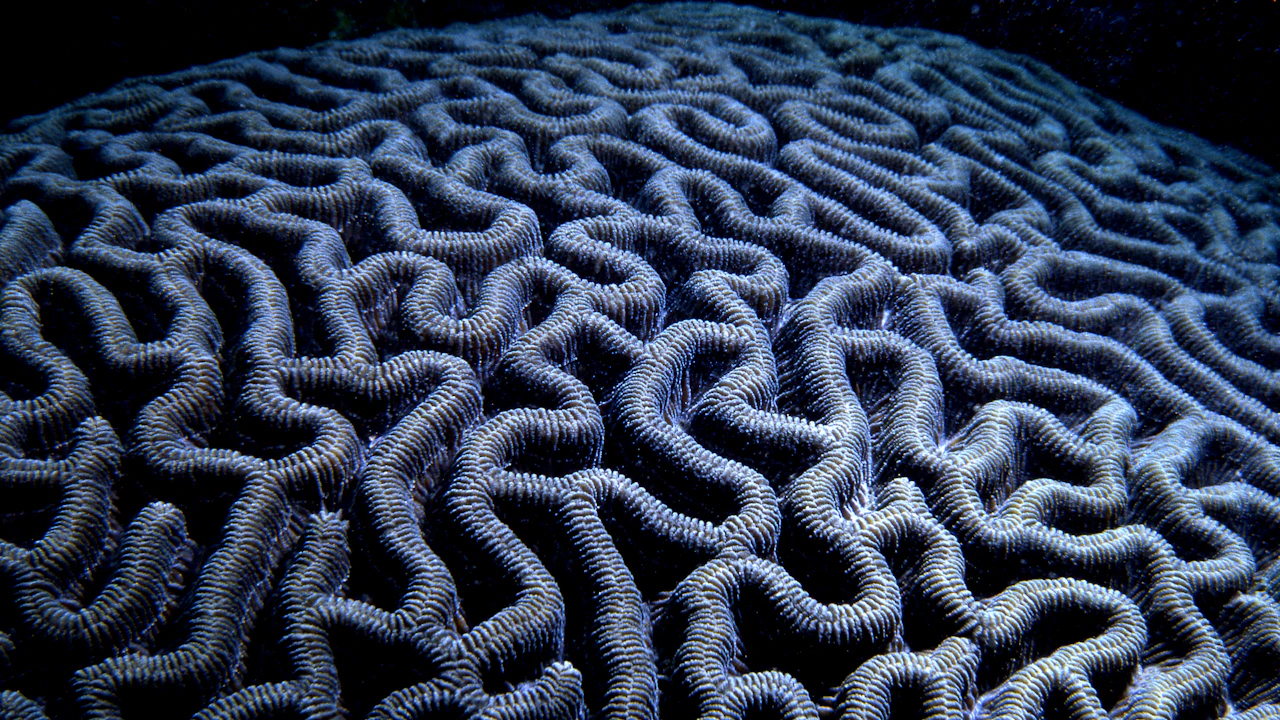
NOAA says brain corals often act as foundations for reefs. Stony corals in general are primarily responsible for laying the foundations of reef structures, and the slow, solid boulders give the rest of the reef something to grow on.
They also protect the shore. NOAA notes that coral reefs can absorb up to 97 percent of the wave energy during storm events, and brain corals help build the structures that do this work. The reef in front of a coastline is a natural breakwater.
Reefs take a very long time to build. NOAA’s coral tutorial says it can take up to 10,000 years for a coral reef to form, and that barrier reefs and atolls can take from 100,000 to 30 million years to fully form. Slow growers like brain corals are a big part of that patient work.
A home for reef life
Brain corals are hard corals, so they are part of the stony framework, while the bendy fans and whips around them are soft corals that do not build reefs. Our guide to sea fans and soft corals on the reef explains the difference.
Brain corals also take part in the reef’s mass spawning. NOAA’s coral tutorial shows a symmetrical brain coral releasing gametes during spawning, and our article on coral spawning on the Belize reef covers when and how that happens.
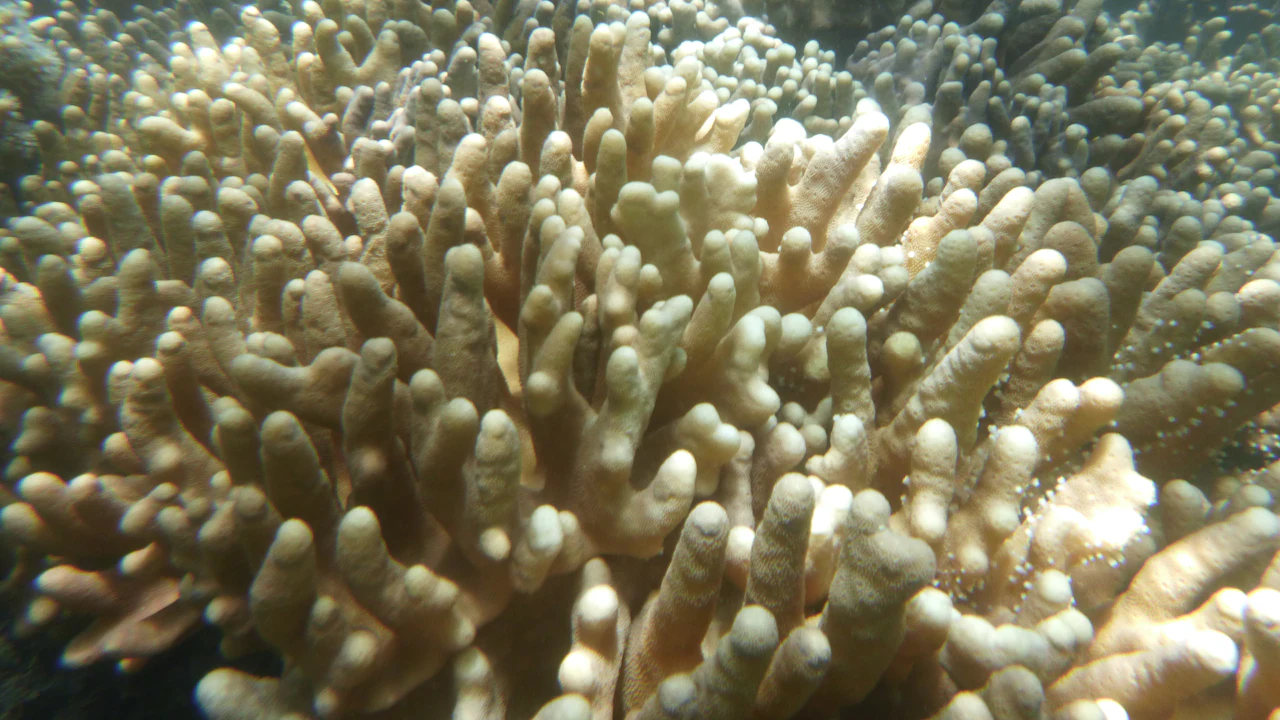
Brain coral threats: bleaching and disease
NOAA says some species of brain corals suffer mass mortalities from diseases such as black band disease and white plague, and from thermal bleaching. The shared tissue that helps a healthy colony is the same route a disease can travel.
What bleaching means
Corals live with algae in their tissue that feed them and give them color. NOAA’s page Is coral bleaching the same as coral death? explains that when water is too warm, corals expel these algae and turn completely white. A bleached coral is not dead and can recover if the stress is mild, but it is more likely to catch a disease.
Warming ocean temperature is the leading cause, NOAA says, with runoff, pollution and very low tides also playing a part. Our guide to coral bleaching in Belize and how divers can help goes into the causes and recovery.
How you can help
NOAA’s advice for reef visitors is practical. It suggests sun-protective clothing instead of relying on sunscreen, keeping hands, feet and fins off corals, and avoiding anchoring near live coral. A few habits on every dive and snorkel put that into practice.
- Never touch, stand on or rest a fin on a brain coral, however solid it looks.
- Keep gauges and hoses tucked in so they do not scrape the coral.
- Choose clothing for sun protection and follow our reef etiquette guide for divers.
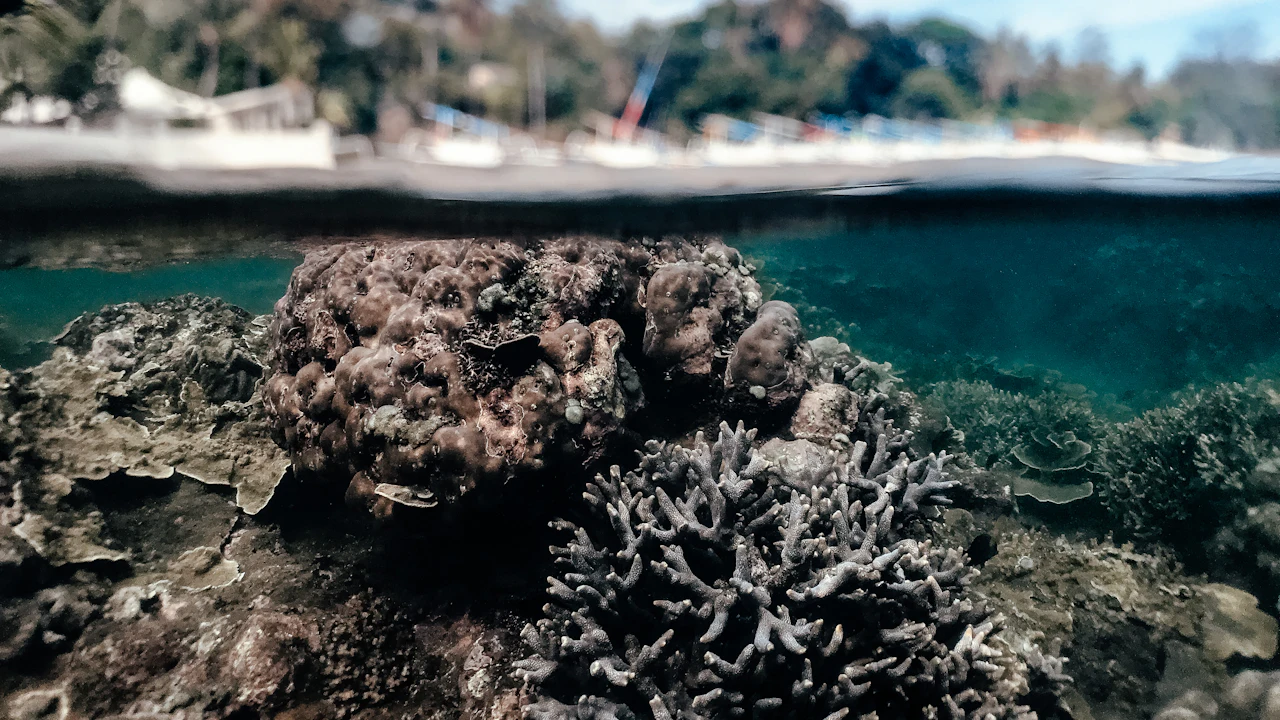
Seeing the reef with White Sands Dive Shop
White Sands Dive Shop is a 5 Star PADI Dive Facility on the beach in San Pedro, overlooking what our homepage calls the largest barrier reef in this hemisphere. That reef is protected as part of the Belize Barrier Reef Reserve System World Heritage site. Our guide to diving on Ambergris Caye covers the daily dive and snorkel trips.
The shop is owned and operated by PADI IDC Staff Instructor Elbert Greer. Student Vivake K. Bhalla described him as “an outstanding instructor with a lot of experience and useful tips”, and there is more in the letters from Elbert’s dive students.
Brain coral facts: your questions answered
How old is brain coral?
NOAA says brain corals can live for up to 900 years. It also describes them as a slow-growing species.
How big do brain corals get?
According to NOAA, brain corals can grow six feet tall.
Is brain coral alive?
Yes. Each head is a colony of tiny animals called polyps living on a stony skeleton they build themselves. NOAA notes the polyps are closely connected and share nutrients and oxygen.
What diseases affect brain corals?
NOAA names black band disease and white plague, along with thermal bleaching, as causes of mass mortalities in some brain coral species.
Can I touch brain coral?
No. It looks like rock, but the surface is a living layer of polyps, so keep your hands, knees and fins off it.
Want to see the reef for yourself? Talk to Elbert
Tell us your travel dates and whether you snorkel or dive, and we can help you plan your reef days. Email Elbert at elbertgreer@fastmail.fm or call 011 (501) 226 2405.