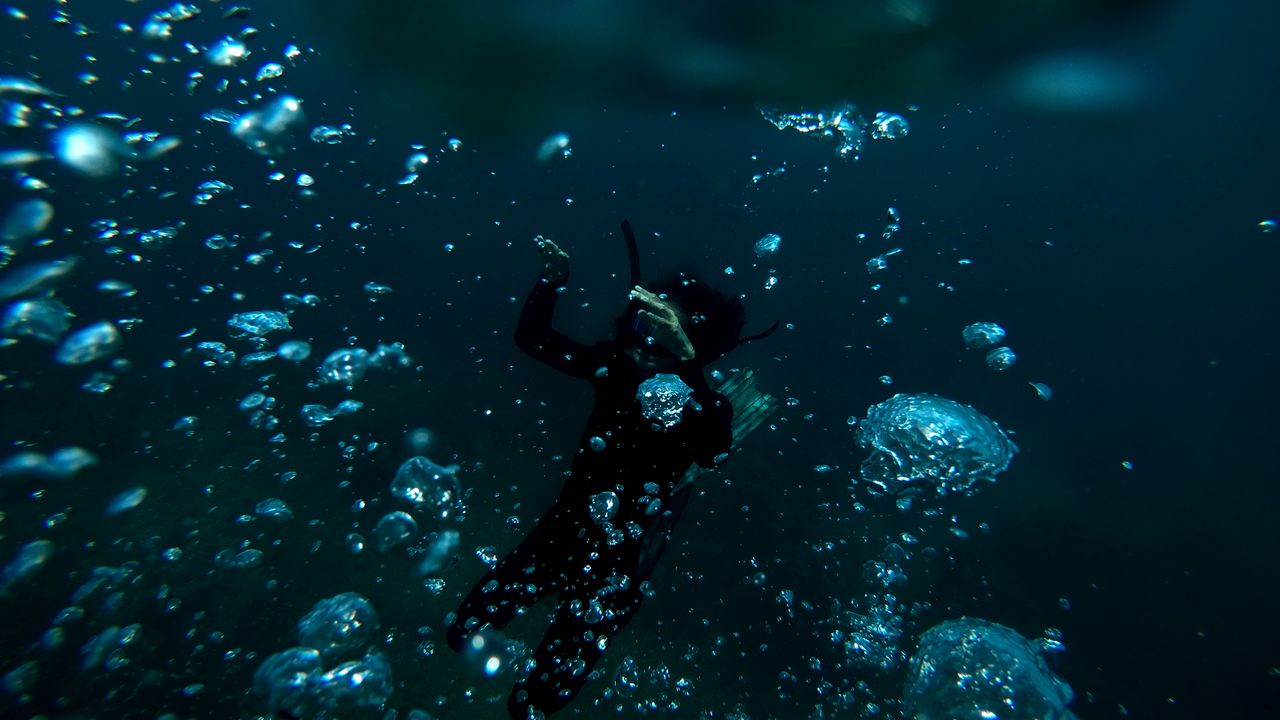
Most people who try scuba for the first time are surprised by one thing: breathing underwater feels almost normal. The regulator gives you air when you inhale, and your bubbles drift away when you exhale. Learning how to breathe while scuba diving is less about a special trick and more about a few calm habits.
This guide is for first-time divers, students preparing for a course and certified divers who feel they breathe too fast or run low on air early. We cover the one rule you must never break, the slow and deep rhythm that works best, and how your breath changes your buoyancy and your air supply.
How do you breathe while scuba diving?
Quick answer: Breathe in and out through your mouth with slow, deep, continuous breaths, and never hold your breath. PADI calls breathing all the time the number one rule in scuba diving, because pressure changes with depth. A relaxed rhythm also uses less air and makes it easier to stay neutrally buoyant.
The most important rule: never hold your breath
Every scuba course starts with the same rule. In its guide to how you breathe while scuba diving, PADI says the number one rule is that you always breathe while scuba diving. You keep breathing from the moment you descend until you are back at the surface.
The reason is pressure. As you change depth, the water pressure around you rises and falls, and PADI explains that a held breath can cause your lungs to over-expand or contract. Breathing continuously lets your lungs work normally while the pressure changes around you.
One more myth worth clearing up: the tank does not hold pure oxygen. PADI notes that divers breathe air, roughly 21 percent oxygen and 79 percent nitrogen, because pure oxygen would become toxic under pressure.
How to breathe while scuba diving: the basic rhythm
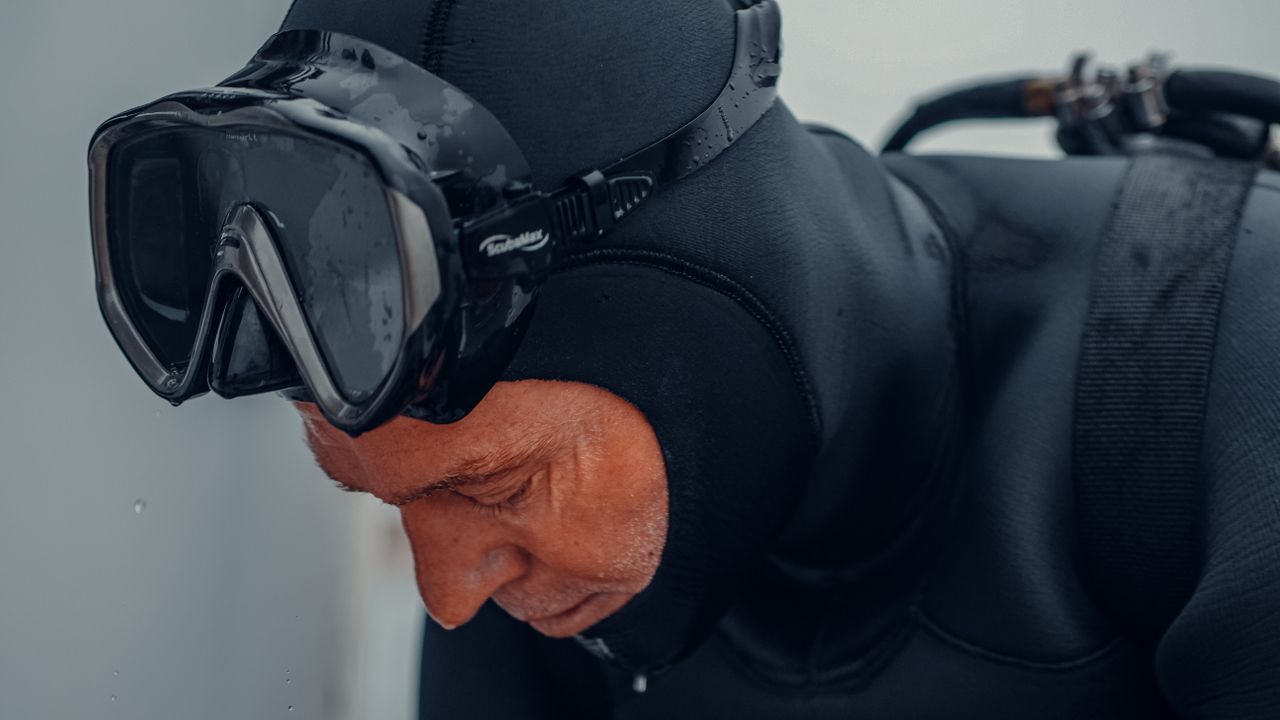
Your mask covers your nose, so you breathe in through your mouth. PADI also advises breathing out through your mouth, because exhaling through your nose can make your mask leak. If that feels odd at first, it soon becomes automatic.
The pattern PADI recommends is slow and rhythmic, breathing deeply but without straining. It should never feel like you are sucking air out of the tank. Here are the habits that help most new divers:
- Breathe in slowly and fully, then let the breath out just as slowly.
- Keep the cycle going without long pauses; never skip breaths to save air.
- Relax your jaw and shoulders so the regulator sits lightly in your mouth.
- Move slowly underwater, since hard kicking makes you breathe faster.
PADI points out that stress often makes breathing fast and shallow, and that proper breathing eases stress. In its piece on breathing properly by blowing bubbles underwater, it adds that slow, deep breaths make gas exchange more efficient.
Breathing and buoyancy
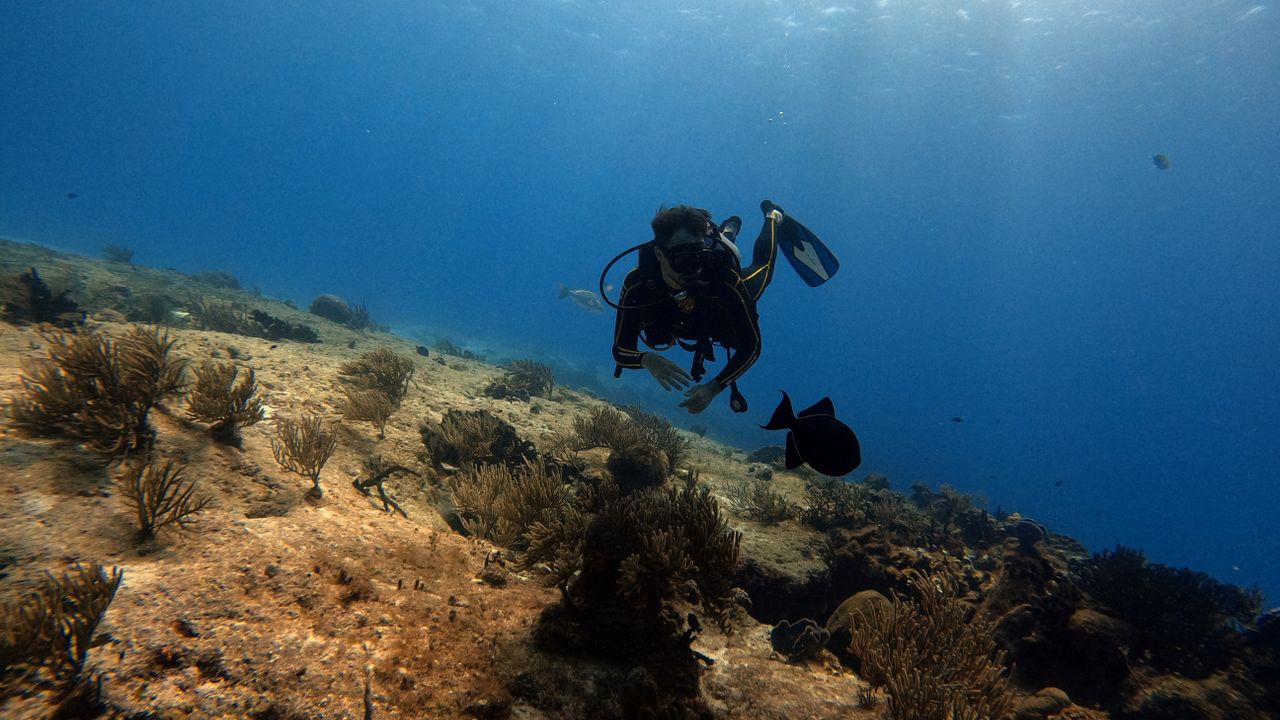
Your lungs work like a small balloon in the middle of your body. PADI explains that when you inhale you slowly start to rise, and as you exhale you start to sink back down. Once your weights and BCD are set, your breathing becomes your fine control.
That is why new divers often bob up and down. A huge breath lifts you, and holding air in your lungs makes it hard to stay down. Steady breathing keeps you level, which is the heart of buoyancy control tips for new divers.
| Breathing pattern | Effect on buoyancy | Effect on air use | How it feels |
|---|---|---|---|
| Slow, deep and continuous | Stable, easy to stay level | Lower, longer dives | Calm and comfortable |
| Fast and shallow | Small, jerky changes | Higher | Short of breath, tense |
| Very large breaths held in | You drift upward | Wasteful | Floaty, hard to stay down |
| Breath held or skipped | Unpredictable | Not a safe way to save air | Never acceptable on scuba |
Breathing and air use
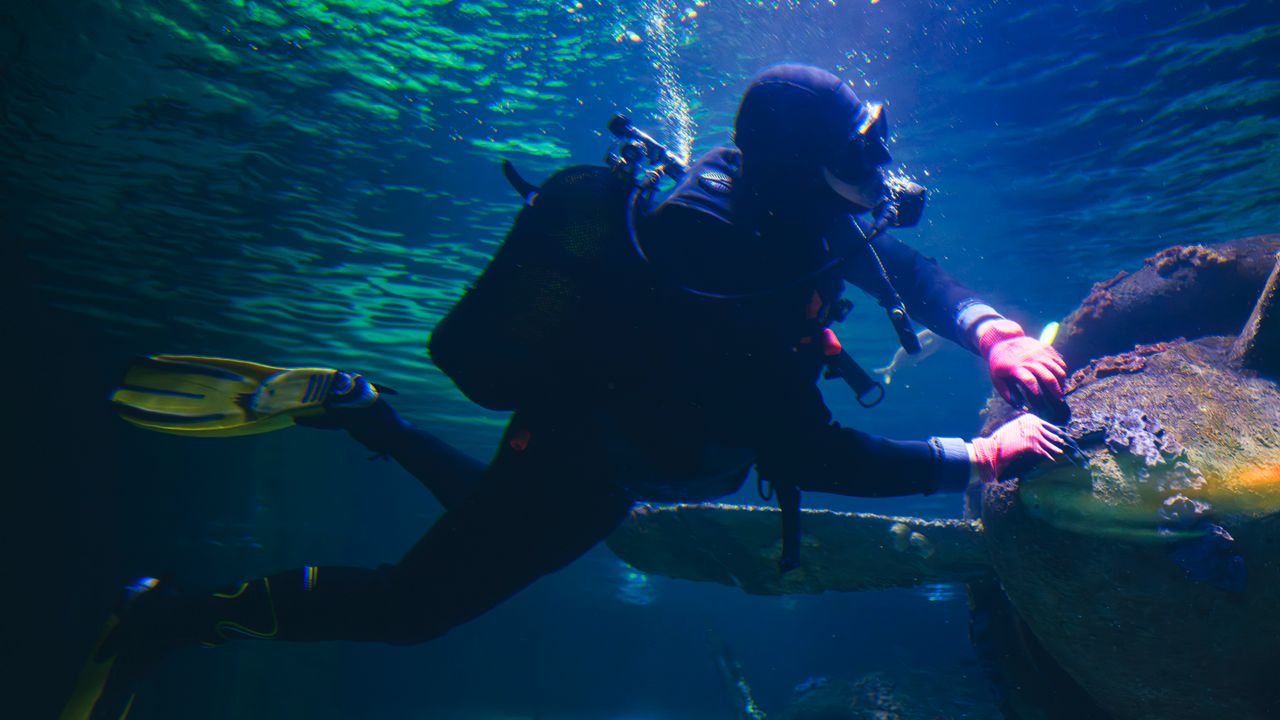
PADI says a slow yet deep breathing pattern results in lower air consumption, which means more time underwater. Fast breathing and stress do the opposite. If you are often the first in your group to run low on air, your breathing is usually the place to start.
Buoyancy and breathing feed each other. PADI notes that poor buoyancy leads to extra kicking and effort, which raises your breathing rate and your air use. Our guide to how long a scuba tank lasts underwater explains the other factors, such as depth and tank size.
Air use improves with experience. Most divers find that as they relax, their breathing slows on its own and their dives get longer.
A calming breath at the surface
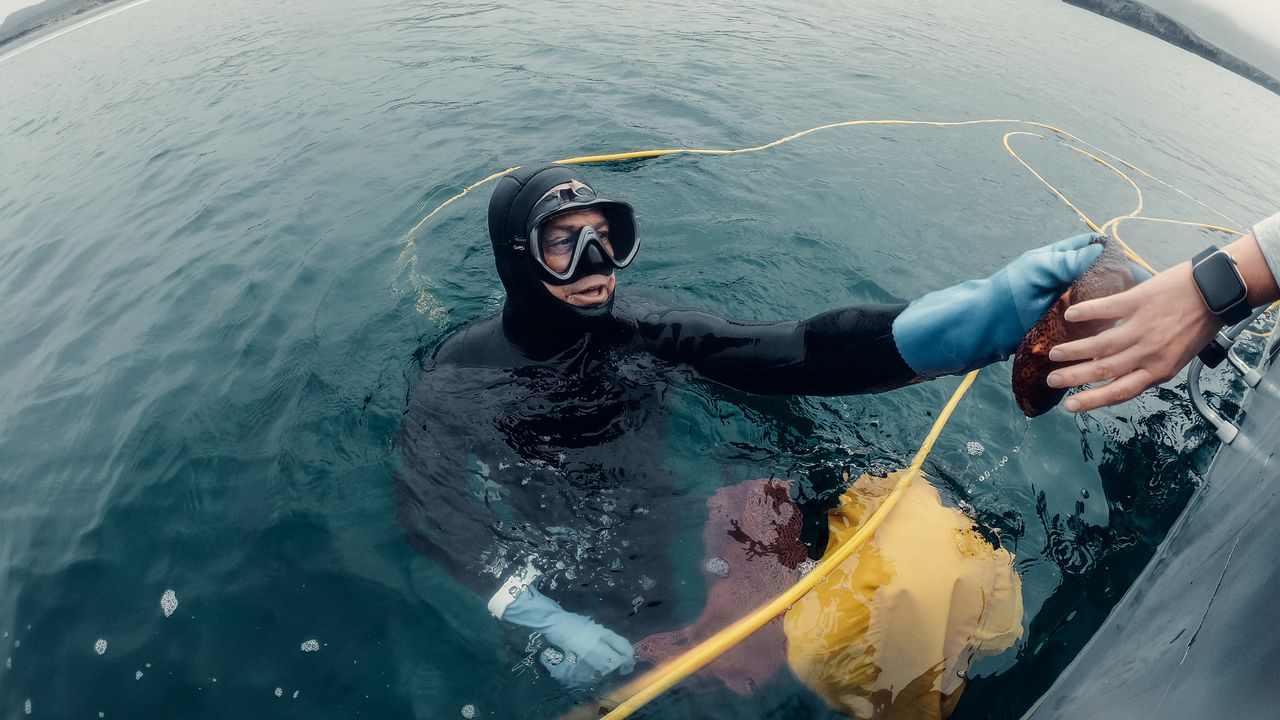
Good underwater breathing starts before you go down. Once you are in the water, take a moment to breathe slowly from your regulator at the surface before you descend. A few calm breaths with your face in the water let you settle and check that everything feels right.
If your heart is racing, wait until your breathing slows before you start down. Rushing a descent while breathless only makes the first minutes harder. If nerves are part of the picture, our guide to scuba diving with anxiety and calm habits goes further.
If your regulator comes out of your mouth
The no-breath-holding rule still applies if your regulator slips out. You blow small bubbles while you get it back, so you are never holding air in your lungs. Our guide to regulator recovery when scuba diving walks through the skill you learn in training.
Learning to breathe with an instructor
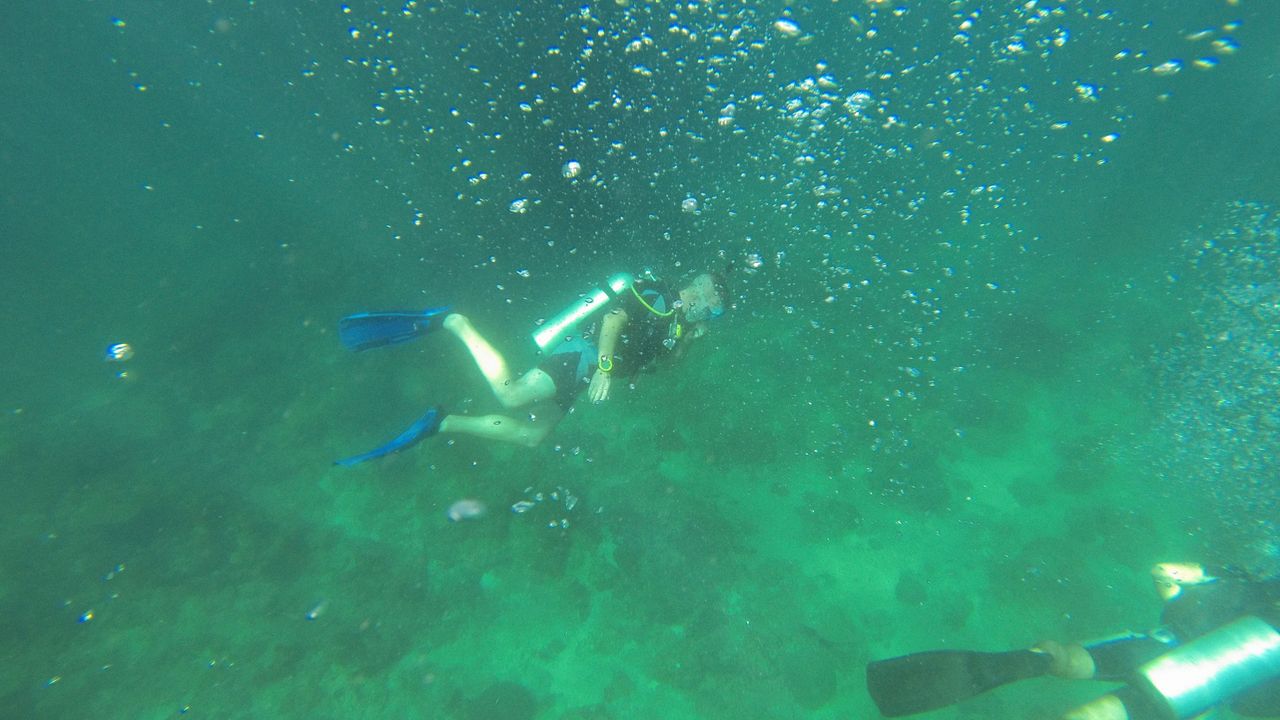
Reading about breathing helps, but the habit forms in the water with someone watching. White Sands Dive Shop is a 5 Star PADI Dive Facility on the beach in San Pedro, owned and operated by PADI IDC Staff Instructor Elbert Greer. Our guide to learning to dive on Ambergris Caye compares every first step.
After a refresher course with Elbert, Minette Layne wrote: “I was so panicked and you really calmed me down”. You can read her full letter and others in the letters from Elbert’s dive students. Each course is listed with current course prices on our Water Sports page.
How to breathe while scuba diving: your questions answered
Can you breathe through your nose while scuba diving?
No. Your mask covers your nose, so you breathe in through your mouth, and PADI advises breathing out through your mouth too, since exhaling through your nose can make your mask leak.
Why should you never hold your breath while scuba diving?
Pressure changes as you change depth. PADI explains that a held breath can cause your lungs to over-expand or contract, so you always keep breathing.
Is the air in a scuba tank pure oxygen?
No. Recreational divers breathe air, roughly 21 percent oxygen and 79 percent nitrogen. PADI notes that pure oxygen would become toxic under pressure.
How can I make my air last longer?
Breathe slowly and deeply, move slowly and work on your buoyancy. PADI says a slow yet deep breathing pattern lowers air consumption, while extra kicking raises it.
Does breathing affect buoyancy?
Yes. Your lungs act like a small balloon: you rise slightly as you inhale and sink slightly as you exhale, so steady breathing keeps you level.
Ask Elbert about your first breaths underwater
If breathing on a regulator is what worries you, tell us when you get in touch and we can talk through which first step suits you. Email Elbert at elbertgreer@fastmail.fm or call 011 (501) 226 2405.