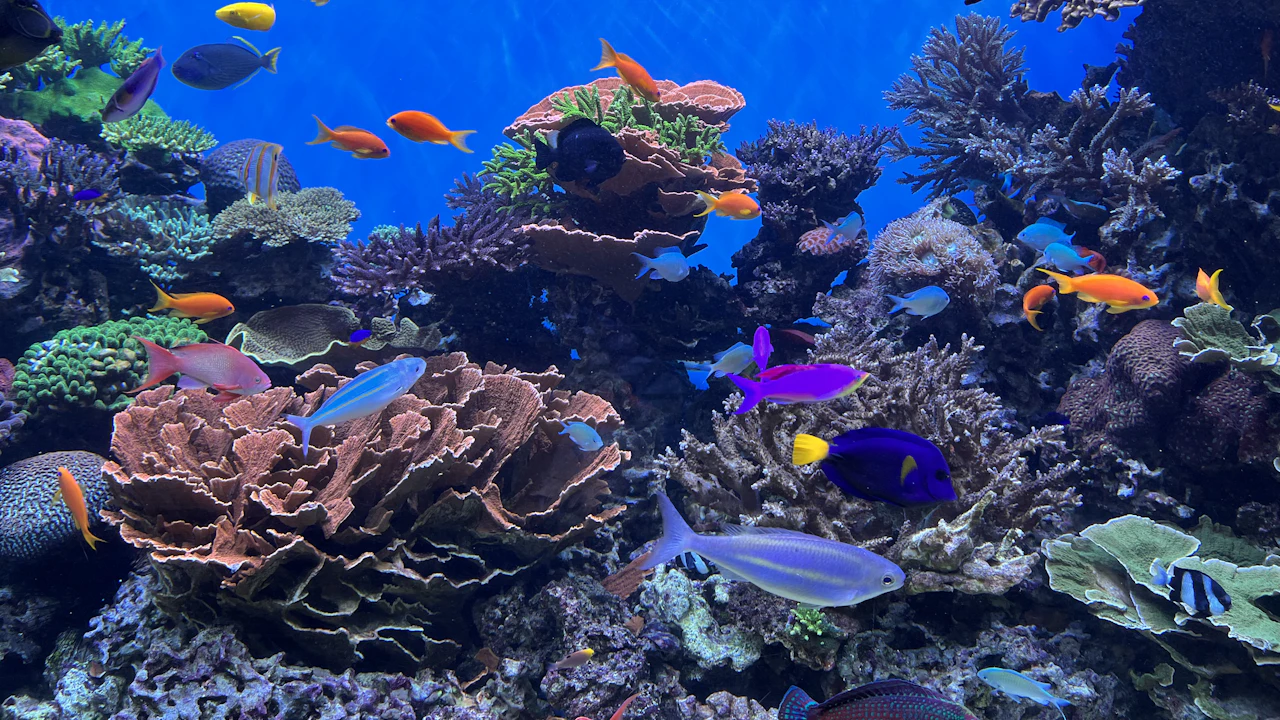
Your first look at a Caribbean reef can feel like a crowd scene: hundreds of fish, dozens of colors, and no idea what any of them are called. This reef fish identification guide gives you a simple method to put names to what you see, whether you snorkel or dive.
It is written for beginners, families and new divers. You do not need to memorize a book. You need to know where to look: body shape, color pattern, behavior, habitat and family. Once those click, a field guide becomes easy to use.
How do you use a reef fish identification guide as a beginner?
Quick answer: Start with the family, not the species. Note the fish’s body shape, its color pattern (bars, stripes, spots, eye markings), how it behaves and where on the reef it lives. Those four clues usually narrow it to one family, and a regional field guide or photo takes you the rest of the way after the dive.
Start with families, not species
The Caribbean has hundreds of reef fish species, but far fewer families. An expert surveyor interviewed by the Reef Environmental Education Foundation (REEF) put it simply: “Start with learning families. If you know what family a fish is in, it’s so much easier to ID it.” She adds that families are pretty much the same everywhere, even when species change from region to region.
So the first question underwater is not “what is that?” but “what kind of fish is that?” A parrotfish is a parrotfish whether it is blue, green or speckled. Once you know the family, flipping to the right page of a field guide takes seconds.
The four clues for Caribbean reef fish ID
1. Body shape
Shape is the fastest clue because it does not change with light or depth. Ask yourself: is the fish tall and flat like a dinner plate, long and slim like a cigar, heavy and thick-lipped, or small and oval? Look at the mouth too. A pointed snout, a beak or a huge gape each points to a different family.
2. Color pattern
Look for the pattern rather than the exact shade, since colors fade with depth. Note vertical bars, horizontal stripes, spots, a dark band through the eye, a spot near the tail or a bright edge on the fins. Be careful: many reef fish change color as they grow, and some change with sex or mood, so a young fish can look nothing like the adult in your book.
3. Behavior
How a fish acts is often as telling as how it looks. Is it hovering in a school, darting in constant motion, chasing other fish away from a patch of algae, or resting still on the bottom? Does it swim in a pair? These habits are consistent within families and easy to spot from the surface.
4. Habitat
Note where the fish lives: under a ledge, out in open water above the reef, in sand, in seagrass or tucked into branching coral. Our guide to elkhorn coral and the shallow reef it builds explains why branching corals shelter so many small fish.
Common reef fish names and how to spot each family
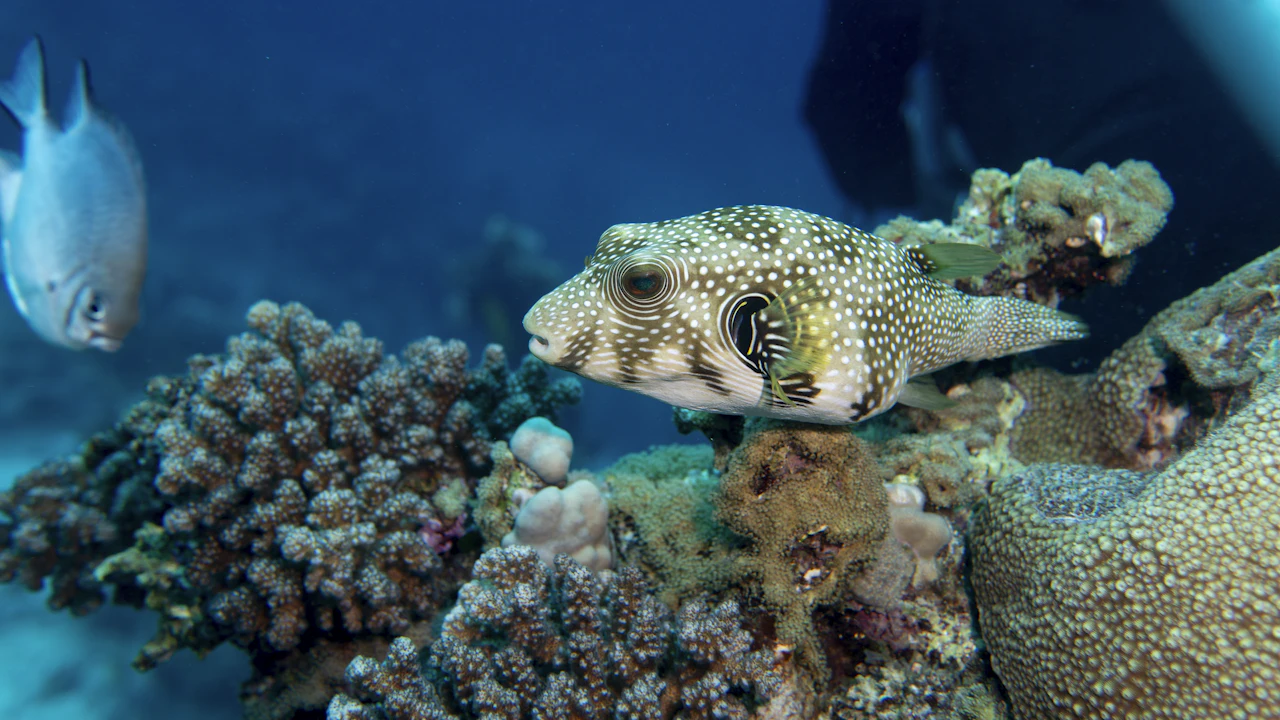
REEF runs free online ID classes for Caribbean fish families, from angelfish and butterflyfish to grunts, snappers, wrasses and damselfish. The table pulls together the main clue for each of the families beginners meet most often.
| Family | Shape | Pattern or feature | Behavior and habitat |
|---|---|---|---|
| Angelfish | Tall, flat, plate-like | Bold colors, long trailing fins | Often in pairs, cruising near sponges and coral |
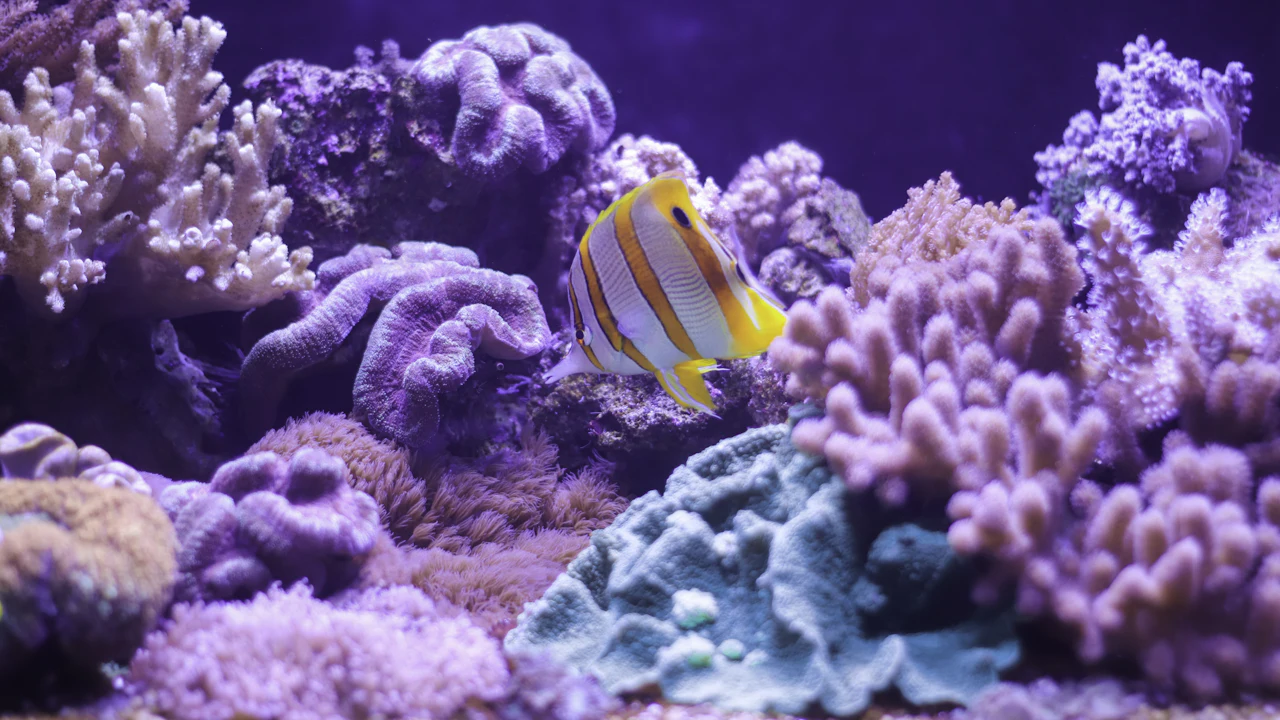
| Butterflyfish | Small, flat, round | Pointed snout, dark eye band or tail spot | Pairs, picking at coral heads |
| Parrotfish | Heavy, oval, large scales | Beak-like mouth; colors change with age and sex | Scraping algae off rock and dead coral |
| Wrasses | Slim, cigar-shaped | Small mouth, often bright bands | Constant motion over the reef |
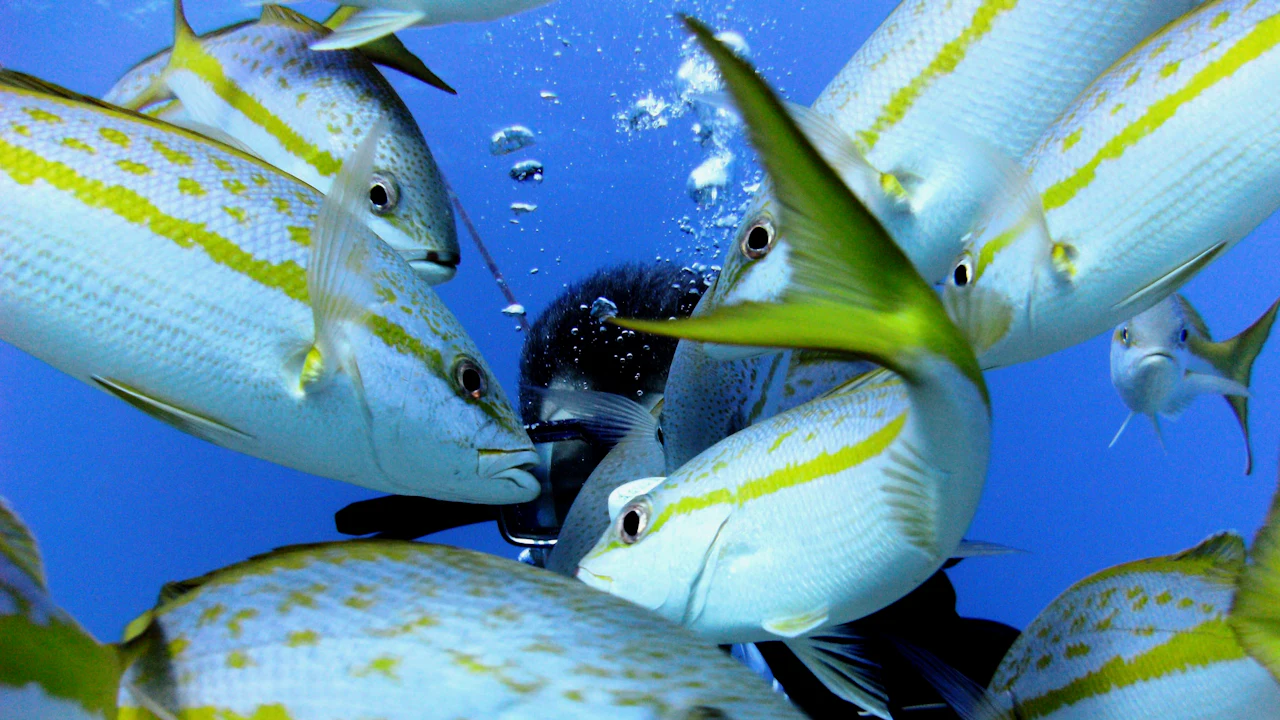
| Grunts | Medium, deep-bodied | Stripes along the body | Schools hovering under ledges by day |
| Snappers | Streamlined, triangular head | Often a stripe or tail color | Loose groups just above the reef |
| Damselfish | Small, oval | Dull adults, often bright juveniles | Guard a small patch and chase intruders |
| Groupers | Thick, heavy, big mouth | Bars or blotches | Rest still on the bottom or in holes |
Two families get mixed up more than any others: parrotfish and wrasses are close relatives. Our guide to parrotfish and their role on coral reefs explains the beak that sets parrotfish apart. For one grouper you should know by name, read about the Nassau grouper and its protected status.
Tools that make fish ID easier
- A regional field guide: pick one written for the Caribbean, Bahamas and Florida, since Pacific books show different species.
- A camera: REEF suggests a small waterproof camera for mystery fish you can look up later. Our underwater photography guide for beginners covers the basics.
- A small light: REEF recommends one for peering into crevices and dark corners.
- A slate and pencil: sketch the shape and note the pattern while it is fresh.
- Your logbook: write down what you saw after each dive. Our guide on how to log a dive shows what to record.
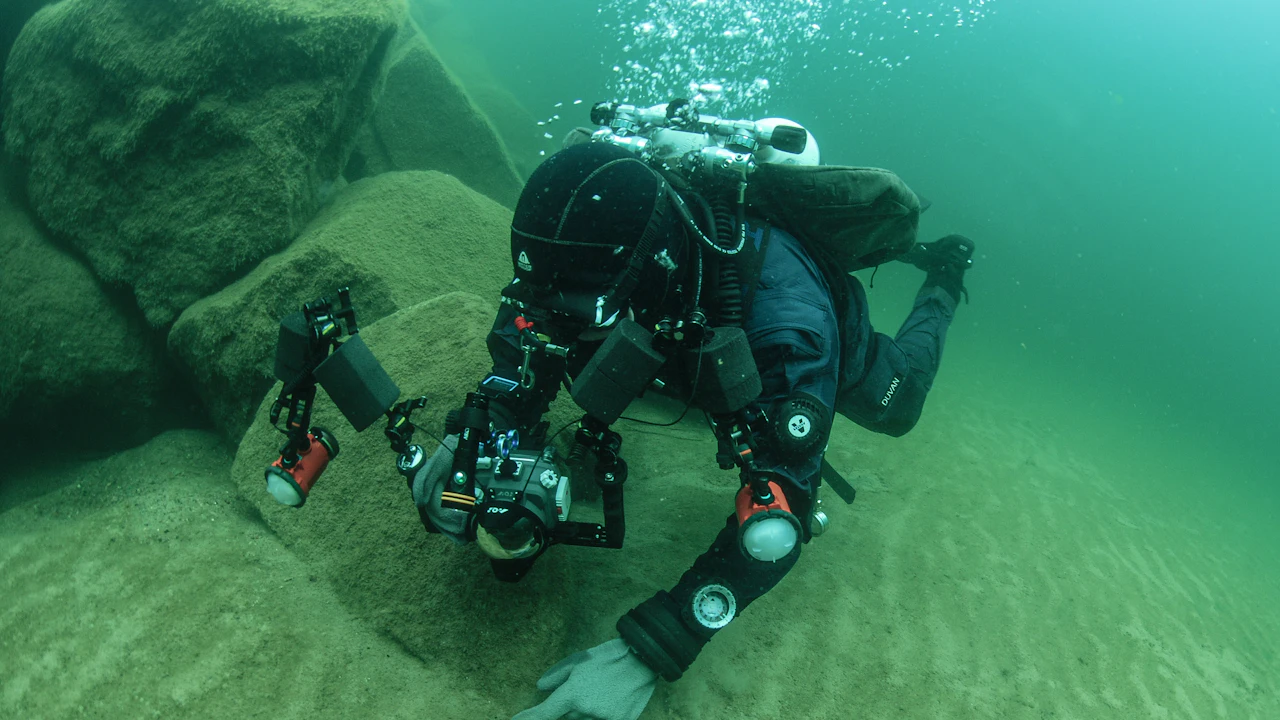
Learn a few scuba diving hand signals for pointing out fish to your buddy, and save the naming for the boat ride home.
Count fish for science: REEF surveys
Once you can name a few dozen fish, your sightings can help researchers. REEF’s Volunteer Fish Survey Project began in 1993, and by 2024 volunteers had logged more than 300,000 surveys. Snorkelers can take part, and no scuba certification is needed.
The method is called the Roving Diver Technique. You swim freely around a site, list every species you can positively identify, and give each a rough count: single, few, many or abundant. Each dive is then entered online.
Practice on the reef with Elbert
White Sands Dive Shop is a 5 Star PADI Dive Facility on the beach in San Pedro, owned and operated by PADI IDC Staff Instructor Elbert Greer. We run daily diving, SCUBA instruction and snorkeling, and our guide to diving on Ambergris Caye covers the reef trips.
Good guiding makes the reef come alive. After her first dives, Susan wrote to Elbert that “you pointed out so many cool things to look at” and the letters from Elbert’s dive students have more. To read up before you go, see our overview of marine life around Ambergris Caye, our snorkeling tips for beginners and our guide to the Hol Chan Marine Reserve dive.
Reef fish identification guide: your questions answered
What is the easiest way to identify reef fish?
Learn the main families first, then use body shape, color pattern, behavior and habitat to place each fish. A photo and a regional field guide finish the job after the dive.
What is the best fish ID book for the Caribbean?
Choose a guide written for the Caribbean, Bahamas and Florida rather than a worldwide or Pacific book. REEF sells regional ID guides and runs free online Fishinars for Caribbean families.
Why does the same fish look different from my book?
Many reef fish change color as they grow, and some change with sex or mood. Colors also fade with depth, so pattern and shape are more reliable than shade.
Can snorkelers help count reef fish?
Yes. REEF’s Volunteer Fish Survey Project is open to snorkelers and divers, and no scuba certification is required.
How can I tell a parrotfish from a wrasse?
They are close relatives. Parrotfish are heavier and have a beak-like mouth for scraping algae, while wrasses are slimmer, with smaller mouths, and stay in constant motion.
Come and meet the fish
Ready to put names to the fish you see? Email Elbert at elbertgreer@fastmail.fm or call 011 (501) 226 2405 to plan your snorkeling or diving.