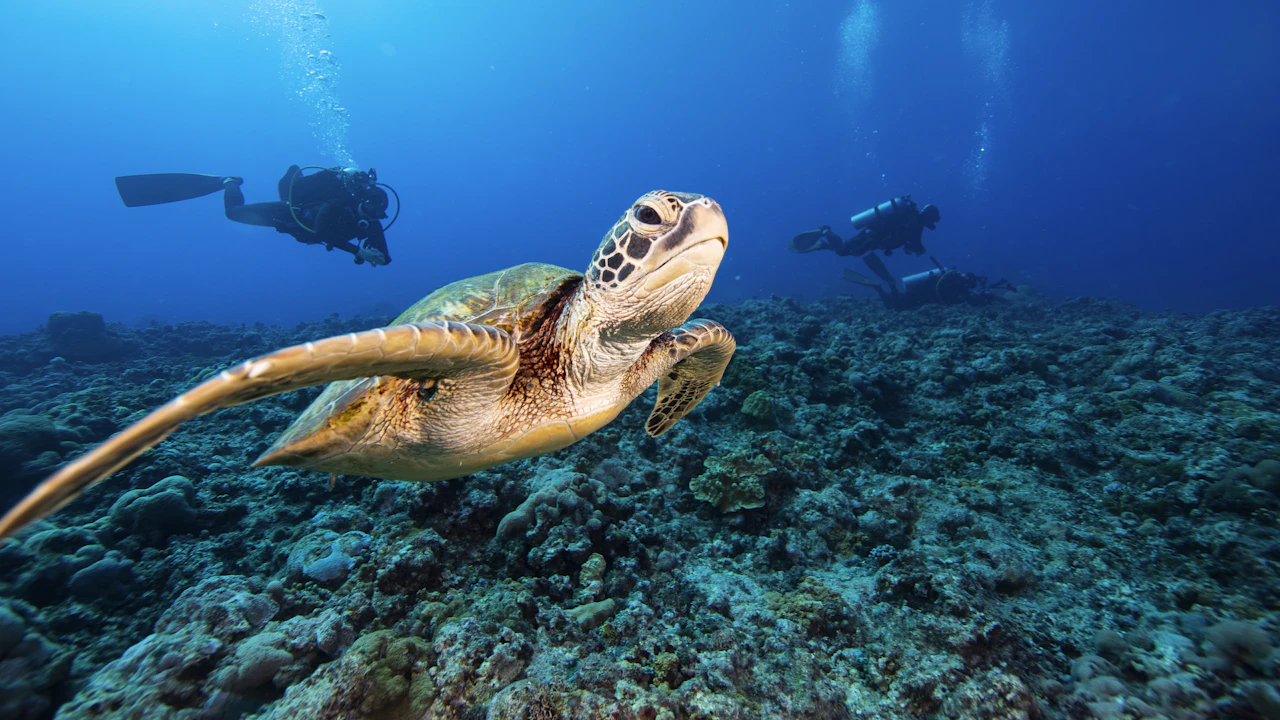
Almost every new diver surfaces wishing they had a picture of that turtle or that school of fish. Then the first photos come back blue, blurry and taken from too far away. This guide to underwater photography for beginners covers the few habits that fix most of that.
It is written for certified divers and confident snorkelers planning a trip with us at White Sands Dive Shop. You will find what to work on first, how to choose gear without overspending, and how to get good shots without harming the reef you came to see.
What matters most in underwater photography for beginners?
Quick answer: Buoyancy and comfort come first, the camera second. Start with simple gear you already know, such as a phone in a tested housing or an action camera. Get close to cut the water between lens and subject, shoot at eye level, and never touch, chase or kneel on the reef for a picture.
Start with buoyancy, not the camera
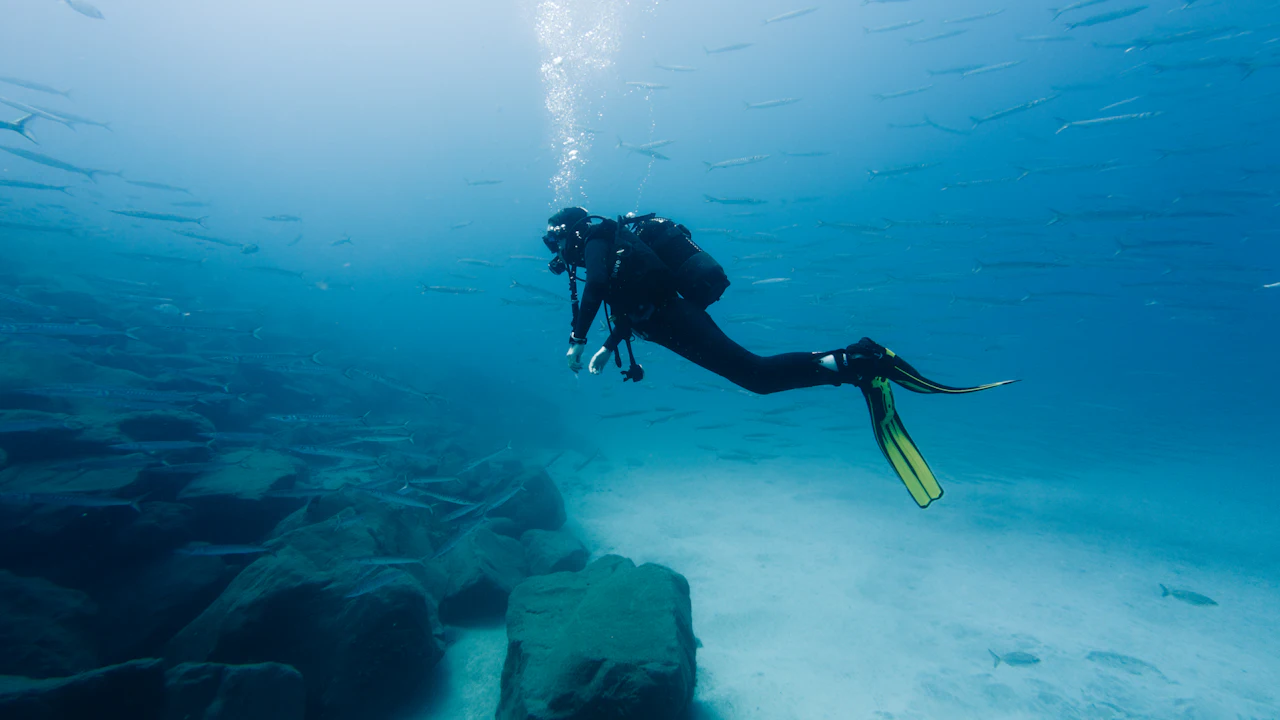
Ocean photographer Raul Touzon puts it neatly in his National Geographic underwater photography tips: you become “a floating platform on which the camera rests.” On scuba, he says, you must master flotation and have control of where you are at all times.
That is why we suggest a few relaxed dives without a camera before you bring one. Once you can hover still, breathe slowly and stay off the bottom without thinking about it, your hands are free to frame a shot. Our buoyancy control tips for divers are a good place to start.
Not certified yet? Our guide to learning to dive on Ambergris Caye compares the routes from a first try dive to full certification. Snorkelers can still take lovely pictures, because Touzon notes that many of his best images were made at the surface, where light is abundant.
Underwater camera tips for your first dives
Get close and stay shallow
NOAA explains that water absorbs the red part of the light spectrum, which is why the ocean looks blue. Every foot of water between you and the subject strips away more warm color. The simplest fix is to get closer, not to zoom in.
Shallow reef in bright sun also helps, since there is simply more light to work with. Midday on a clear, calm day is usually kinder to a small camera than a cloudy late afternoon.
Shoot at eye level and keep moving
In her National Geographic guide on how to take photos underwater, Jennifer Hayes advises getting eye to eye with animals to show their personality. Shooting down on the top of a fish rarely works as well.
She also suggests moving around rather than staying in one spot, using wide shots to show an animal in its setting, and saving macro, or close-up, shots for small creatures. Try one of each on every dive and you will learn fast.
Keep settings and files simple
- Learn your camera on land and in a pool or shallow water before the reef.
- Use the underwater or auto mode at first, then try manual control once the basics feel easy.
- Shoot RAW if your camera allows it, as Hayes does, so you can correct color later.
- Back up your files as soon as you can after each dive day.
Choosing your first underwater camera setup
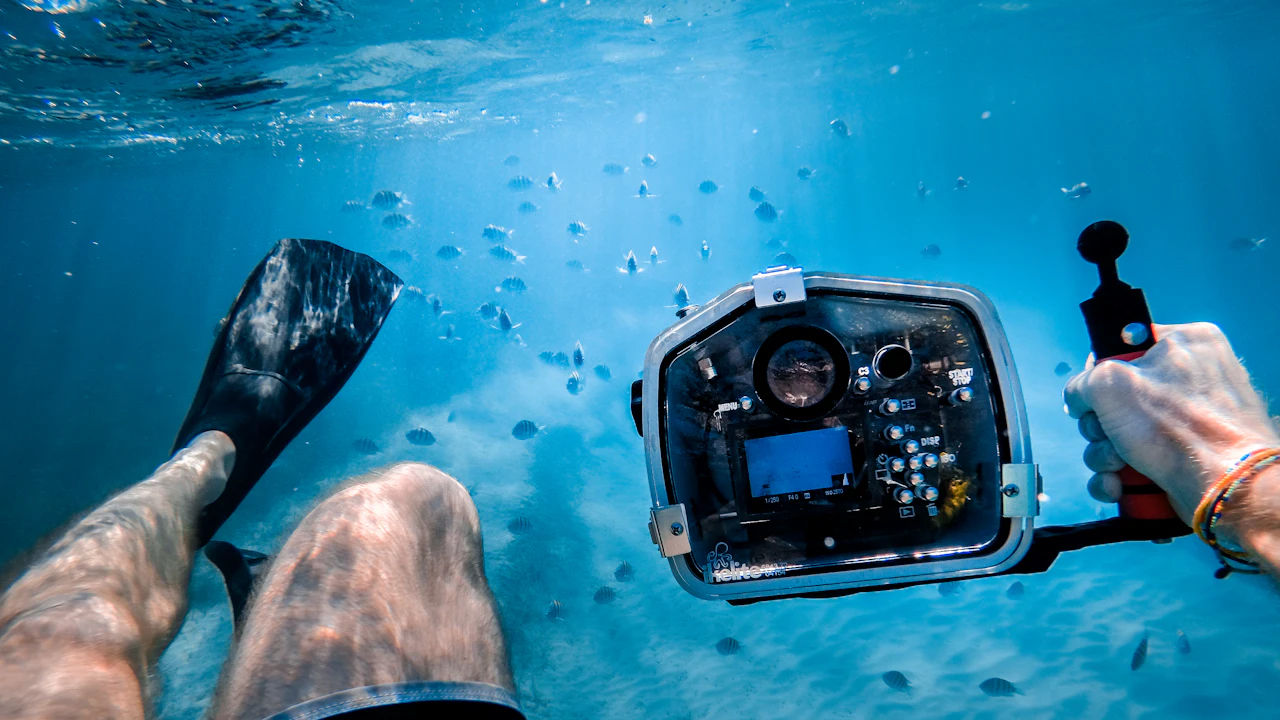
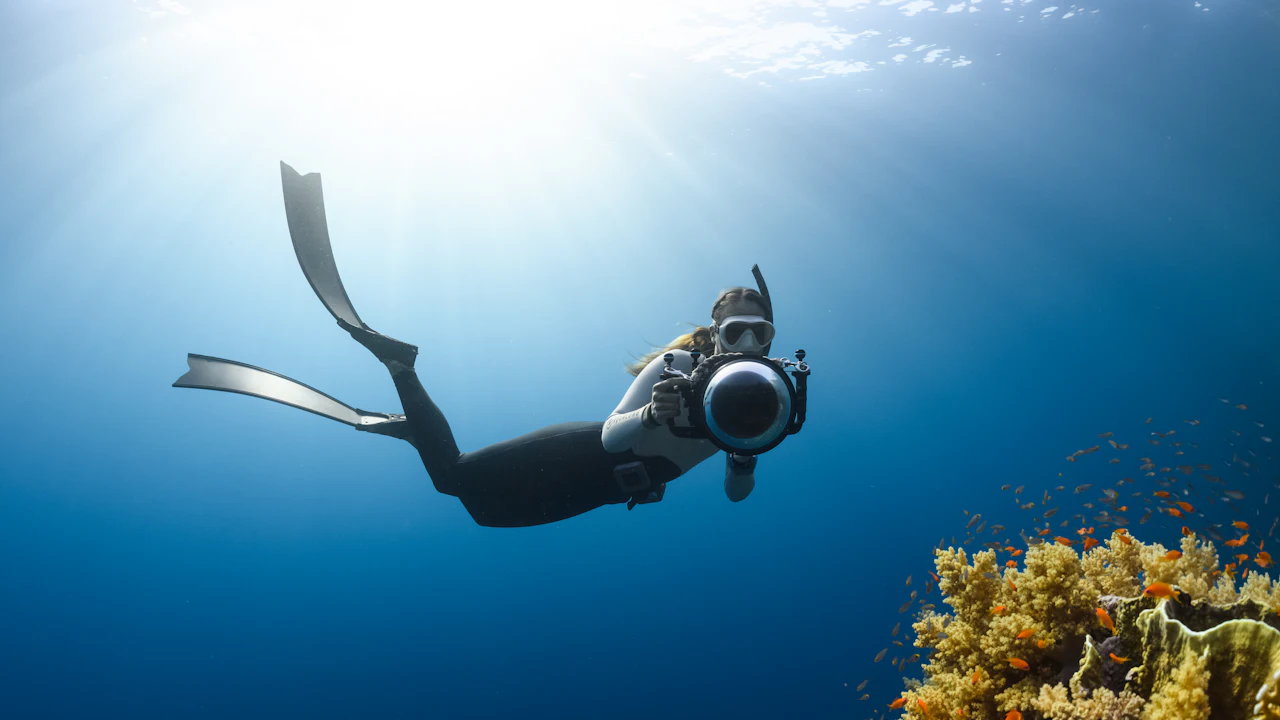
Hayes’s advice is to never underestimate the tools you already have. A phone or action camera in good hands beats an expensive rig used by a nervous diver. The table compares the usual steps up, without prices, since those change constantly.
| Gear tier | Best for | Strengths | Trade-offs |
|---|---|---|---|
| Phone in a waterproof housing | Snorkelers and first-time shooters | A camera you already know; easy sharing | Limited depth; housings can leak, so test it first |
| Action camera | Video, wide scenes, hands-busy divers | Small, tough, simple to mount or clip on | Wide lens makes small fish look tiny; few controls |
| Compact camera in a housing | Divers ready to learn settings | Manual control, macro mode, RAW files | More buttons to learn; housing adds bulk |
| Mirrorless or DSLR with lights | Experienced divers committed to the hobby | Best image quality and lens choice | Heavy and complex; needs very solid buoyancy |
Whatever you choose, check the housing’s depth rating against the dives you plan, and do a test in a sink or pool before the trip. Hayes warns that housings may fail, so be ready for a flood and never trust your only phone to one.
Reef-safe habits behind the lens
A camera makes it easy to forget everything else. Hayes notes that a diver with big equipment, strobes and bubbles is more threatening to animals than a small camera, so the calmer and smaller you are, the more natural the behavior you get to see.
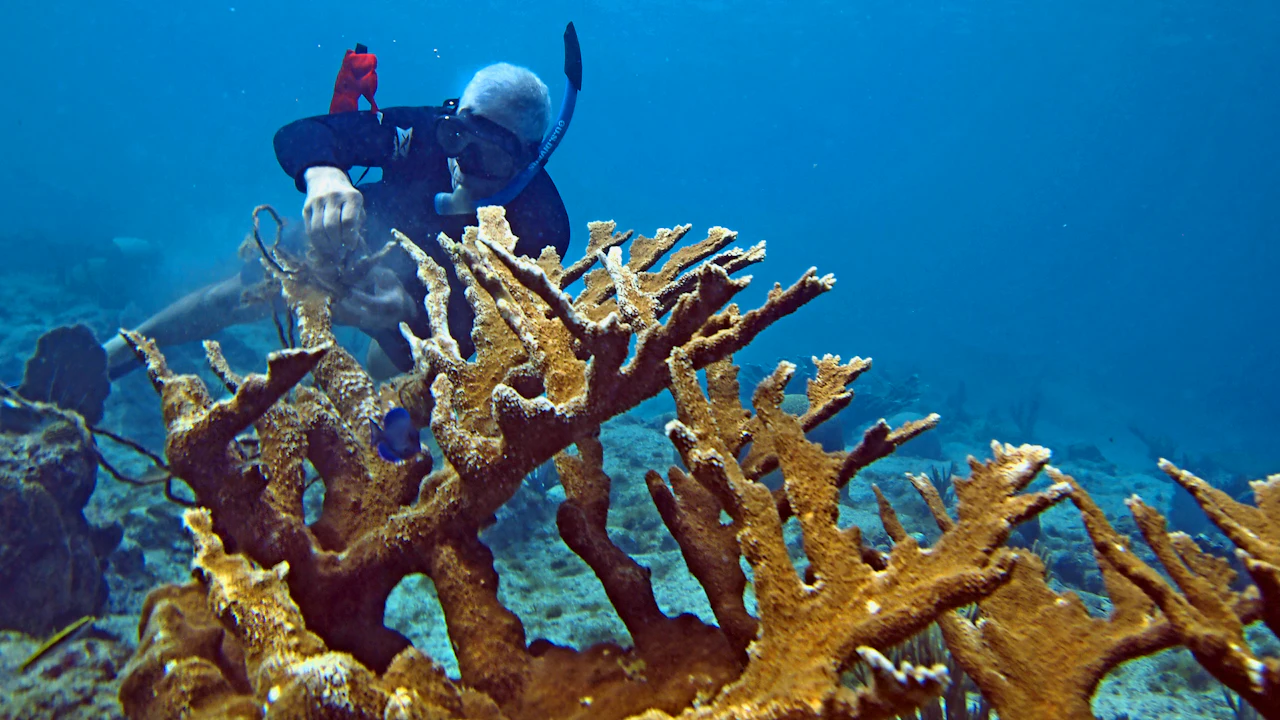
- Never touch, kneel on or hold onto coral to steady a shot.
- Do not chase, corner or move animals into a better pose; wait for them instead.
- Clip loose straps and gauges so nothing drags across the reef.
- Check your air, depth and buddy between shots, not only when you remember.
Our full reef etiquette guide for divers goes further. For ideas on what to photograph, see our guide to marine life on Ambergris Caye reefs.
PADI Digital Underwater Photographer and other next steps
PADI offers a Digital Underwater Photographer specialty course for divers who want structured coaching on camera use and composition. It sits alongside the other PADI specialties covered in our overview of PADI specialty courses in Belize.
Our Water Sports page lists Photography among the specialty courses and as one of the elective dives in the Advanced Open Water course on Ambergris Caye, next to Naturalist, Drift, Boat and Multilevel. Course details and current course prices are on our Water Sports page with every PADI course.
Diving with White Sands Dive Shop
White Sands Dive Shop is a 5 Star PADI Dive Facility on the beach in San Pedro, owned and operated by PADI IDC Staff Instructor Elbert Greer. Local dive and snorkel trips leave at 9:00, with pickup at the dock of your hotel, and our guide to diving and snorkeling on Ambergris Caye describes them.
Patient teaching matters when you are juggling a camera and your gear. Minette Layne wrote: “If it hadn’t been for you and your caring teaching style, I most certainly would have given up and I would have missed out on some of the richest memories of my trip.” Read more in our letters from Elbert’s dive students.
Underwater photography for beginners: your questions answered
Can I use my phone for underwater photos?
Yes, in a proper waterproof housing rated for the depth you plan. Test it before the trip, because housings can leak, and avoid risking the only phone you have with you.
Why do my underwater photos look blue?
Water absorbs red light first, so colors fade the farther your subject is from the lens. Get closer, shoot in shallow, sunny water and correct color afterward if you shoot RAW.
How many dives should I have before bringing a camera?
There is no fixed number. Bring one once you can hover still and control your position without thinking about it, which is the point National Geographic photographer Raul Touzon stresses.
What is the PADI Digital Underwater Photographer course?
It is a PADI specialty course that coaches certified divers on using a camera underwater and composing better shots. Ask us which photography training fits your trip.
Is it OK to touch coral to steady my camera?
No. Touching or kneeling on coral damages it, so work on buoyancy and keep your hands and gear clear of the reef.
Plan your camera dives with us
To ask about dives, courses or the best time to bring your camera along, write to Elbert at elbertgreer@fastmail.fm or call 011 (501) 226 2405. Tell us what you shoot with and how many dives you have, and we will help you plan.