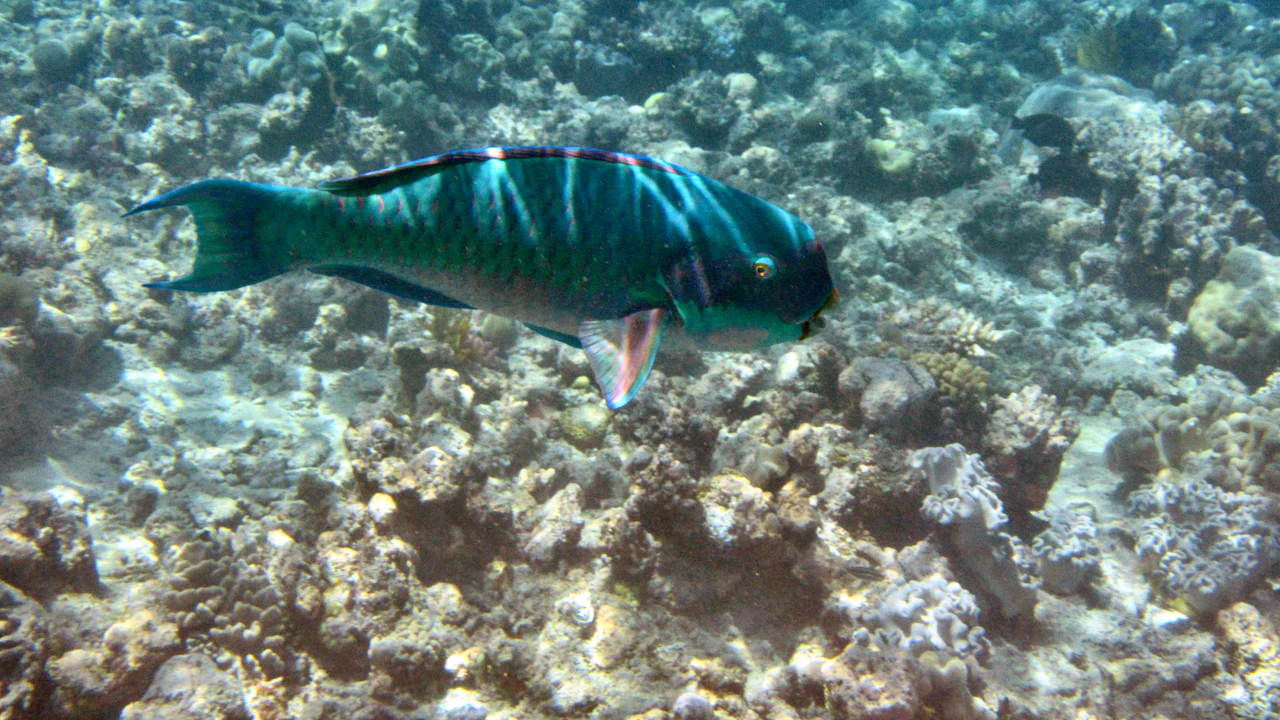
If you have ever watched a colorful fish pecking at bare rock on a reef dive, there is a good chance it was a parrotfish at work. The link between parrotfish and coral reefs is one of the most useful things a new diver can learn, because once you know what these fish are doing, you start to see it on every dive.
This guide is for divers and snorkelers who want to understand what they are looking at. We explain how parrotfish graze algae, why that helps coral, what the science says about parrotfish and sand, how some species sleep in a mucus “sleeping bag”, and how to recognize one underwater. Every general fact here comes from NOAA Fisheries or the Coral Reef Alliance (CORAL).
What is the connection between parrotfish and coral reefs?
Quick answer: Parrotfish use beak-like mouths to scrape algae off rock and dead coral. NOAA Fisheries explains that this keeps algae from overgrowing reef-building corals and opens space where young corals can settle. The reef material they bite off is ground up and excreted as sand, so parrotfish also help make the sand around a reef.
Parrotfish and coral reefs: how grazing keeps reefs healthy
Corals and seaweed (macroalgae) compete for the same space on a reef. NOAA Fisheries notes that when warming events stress and bleach corals, algae can overgrow and smother them. Once algae takes hold of more and more of the seafloor, it becomes harder for corals to regain their footing, and new corals are less likely to find space to settle.
That is where grazers come in. NOAA Fisheries describes parrotfish using their bird-like beaks to scrape away seaweed, or algae, on reefs. In its words, on coral reefs “all parrotfish species are tasked with the important job of keeping algae from overgrowing reef-building corals.”
Why a bite of rock helps new coral
Parrotfish do not just nibble the surface. NOAA Fisheries explains that their hard beaks remove part of the reef surface when they take a bite of algae, which creates new spaces for corals to potentially settle onto. CORAL adds that by nibbling on dead coral, parrotfish aid coral growth and promote the development of new polyps.
Do parrotfish make sand?
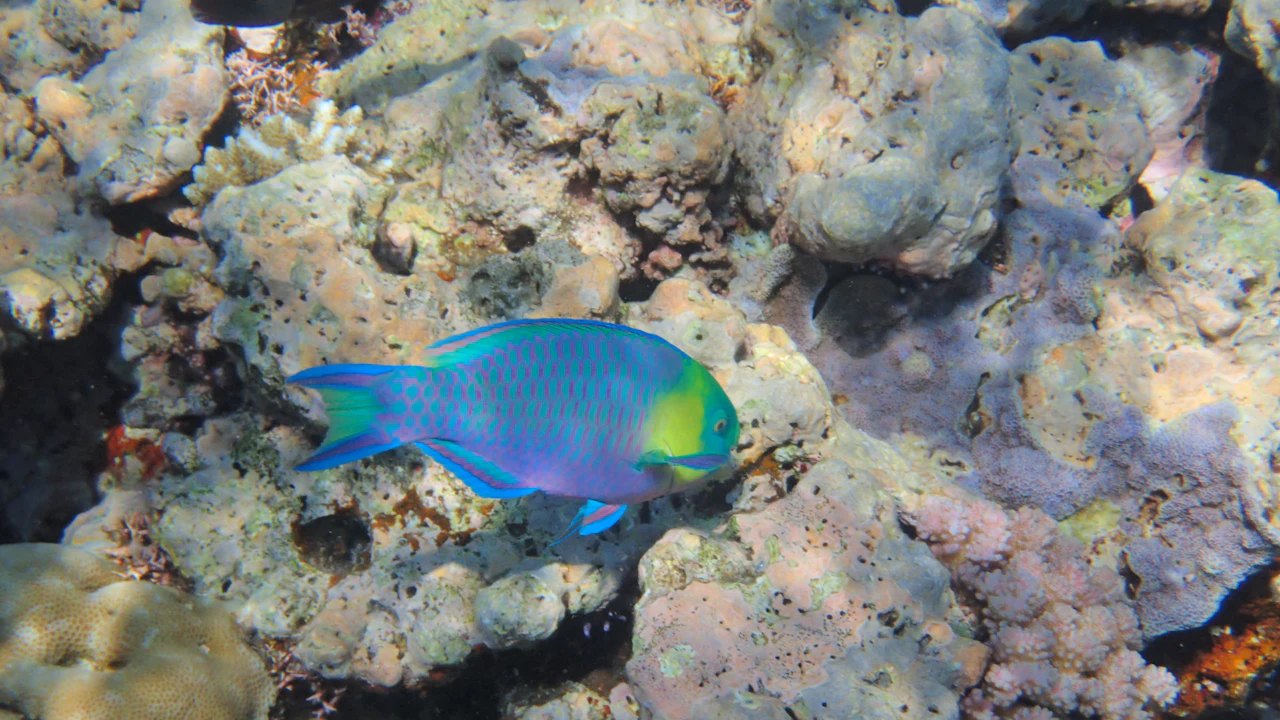
Yes, though the popular claim that every white beach is “parrotfish poop” goes too far. According to NOAA Fisheries’ field notes on bumphead parrotfish, parrotfish bite and scrape algae off rocks and dead corals, then grind the inedible calcium carbonate (reef material made mostly of coral skeletons), which is excreted as sand back onto the reef.
How much sand depends on the fish. CORAL says the answer varies with the species and its size, and that scientists estimate one stoplight parrotfish can process and generate about 0.6 pounds of sand per day on average. The bumphead parrotfish, a Pacific and Indian Ocean species and the largest parrotfish in the world, can remove more than 5 tons of calcium carbonate from a reef in a year, according to NOAA.
Why parrotfish matter: what they do and what it means for you
| What parrotfish do | What it means for the reef | What you may notice on a dive |
|---|---|---|
| Scrape algae off rock and dead coral | Algae is kept from overgrowing reef-building corals | Fish pecking at rock and dead coral, bite after bite |
| Take small bites of reef surface | New spaces open where young corals can settle | Bare patches of rock among the coral |
| Grind reef material and excrete it | Sand is returned to the reef | Small clouds of white sediment behind a fish |
| Sleep in a mucus cocoon (some species) | Fish are protected from parasites at night | A still fish wrapped in a clear film on a night dive |
How parrotfish sleep in a mucus cocoon
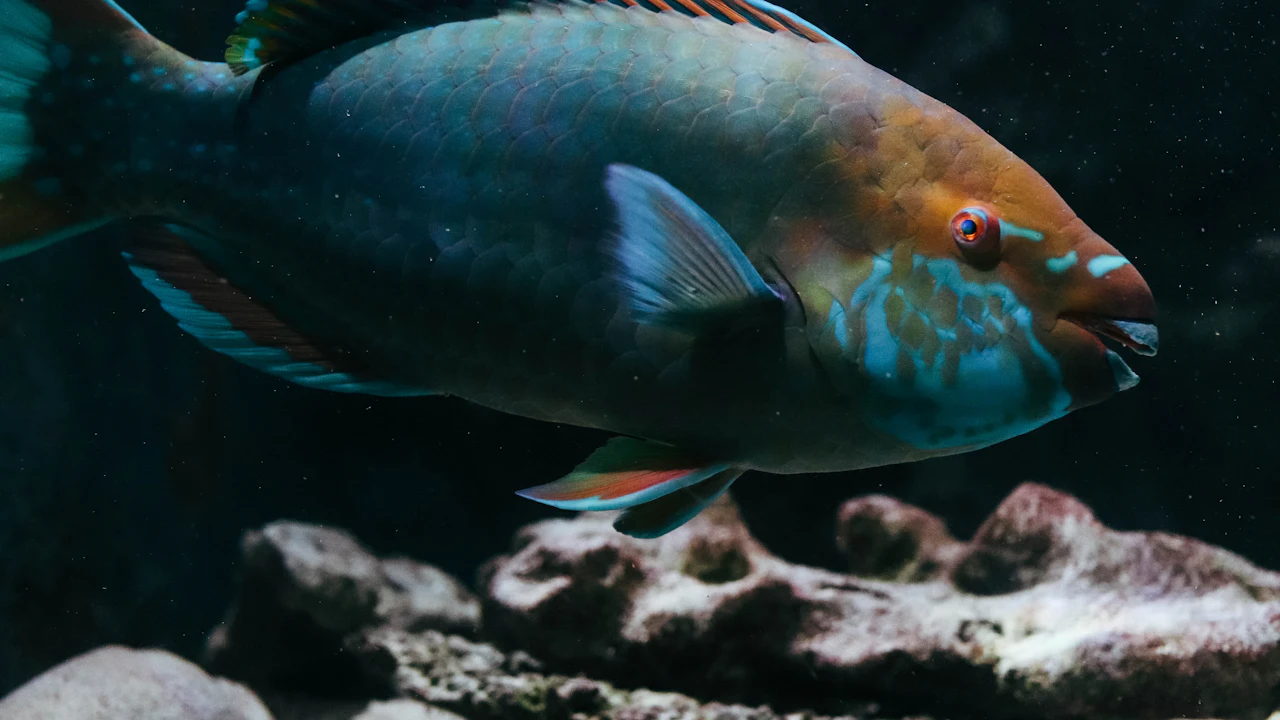
This is one of the best surprises of a night dive. CORAL’s parrotfish facts explain that some species produce mucus from glands behind their gills, secrete it from their mouths and spread it over their bodies and heads. The result is a sleeping bag, or cocoon, that protects them from tiny blood-sucking parasites at night, much like a mosquito net.
CORAL says studies show parasite loads rise about nine-fold when the fish are not protected by their cocoons. The cocoon also works as an alarm: if a predator like a moray eel nudges the membrane, the parrotfish can feel the vibration and flee. Making it costs about 2.5 percent of the fish’s daily energy budget.
Curious about that predator? Our companion guide asks are moray eels dangerous to divers and snorkelers, and explains what morays do after dark.
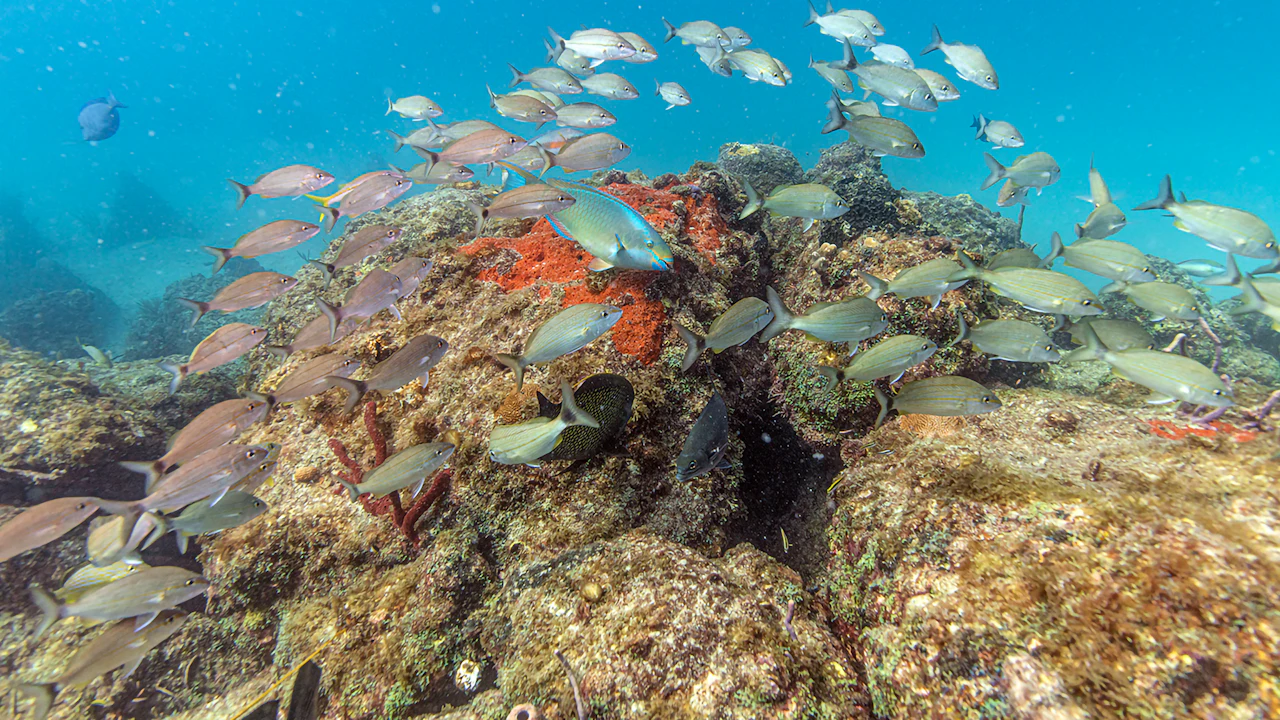
How to recognize a parrotfish underwater
You do not need to know every species to spot the family. A few cues help:
- The beak. NOAA describes parrot-like beaks, and CORAL contrasts the “toothier grins” of parrotfish with the large, fleshy lips of their wrasse relatives.
- The feeding. Watch for a fish pecking at rock and dead coral over and over, instead of picking at the water.
- The family tie. CORAL notes that many scientists now treat parrotfish as a subfamily of the wrasses, so a wrasse-like shape with a beak is a good clue.
- Changing looks. CORAL explains that parrotfish begin life as females and some later change into males, so the same species can look different at different stages.
Parrotfish share the reef with plenty of other characters. Our guide to marine life you can see diving Ambergris Caye is a good next read, and our page on lionfish in Belize and why they are a problem covers a very different kind of reef fish.
Are parrotfish protected?
Rules vary from country to country, so check local regulations before you fish. What NOAA does make clear is how vulnerable parrotfish can be: bumphead parrotfish declined sharply where they were fished, and sleeping parrotfish are easy targets for spearfishers at night. The reef they graze is part of the Belize Barrier Reef Reserve System World Heritage site.
As a diver, the most useful thing you can do is simple: look, do not touch, and keep your fins off the reef so the grazers have healthy coral to work on.
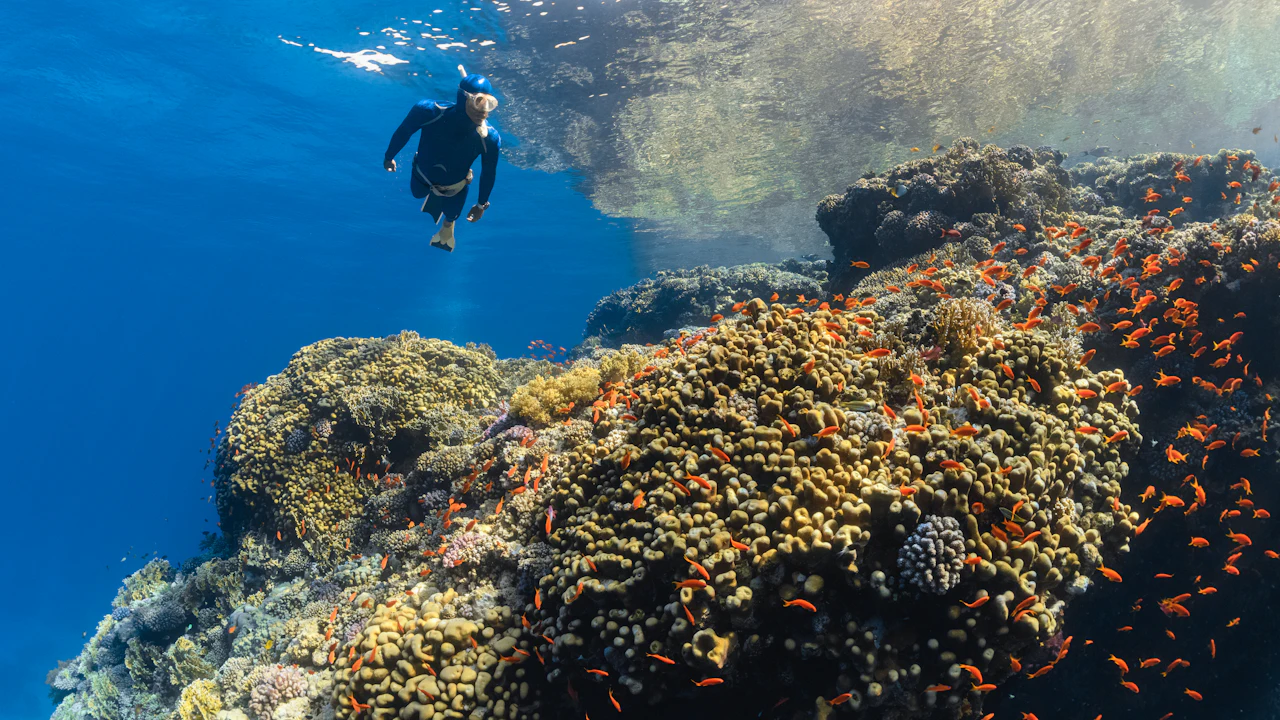
See parrotfish on the reef with Elbert
White Sands Dive Shop is a 5 Star PADI Dive Facility on the beach in San Pedro, overlooking the largest barrier reef in this hemisphere. It is owned and operated by Elbert Greer, PADI IDC Staff Instructor. We run daily diving, SCUBA instruction and snorkeling, and local trips leave at 9:00 with pickup at the dock of your hotel. Our guide to scuba diving on Ambergris Caye describes the 1-, 2- and 3-tank reef dives.
Elbert loves showing people what the reef is doing. One student, Susan, wrote that her dives with him were special partly “because you pointed out so many cool things to look at, not to mention the manatee.” Read more in our letters from students Elbert has taught, and see trips and current prices on our Water Sports page of dives and PADI courses.
Parrotfish and coral reefs: your questions answered
Do parrotfish make sand?
Yes. NOAA Fisheries explains that parrotfish grind the calcium carbonate they bite off rock and dead coral and excrete it as sand back onto the reef. CORAL estimates one stoplight parrotfish makes about 0.6 pounds of sand a day on average.
Why are parrotfish important to coral reefs?
They graze algae that would otherwise overgrow reef-building corals, and their bites open space where young corals can settle, according to NOAA Fisheries.
Do parrotfish eat coral?
Mostly they scrape algae off rock and dead coral, taking some reef surface with each bite. NOAA notes that larger species can take small chunks of reef, including the occasional piece of coral.
How do parrotfish sleep?
CORAL explains that some species spread mucus over their bodies to make a cocoon that protects them from parasites at night and warns them when a predator nudges it.
Can I touch a parrotfish on a dive?
No. Look without touching and keep your hands and fins off the reef, which protects both the fish and the coral they depend on.
Ask us about reef dives
Want to see parrotfish at work? Email Elbert at elbertgreer@fastmail.fm or phone 011 (501) 226 2405. Tell us your dates and your experience, and we will help you plan your reef dives.