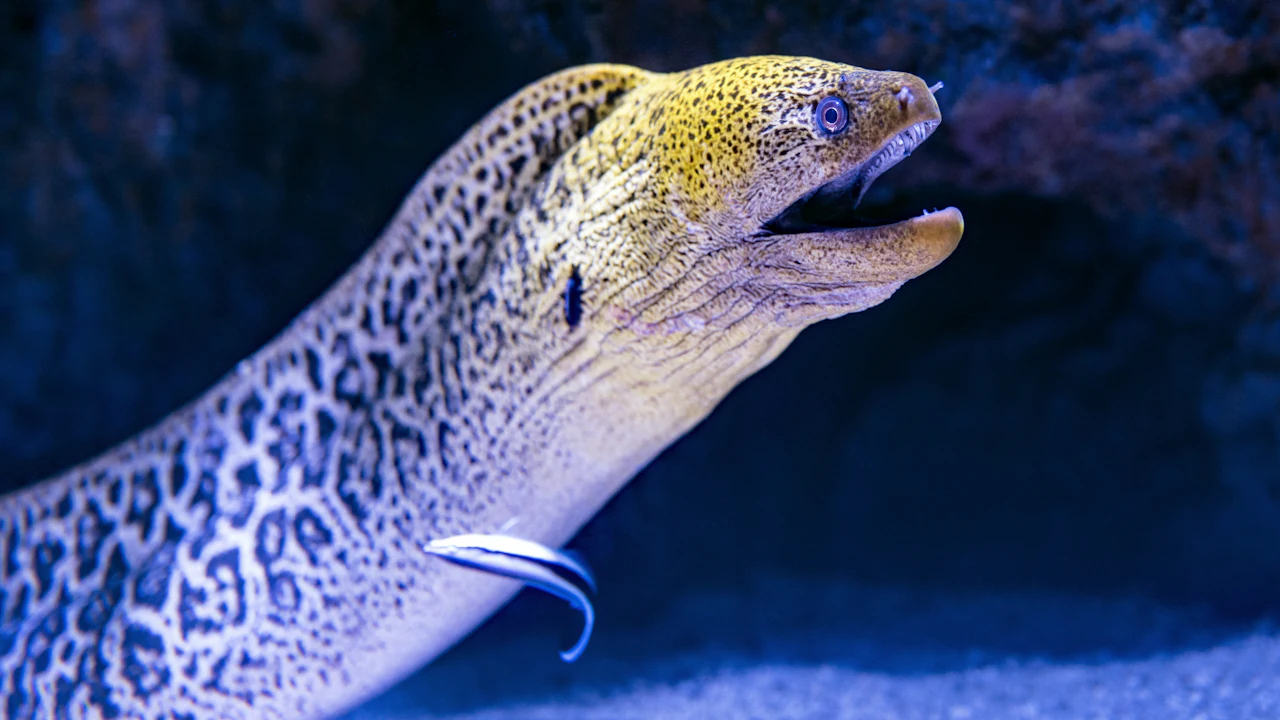
A moray eel peering out of the reef, mouth opening and closing over rows of sharp teeth, is one of the first sights that makes new divers nervous. So, are moray eels dangerous? The honest answer is that they rarely bother people, but a bite is serious, so it pays to understand them.
This guide is for new divers and snorkelers who want to enjoy morays without worry. We explain why morays gape, what usually leads to a bite, the simple habits that keep you safe, and what morays do after dark. The general facts here come from National Geographic. We are a dive shop, not doctors, so any bite or injury belongs with a doctor.
Are moray eels dangerous to divers and snorkelers?
Quick answer: Not usually. National Geographic says morays have sizable, sharp teeth and look fierce but are usually not aggressive toward people. They can still inflict serious bites, particularly when backed into a corner. Keep your hands out of holes and crevices, never feed or touch a moray, and give it space.
Are moray eels dangerous or just misunderstood?
Mostly misunderstood. In a National Geographic report on a moray that lunged at a snorkeler after catching an octopus, George Burgess, a marine biologist at the Florida Museum of Natural History, explained that morays are usually not aggressive toward people. He compared the lunge to a dog baring its teeth when someone tries to take its bone. Burgess also suggested the eel may have been reacting to its own reflection in the camera lens.
The same article is just as clear about the other side. Morays can inflict serious bites, especially if they feel cornered. Burgess put it simply: “Just like how you don’t tug on Superman’s cape, you don’t get too close to a moray eel.”
Why moray eels open and close their mouths
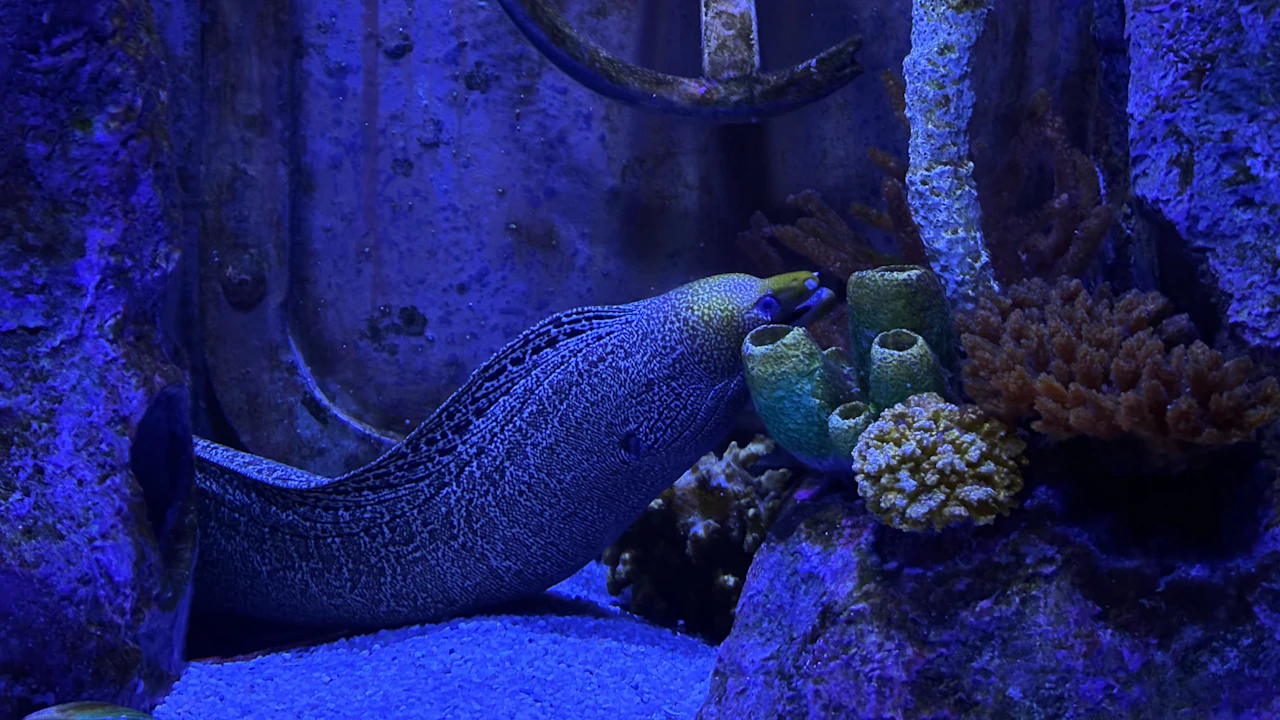
That slow, steady gape is not a threat. It is how a moray breathes. National Geographic’s 2025 Your Shot reader photo selection features a spotted moray filmed under corals on a reef off Cozumel, Mexico, opening and closing its mouth to breathe. Another National Geographic writer, diving in Palau, describes a moray opening and closing its mouth to pass oxygenated water through its gills.
So when you see a moray gaping from its hole, you are watching it breathe, not getting ready to strike. Stay a respectful distance back and enjoy the view.
Two sets of jaws
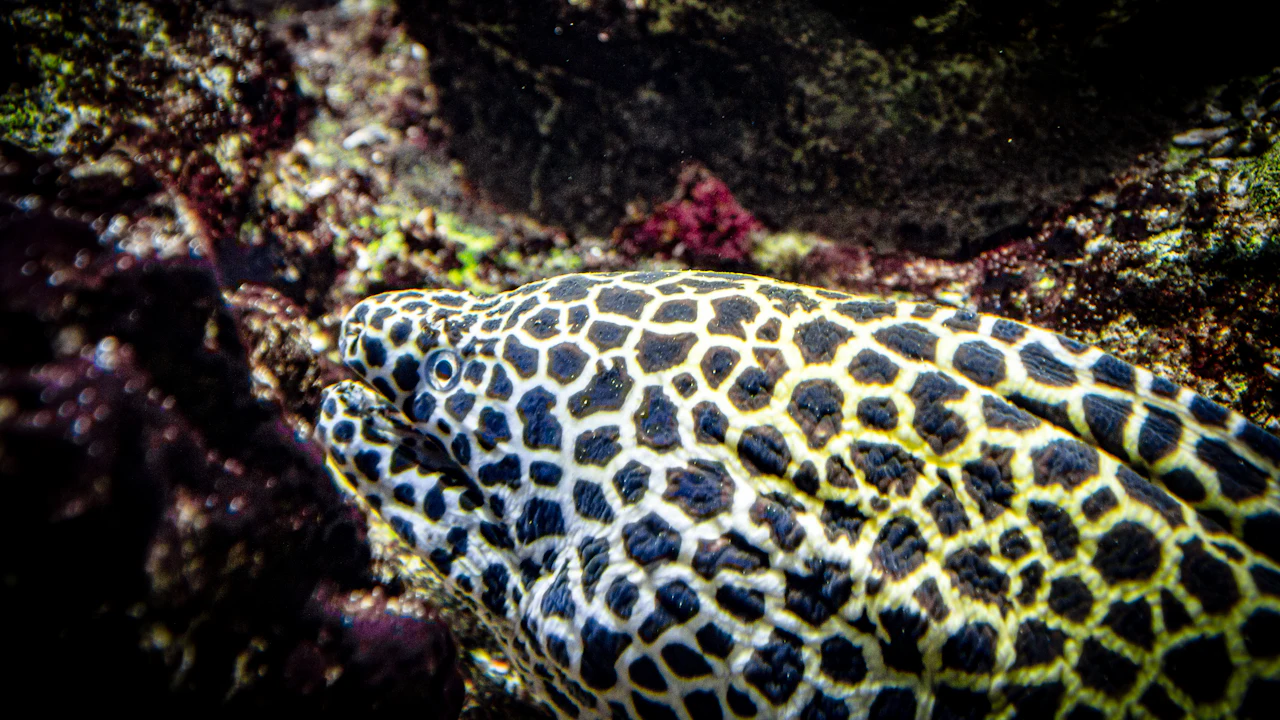
The reason a bite is serious lies inside the throat. National Geographic describes “pharyngeal jaws” housed in a moray’s throat: when the main jaws close on a fish, the second set launches forward, grips the prey with backward-pointing teeth and drags it in. The large head also holds powerful jaw-closing muscles that deliver formidable bites.
National Geographic adds that there are about 200 species of moray, and all of them are top predators of coral reefs. They are built to grip and hold, which is exactly why you never want your hand in front of one.
How divers stay safe around moray eels
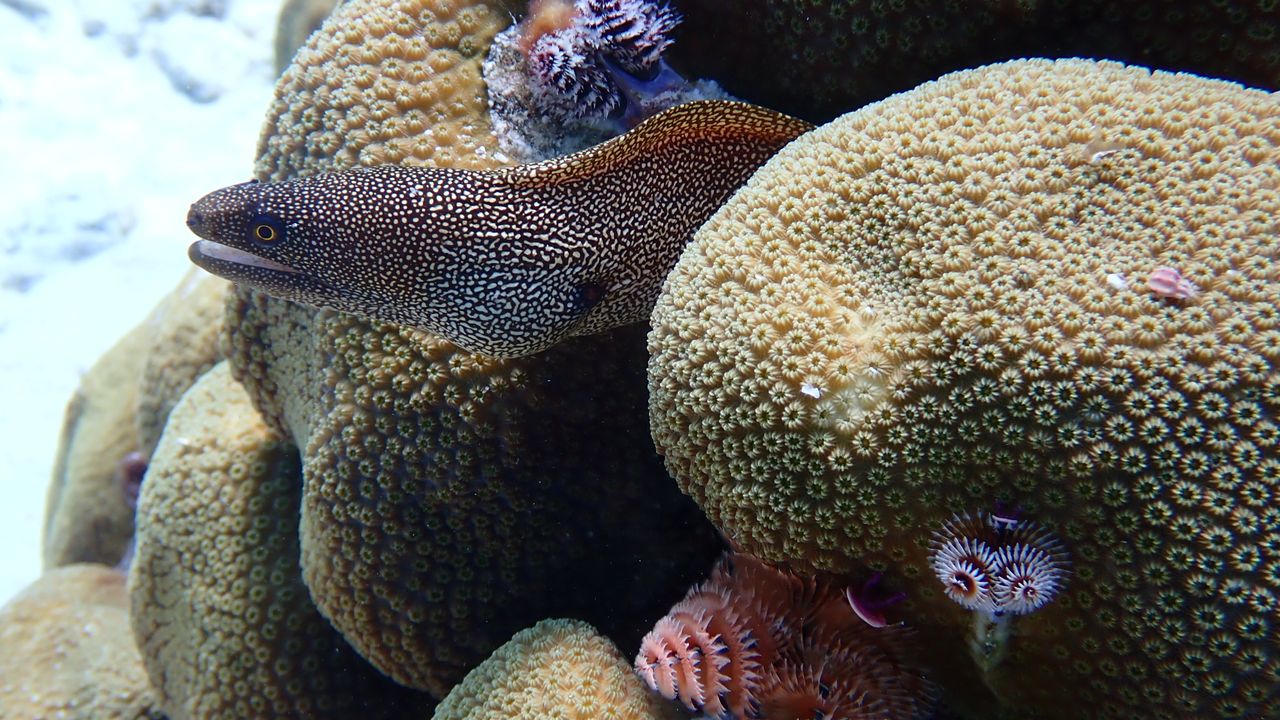
Morays live in tight rocky alcoves, according to National Geographic, and they probe cracks and crevices for prey. That tells you where trouble starts: a hand in a hole the eel calls home, or food the eel wants to keep.
| Situation | Why it raises the risk | Safer habit |
|---|---|---|
| Reaching into a hole or crevice | Morays live in tight alcoves and may feel cornered | Keep hands out of holes; look, do not reach |
| Holding food or chasing a meal | A moray may lunge to protect food it has caught | Never feed morays or carry food on a dive |
| Getting close for a photo | Crowding an eel at its hole leaves it nowhere to go | Stay back and use the camera’s zoom |
| Poor buoyancy near the reef | Hands and knees land on the reef where eels hide | Hover with good buoyancy and keep fins up |
- Never put your hand into a hole you cannot see the back of.
- Do not feed, touch or tease a moray, even one that seems used to divers.
- Approach slowly from the side and leave the eel a clear way out.
- If a moray leaves its hole and swims toward you, move calmly away and let it pass.
These habits are part of good reef manners in general. Our guide to reef etiquette for divers and snorkelers covers the rest, and any bite, however small, should be seen by a doctor.
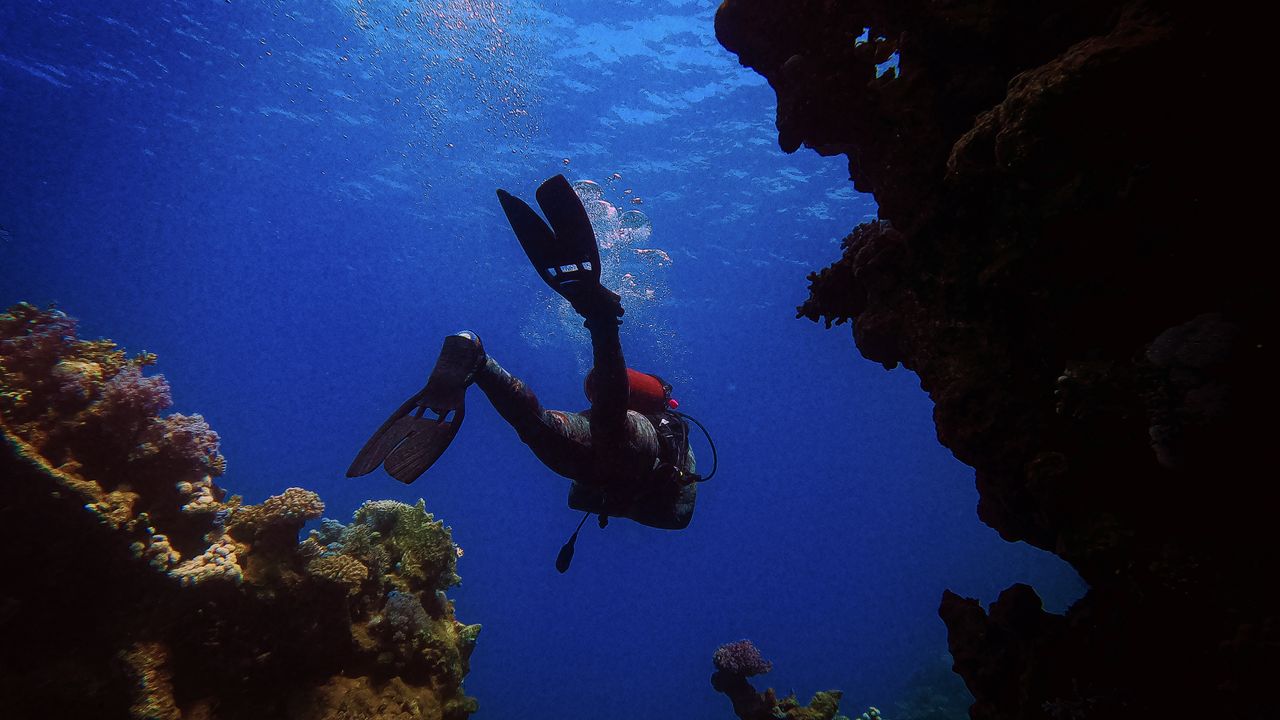
Moray eel behavior at night
By day, morays mostly rest in their holes. National Geographic’s report on groupers teaming up with moray eels notes that groupers hunt in the day and morays at night, which is why a grouper has to rouse a resting eel to hunt with it.
That means a night dive is your best chance to see a moray out of its hole and moving across the reef. It is a wonderful sight, and the same rules apply: give it room and keep your hands to yourself. Our guide to a night dive on Ambergris Caye explains what to expect after dark.
Morays are also part of the reef’s night-time food web. Our guide to parrotfish and coral reefs explains how a sleeping parrotfish’s mucus cocoon can warn it when a predator such as a moray comes close, and our page on marine life you can see diving Ambergris Caye introduces the reef’s other residents.
Meet morays on the reef with Elbert
White Sands Dive Shop is a 5 Star PADI Dive Facility on the beach in San Pedro, owned and operated by Elbert Greer, PADI IDC Staff Instructor. Local dive and snorkel trips leave at 9:00, with pickup at the dock of your hotel, and we also offer a one-tank night dive (light not included). Our guide to scuba diving on Ambergris Caye describes the reef dives we run.
Students value his care. Vivake K. Bhalla wrote: “Elbert Greer was an outstanding instructor with a lot of experience and useful tips.” Read more in our letters from students Elbert has taught, and see trips and current prices on our Water Sports page of dives and PADI courses.
Are moray eels dangerous: your questions answered
Are moray eels aggressive to humans?
Usually not. National Geographic reports that morays are usually not aggressive toward people, though they can inflict serious bites, particularly when backed into a corner.
Why do moray eels keep opening their mouths?
They are breathing. National Geographic describes morays opening and closing their mouths to pass oxygenated water over their gills.
Can I touch or feed a moray eel?
No. Feeding or touching a moray puts your hand right where a bite happens, and a moray may lunge to protect food it has caught.
Do moray eels come out at night?
Yes. National Geographic notes that morays hunt at night, so a night dive is a good chance to see one swimming in the open.
What should I do if a moray eel bites me?
End the dive safely with your buddy and see a doctor, since a moray bite is a serious wound.
Ask us before your dive
Nervous about eels, or just curious? Email Elbert at elbertgreer@fastmail.fm or phone 011 (501) 226 2405. Tell us your dates and your experience, and we will help you plan your reef or night dives.