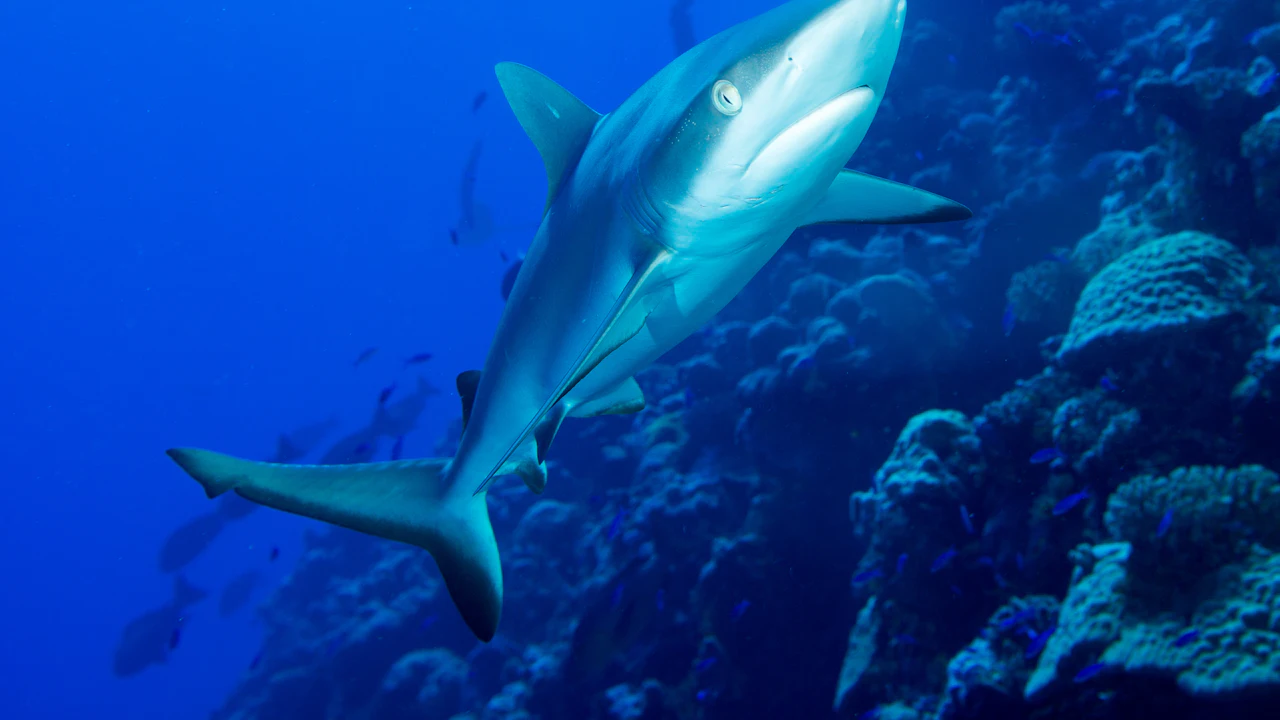
Caribbean reef sharks are the sleek, gray sharks many divers hope to see cruising along a reef wall. They are also the sharks that make some first-time divers nervous. If you are wondering what they are, how to tell them from the nurse sharks you may meet in shallow water, and how to behave when one swims by, this guide is for you.
We keep to what National Geographic and NOAA Fisheries say about sharks, and we never promise a sighting. Sharks are wild animals that come and go as they please, and every encounter is a bonus.
Are Caribbean reef sharks dangerous to divers and snorkelers?
Quick answer: Shark bites are very rare. National Geographic puts a beachgoer’s chance of being bitten at one in 11.5 million, and says sharks may bite out of curiosity, in self-defense or by mistaking a person for prey. Stay calm, keep your hands to yourself, never feed sharks and give them room to pass.
What are Caribbean reef sharks?
Sharks are a huge group. National Geographic counts about 500 species, ranging from 7 inches to almost 33 feet long. Like rays and skates, they have skeletons made of cartilage rather than bone, and five to seven gill slits on each side of the head.
The Caribbean reef shark is one of those species, named for the reefs where divers meet it. National Geographic published a photo of one swimming over a coral reef in the Bahamas, from a story on the 40 shark species found there. Its look is classic shark: NOAA Fisheries notes that most sharks in life are brown, olive or grayish.
How sharks sense the reef
NOAA Fisheries explains that most sharks see well in dim light and can see colors. In its list of shark facts from NOAA Fisheries, it also describes small pores near the nose, eyes and mouth that pick up electrical fields and temperature changes in the water. A shark circling a group of divers is often simply taking a look.
Reef shark or nurse shark? How to tell them apart
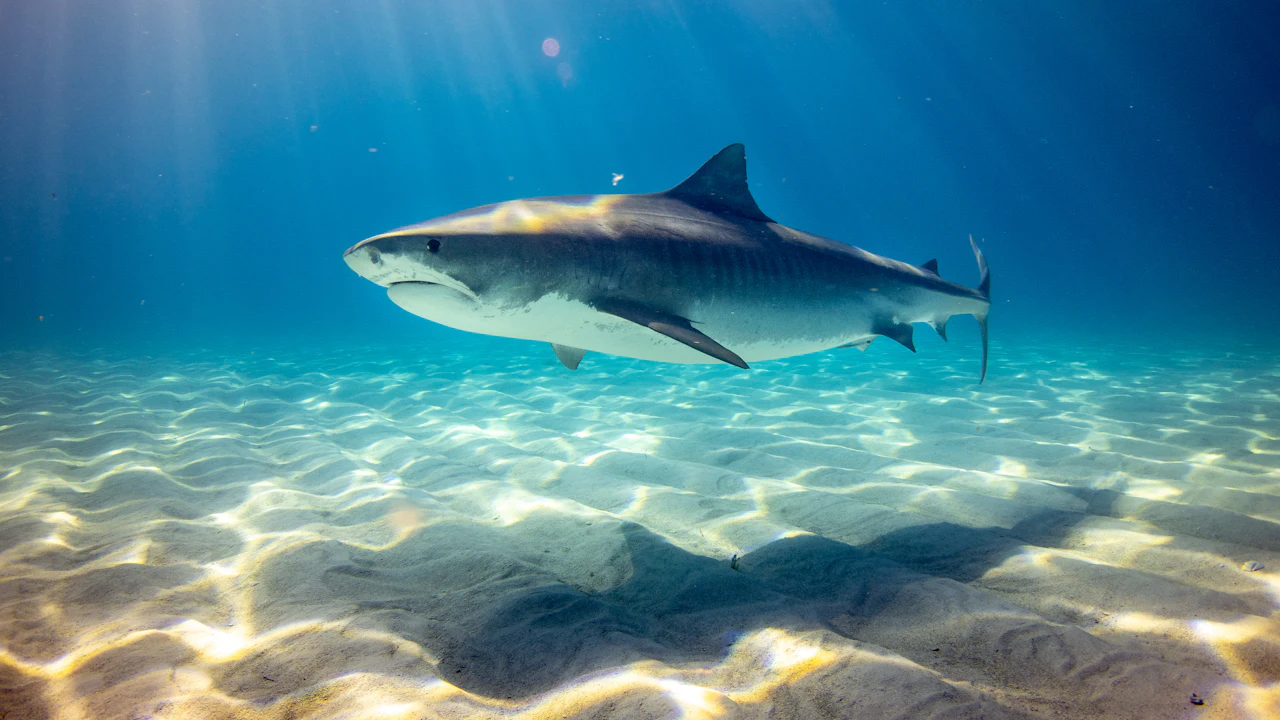
The shark most visitors see first is the nurse shark, and our full guide to nurse sharks and how to snorkel calmly beside them covers that species. The easiest clue is what the shark is doing. NOAA Fisheries says most sharks have to keep swimming to pump water over their gills, while bottom-dwellers such as nurse sharks can rest on the seafloor and breathe through a spiracle behind the eye.
| Clue | Nurse shark | Swimming reef shark |
|---|---|---|
| Where you see it | On or just above the bottom, a slow-moving bottom-dweller (National Geographic) | Swimming over the reef, since most sharks must keep moving to breathe (NOAA Fisheries) |
| Breathing at rest | Uses a spiracle to breathe while lying on the seafloor (NOAA Fisheries) | Pumps water over its gills by swimming (NOAA Fisheries) |
| Color | Plain gray-brown (National Geographic) | Most sharks are brown, olive or grayish (NOAA Fisheries) |
| Skin | Smooth to the touch, unlike most sharks (National Geographic) | Rough placoid scales, like tiny teeth (NOAA Fisheries) |
| Your conduct | Never touch or stand near it; it may bite if stepped on or bothered | Stay calm, keep arms in and let it pass |
National Geographic gives nurse sharks a typical length of 7.5 to 9.75 feet. Size alone won’t settle the question underwater, so behavior is the better guide.

Are reef sharks dangerous?
The National Geographic shark facts page says recorded shark attacks have risen since 1900, mostly because of better record keeping and more people in the water. Attacks are still very rare, and people are more likely to die from drowning or lightning. When a shark does bite, it may be out of curiosity, self-defense or mistaken identity.
NOAA Fisheries adds a useful point about sound. In its shark safety notes, the agency says that irregular sounds, like those of a swimmer in trouble, may draw sharks from far away. Calm, steady movement is your friend.
How to behave around reef sharks
- Stay calm and keep breathing slowly. Avoid splashing or thrashing at the surface.
- Keep your arms in and your hands to yourself. Never touch, chase or corner a shark.
- Never feed sharks or carry food or speared fish in the water.
- Stay close to your buddy and your guide, and give the shark a clear path.
- Watch from a respectful distance and enjoy it. A passing shark is usually just curious.
These habits apply to every animal on the reef. You can see more of the cast in our guide to marine life you can see on Ambergris Caye.
Why sharks need protecting
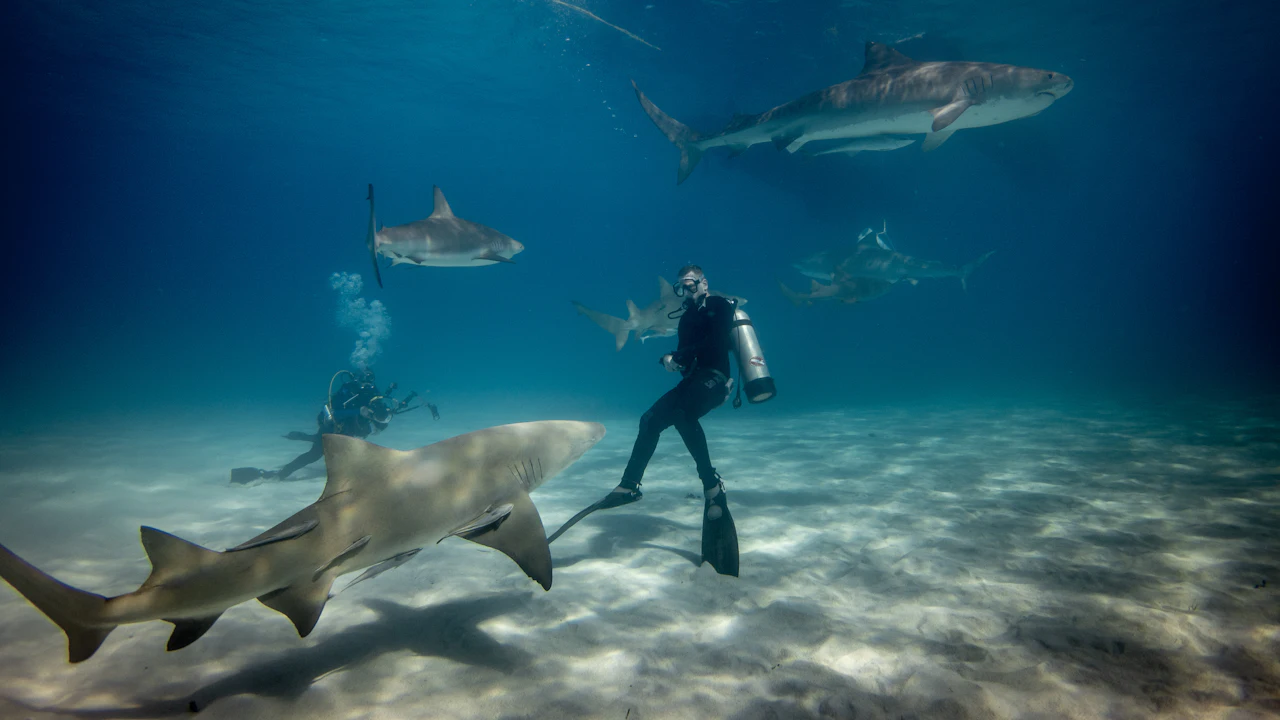
National Geographic calls overfishing the biggest threat to sharks, with an estimated 100 million killed each year, mostly for shark fin soup. Rising water temperatures and coastal development also destroy the mangroves and coral reefs sharks use for breeding, hunting and protecting their pups.
That matters for every diver. As top predators, sharks help keep the ocean food web in balance. Healthy reefs and healthy shark populations go together, which is one reason we ask every guest to treat the reef gently, and why changes in the water, from warming seas to sargassum seaweed arriving on Caribbean beaches, are worth understanding.

Reef shark diving and a student’s Blue Hole story
Our full-day Great Blue Hole trips include three dives along with breakfast, lunch and drinks. One of Elbert’s students, Susan, wrote about waiting at the safety stop on her Blue Hole day: “I looked back up at the boat and saw 6 reef sharks circling about.” That was her day, not a promise for yours.
Before you plan a deep dive like that one, read our page on Blue Hole dive requirements and experience, and see our guide to scuba diving on Ambergris Caye for local reef trips.

Dive with Elbert
White Sands Dive Shop is a 5 Star PADI Dive Facility on the beach in San Pedro, owned and operated by Elbert Greer, PADI IDC Staff Instructor. Read more first-hand stories in our letters from students Elbert has taught, and find trips and current prices on our Water Sports page of dives and PADI courses.
Caribbean reef sharks: your questions answered
Are Caribbean reef sharks dangerous?
Shark bites are very rare. National Geographic puts a beachgoer’s chance of being bitten at one in 11.5 million, and calm, respectful divers keep the risk low.
How can I tell a reef shark from a nurse shark?
Watch what it is doing. NOAA Fisheries says most sharks must keep swimming to breathe, while nurse sharks can rest on the seafloor and breathe through a spiracle.
What should I do if a reef shark circles me?
Stay calm, keep your arms in, stay near your buddy and guide, and let it pass. Never chase, touch or feed it.
Will I see a reef shark on my dive?
No one can promise it. Sharks are wild animals, so every sighting is a bonus.
Why are sharks in decline?
National Geographic names overfishing as the biggest threat, with an estimated 100 million sharks killed each year, plus habitat loss from warming water and coastal development.
Ask us about diving with sharks
Nervous about your first shark, or hoping to see one? Email Elbert at elbertgreer@fastmail.fm or phone 011 (501) 226 2405. Tell us your dates and experience, and we will help you choose the right dives.