Plenty of travelers want to see a coral reef up close but never learned to swim well. So can non swimmers scuba dive? The honest answer has two parts: you can try scuba in a limited way, but a full certification asks for real, if modest, swimming skills.
This guide is for non-swimmers, weak swimmers and anyone who feels uneasy in deep water. We explain what PADI asks of you, which beginner option fits where you are today, and how to close the gap before your trip.
Can non swimmers scuba dive, or do you have to swim first?
Quick answer: Partly. PADI says non-swimmers can still enjoy a Discover Scuba Diving experience in a pool. To earn the Open Water Diver certification, you must swim 200 meters or yards without aids (or 300 with mask, fins and snorkel) and float or tread water for 10 minutes. Speed does not matter; comfort does.
Scuba diving if you cannot swim: what PADI allows
PADI is clear that basic swimming skills are required for scuba diving. Its own PADI guide to Discover Scuba Diving and Open Water adds one useful exception: non-swimmers can still try a Discover Scuba Diving experience in a pool.
That pool session is a taste of breathing underwater, not a license. Whether a particular shop will take a non-swimmer beyond the pool and into the sea is up to that shop, so ask before you book.
Why the line? A scuba diver still spends time at the surface: waiting for the boat, swimming to a mooring line, or resting after a dive. Even with a buoyancy jacket holding you up, feeling at home in water you cannot stand in is what keeps you calm when something small goes wrong.
PADI swim test requirements for Open Water
The water skills check for the PADI Open Water Diver course has two parts. PADI lists them as course prerequisites, and your instructor will see you complete them during the course.
- The swim: 200 meters or yards with no aids, or 300 meters or yards wearing a mask, fins and snorkel.
- The float: float or tread water for 10 minutes, without aids.
Is the swim timed?
PADI’s prerequisites do not set a time for the swim, and they do not name a stroke. That surprises many weak swimmers. A slow, steady breaststroke or a lazy backstroke is fine, as long as you keep going without hanging on to anything.
What does floating for 10 minutes mean?
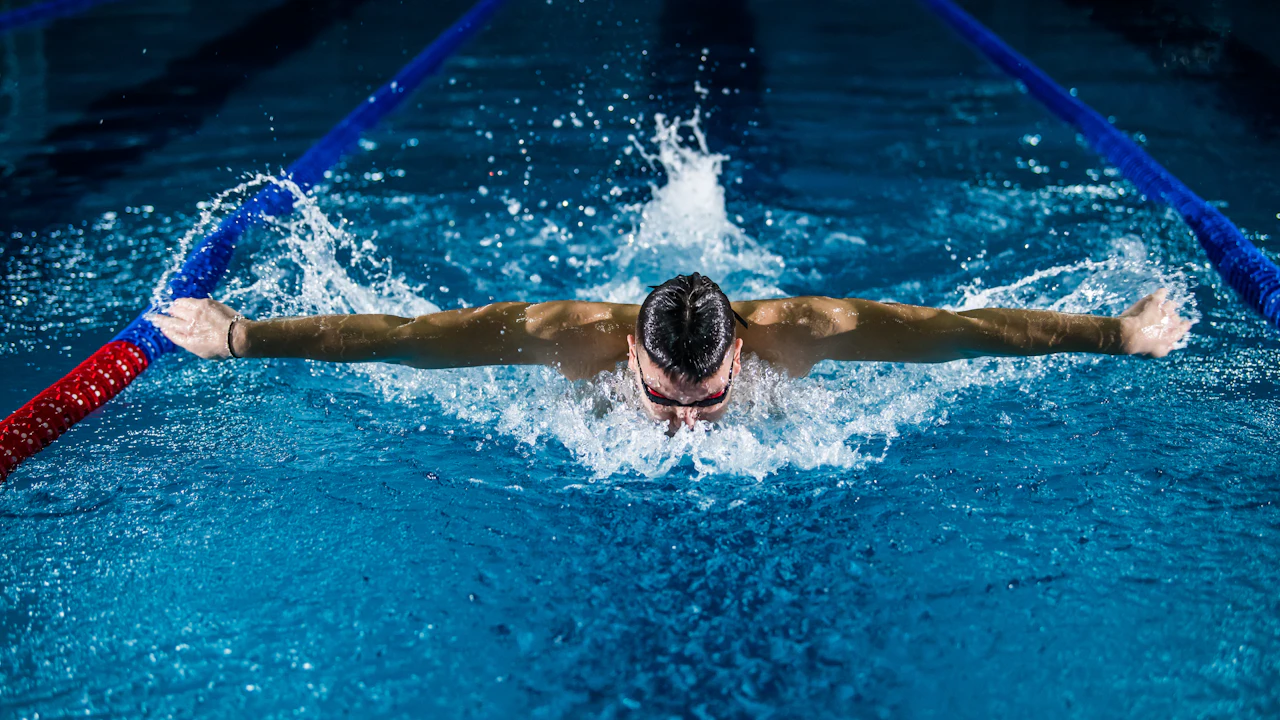
You can float on your back, tread water, or mix the two, as long as you stay up without a noodle or the pool wall. Most people find that slow breathing and spread-out arms make it far easier than they expected.
Which beginner option fits a non-swimmer?
Compare the options by how much swimming each one asks of you and what you come away with. The right choice depends on where your water confidence is today, not on how much time you have.
| Option | Swimming needed | Ocean dives | What you come away with |
|---|---|---|---|
| Discover Scuba Diving, pool only | None, per PADI | None | A first breath underwater and a feel for the gear |
| Discover Scuba Diving with an ocean dive | Basic swimming skills and comfort in deep water | One, with a certified divemaster, to 40 ft at most | A guided reef dive, but no certification |
| PADI Open Water Diver | 200 m/yd swim (or 300 with mask, fins and snorkel) plus a 10-minute float | Four, after five classes | A certification to dive with a buddy |
| Snorkeling first | Comfort floating face down in a mask | None; you stay at the surface | Reef views while you build water confidence |
Our Discover Scuba Diving experience for first-timers includes basic knowledge, a pool session with gear and one open water dive. The PADI Open Water Diver course on Ambergris Caye covers five classes and four open water dives, so allow 3-4 days.
If you are still deciding whether you want scuba at all, our comparison of snorkeling vs scuba diving for beginners may help. Current course prices are on our Water Sports page of PADI courses and prices.
How a weak swimmer can get ready before the trip
The PADI standard is modest, and regular practice at a local pool is the surest way to reach it. Start weeks ahead, because cramming the week before a trip only adds stress.
- Book a few adult swim lessons at home and tell the coach your goal: 200 meters or yards nonstop and a 10-minute float.
- Practice floating on your back in the deep end until it feels restful rather than tense.
- Swim lengths slowly, with any stroke, and add one or two each session.
- Borrow a mask, fins and snorkel and get used to breathing through your mouth with your face in the water.
- Read our first open water dive tips for nervous beginners so the day itself holds fewer surprises.
Fitness counts too. The PADI diver medical form asks whether you struggle with moderate exercise, and it gives swimming 200 meters or yards without resting as an example. Our guide to the scuba diving medical questionnaire explains how that form works.
If you would rather learn with your own instructor and at your own pace, see our page on private scuba lessons on Ambergris Caye. For the full picture of every course, start with our guide to learning to dive on Ambergris Caye.
Who teaches you, and what nervous students said
Lessons at White Sands Dive Shop are taught by Elbert Greer, PADI IDC Staff Instructor, who owns and operates this 5 Star PADI Dive Facility on the beach in San Pedro. Elbert would much rather you tell him you are a weak swimmer up front than hide it.
Being nervous in the water is common, and our students say so in their own words. Minette Layne of Seattle, Washington wrote after her refresher: “I was so panicked and you really calmed me down and set me up for a wonderful couple of weeks of diving and snorkeling.”
Susan, who finished her certification with Elbert, wrote: “You truly put me at ease and made the whole experience fun.” You can read every note in our letters from students Elbert has taught.
Can non swimmers scuba dive: your questions answered
Can you scuba dive if you can’t swim at all?
You can try scuba in a pool through a Discover Scuba Diving experience, which PADI says is open to non-swimmers. Ocean diving and certification need basic swimming skills.
What is the PADI swim test for Open Water?
You swim 200 meters or yards without aids, or 300 meters or yards with mask, fins and snorkel, and you float or tread water for 10 minutes without aids.
Is the PADI swim test timed?
PADI’s prerequisites set no time for the swim and no required stroke. What matters is that you keep going without holding on to anything.
Does a buoyancy jacket mean I don’t need to swim?
A buoyancy jacket helps you float at the surface, but it does not replace water comfort. PADI still requires basic swimming skills for scuba diving.
How long does it take a non-swimmer to get ready for Open Water?
It depends on your starting point and how often you practice. Regular pool sessions with a swim coach at home, aimed at the 200 meter or yard swim and the 10-minute float, are the surest way to get there.
Ask Elbert about your swimming before you book
Not sure where you stand? Email Elbert at elbertgreer@fastmail.fm or phone 011 (501) 226 2405, and tell him honestly how you feel in the water. He can help you pick the beginner option that suits you.