
Your scuba diving trim position is simply the angle of your body in the water: flat like a swimmer, head up like someone climbing stairs, or feet up. Most divers are told to “work on their trim” at some point, often without being told how. Good trim makes every dive easier, and it keeps your fins away from the reef.
This guide is for certified divers whose feet sink, whose head rises, or who kick up sand without meaning to. We explain what good trim looks like, how weight placement and posture affect it, which kicks protect the reef, and a short practice routine for your next trip.
What is the right scuba diving trim position?
Quick answer: For most of a dive, aim for a horizontal position, roughly flat from head to fins, with your knees bent and fins raised behind you. PADI’s blog says good trim reduces drag, helps you conserve air and directs your kicks forward rather than upward. Correct weighting, weight placement and calm practice make it possible.
What scuba diving trim position means
Buoyancy is about up and down: whether you sink, float or hover. Trim is about tilt: whether your body lies level while you do it. A diver can be perfectly neutral and still hang at a steep angle, which means every kick pushes partly toward the bottom.
In its 11 top tips for buoyancy control, PADI’s blog calls a horizontal position, known as good trim, a great default for most scuba diving. It says good trim reduces drag and can help you conserve air. It also notes that you will not stay perfectly horizontal for an entire dive, and that is fine.
Why horizontal trim matters on a reef
When you are tilted head up, your fins sit lower than the rest of you. Near the reef, that puts them closest to the coral and sand. PADI’s blog article on how to minimize your impact underwater says good buoyancy prevents coral damage, avoids silt clouds and eliminates accidental contact.
Weight placement and horizontal trim diving
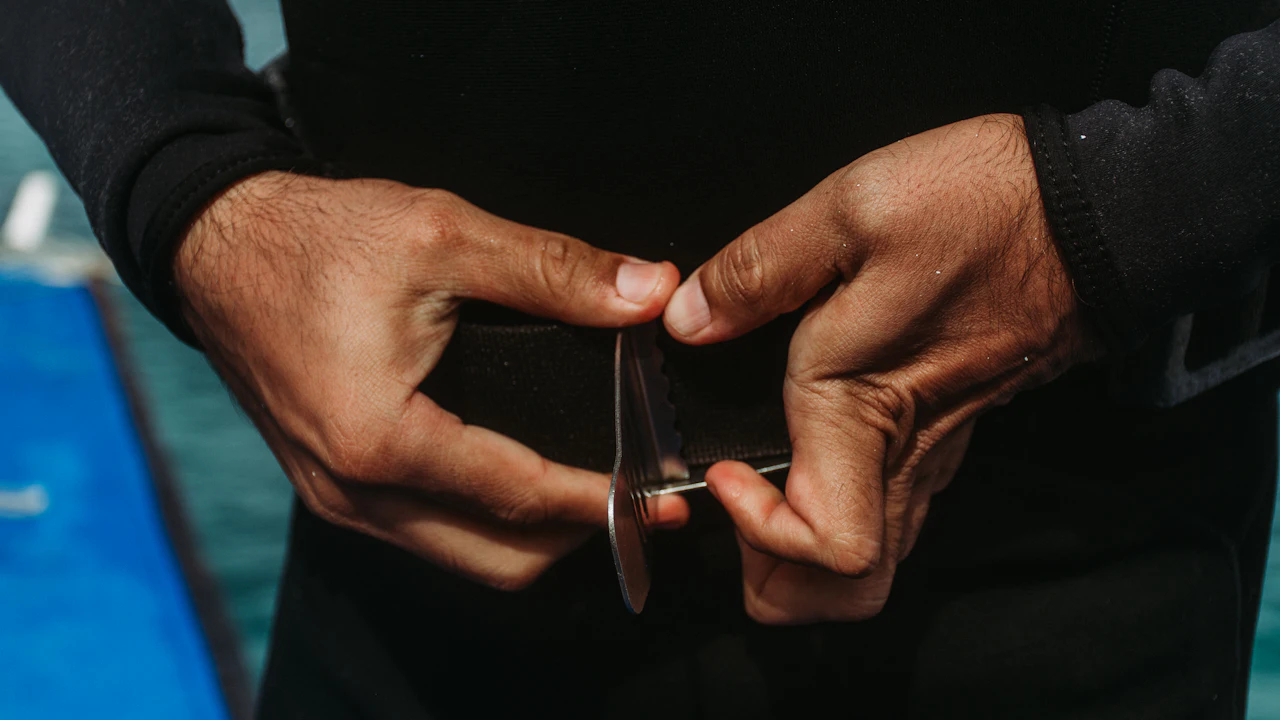
Trim starts with the right amount of lead. An overweighted diver needs extra air in the BCD to stay off the bottom, and that air and lead pull in different places, which tips the body. Our guide to how much weight for scuba diving and the weight check covers that first step.
Once the total is right, where the weight sits matters too. PADI’s blog says small equipment adjustments, such as moving weights on your belt or in your BCD, can help you find a comfortable position. Change one thing at a time, then test it on the next dive.
| What you notice | A likely cause | Something to try |
|---|---|---|
| Feet keep sinking | Too much lead, or lead sitting low on the hips | Do a weight check, then ask your instructor about moving some weight higher |
| Head and chest rise | Too much air in the BCD, often from carrying extra lead | Lose a little weight and use less air in the BCD |
| Sand clouds behind you | Fins below body level, or big downward kicks | Bend the knees, lift the fins and use small, gentle kicks |
| Rolling to one side | Weight uneven from side to side | Balance the weight on both sides |
| Tipping when you hold a camera | The camera pulls you down or up | Plan your setup; PADI’s blog mentions floating arms and trim weights |
The camera row comes from PADI’s blog, which says cameras affect trim and buoyancy and that floating arms and trim weights can help prevent reef contact. If you rent gear, PADI’s blog suggests using the same equipment where possible, so your trim stays consistent from dive to dive.
Body position: small changes that level you out
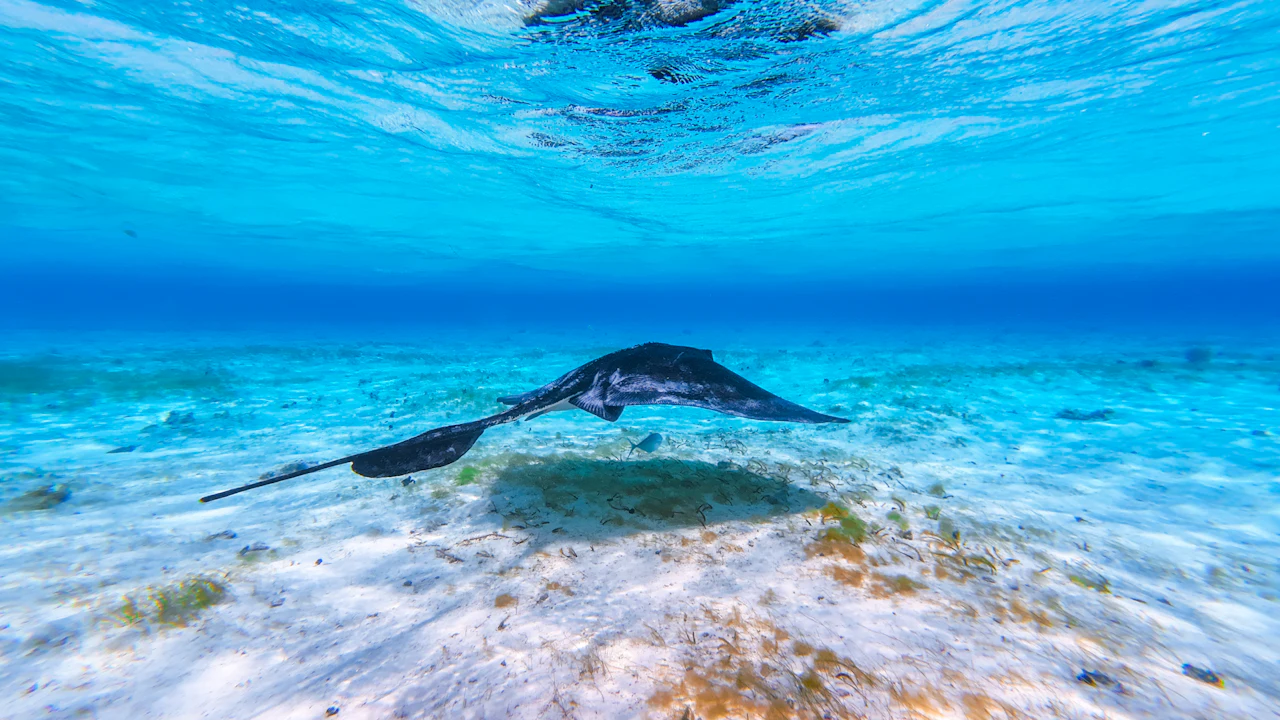
Gear is only half of trim. How you hold your body makes a big difference, and it costs nothing to change. PADI’s blog describes this during a descent: once you start to sink, use your abs to bring your upper body face down and horizontal, then squeeze your glutes and push your belly out to bring your hips and legs up behind you.
- Look forward and slightly down rather than straight down at the reef.
- Keep your knees bent and your fins up behind you, so they ride above your body.
- Keep your arms still, either folded in front or resting together, instead of sculling.
- Breathe slowly and fully. PADI’s blog says relaxed breathing has a direct effect on your position in the water.
Frog kick and trim: kicks that protect the reef
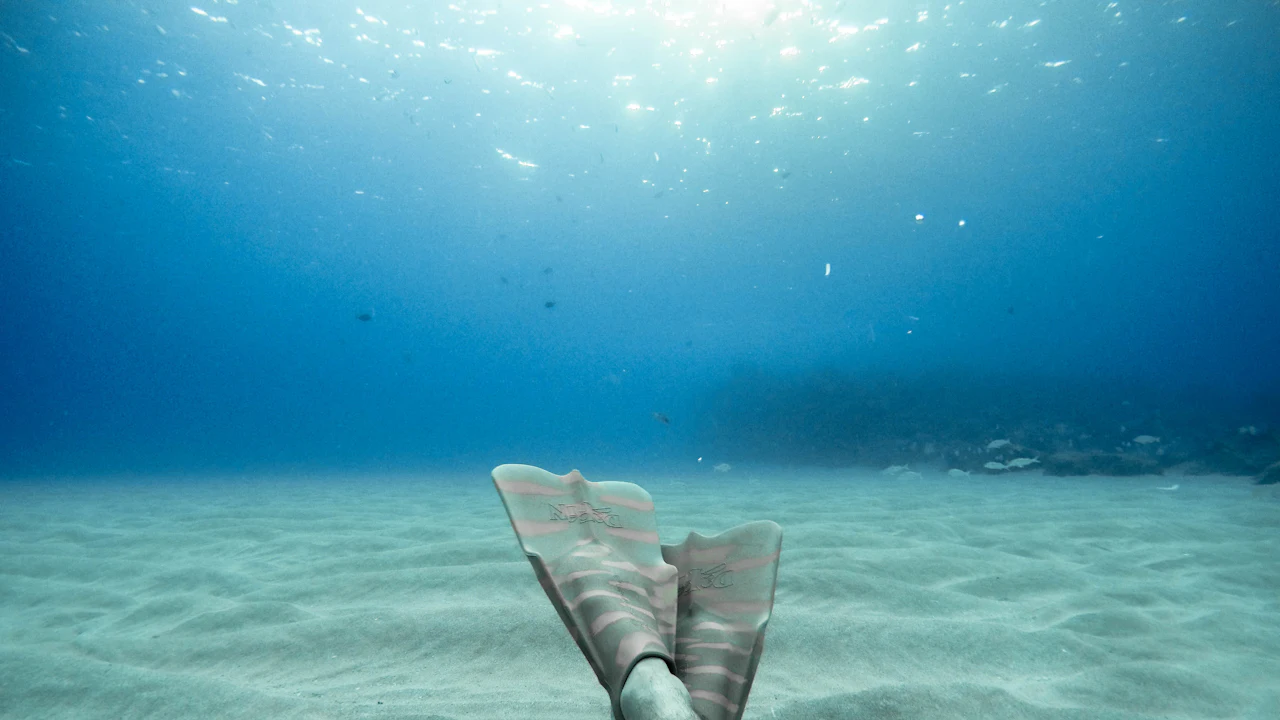
Good trim and good kicks work together. When you are level, your fins push water behind you. When you are tilted, part of every kick goes down toward the sand and coral. PADI’s blog advises using your fins to move through the water, not to adjust your depth, and keeping kicks slow and controlled.
Near the bottom, many divers switch to a gentle frog kick, which moves water backward rather than down, as our reef etiquette guide for divers explains. Your fins matter too: PADI’s blog notes that split fins are less precise for frog kicks, which our guide on how to choose scuba fins covers in detail.
Habits that undo good trim
- Big kicks to correct your depth, which use energy and air.
- Swimming with your hands, which tips your upper body up.
- Dangling gauges and hoses that hang below you and drag across coral.

How to practice your trim
PADI’s blog calls hovering a key skill and a great way to refine your technique. Pick a safe, open area over sand, well away from coral, and try to stay still without kicking or using your hands. Use your breathing and small BCD adjustments to hold your depth.
- Do a weight check first, so you start with the right amount of lead.
- Hover level for a minute and notice which end of you drifts down.
- Ask your buddy to watch your angle from the side and signal what they see.
- Once you can hold still, PADI’s blog suggests changing your position without losing control.
- After the dive, log your weight and where it sat, so next time starts closer.
For more on breathing and BCD control, read our buoyancy control tips for divers. PADI also has a Peak Performance Buoyancy specialty that, according to its blog, helps certified divers fine-tune their weighting and trim.

Diving with White Sands Dive Shop
White Sands Dive Shop is a 5 Star PADI Dive Facility on the beach in San Pedro, owned and operated by PADI IDC Staff Instructor Elbert Greer. All our dives include tanks and weights. New divers can start with our guide to learning to dive on Ambergris Caye, and you can see current course prices on our Water Sports page.
Calm teaching makes skills like this easier to learn. Minette Layne wrote that “you really calmed me down”, and credited his “caring teaching style”. You can read her full letter and others in the letters from Elbert’s dive students.
Scuba diving trim position: your questions answered
What is trim in scuba diving?
Trim is the angle of your body in the water. Good trim usually means a level, horizontal position, which PADI’s blog says reduces drag and helps you conserve air.
Why do my legs sink when I dive?
Common causes are carrying too much weight, weight sitting low on your hips, or posture. Start with a weight check, then try small changes to weight placement and body position.
Do I need to be perfectly horizontal the whole dive?
No. Horizontal is a good default, but PADI’s blog notes you will not stay perfectly flat throughout every dive.
Which kick is best near the reef?
Slow, controlled kicks that push water behind you. Many divers use a gentle frog kick near the bottom because it moves water backward rather than down.
How can I practice trim?
Over open sand away from coral, try to hover still without kicking or using your hands, holding your depth with breathing and small BCD adjustments. Ask your buddy to watch your angle.
Want to work on your trim? Talk to Elbert
Tell us how long you have been diving and what you want to improve, and we can help you plan your dives. Email Elbert at elbertgreer@fastmail.fm or call 011 (501) 226 2405.