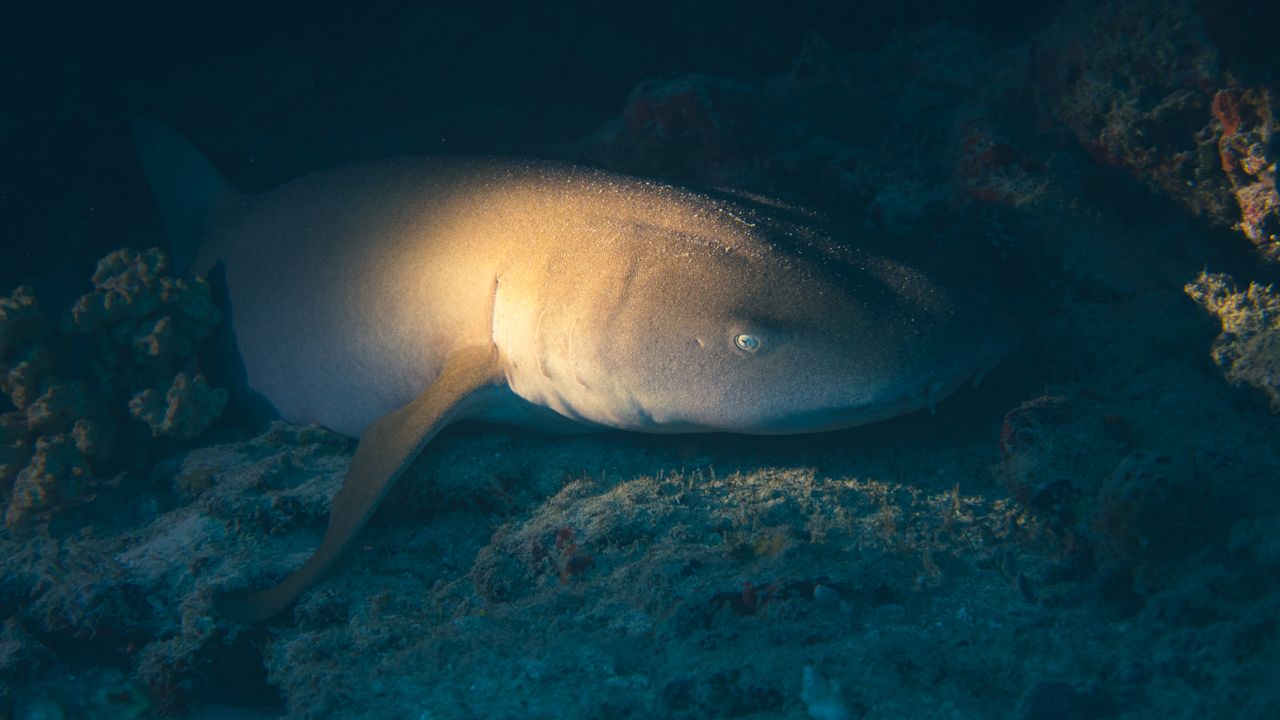
For many visitors, the first shark they ever see in the wild is a nurse shark lying quietly on the sand. If you are reading up on nurse sharks Belize trips before your first snorkel or dive, you probably have one question above all others: are they safe to be near? This guide answers that first, then explains how to recognize them and why they behave the way they do.
It is written for snorkelers, new divers and nervous swimmers. We stick to what NOAA Fisheries and National Geographic say about the species, and we never promise a sighting, because nurse sharks are wild animals that come and go as they please.
Are nurse sharks in Belize dangerous to snorkelers and divers?
Quick answer: Nurse sharks are slow, bottom-dwelling sharks that National Geographic calls mostly harmless to people. They can bite defensively if stepped on or bothered, and NOAA Fisheries notes that even this sluggish species has bitten people when excited or disturbed. Keep your hands to yourself, never feed them, and watch calmly from a respectful distance.
How to recognize a nurse shark
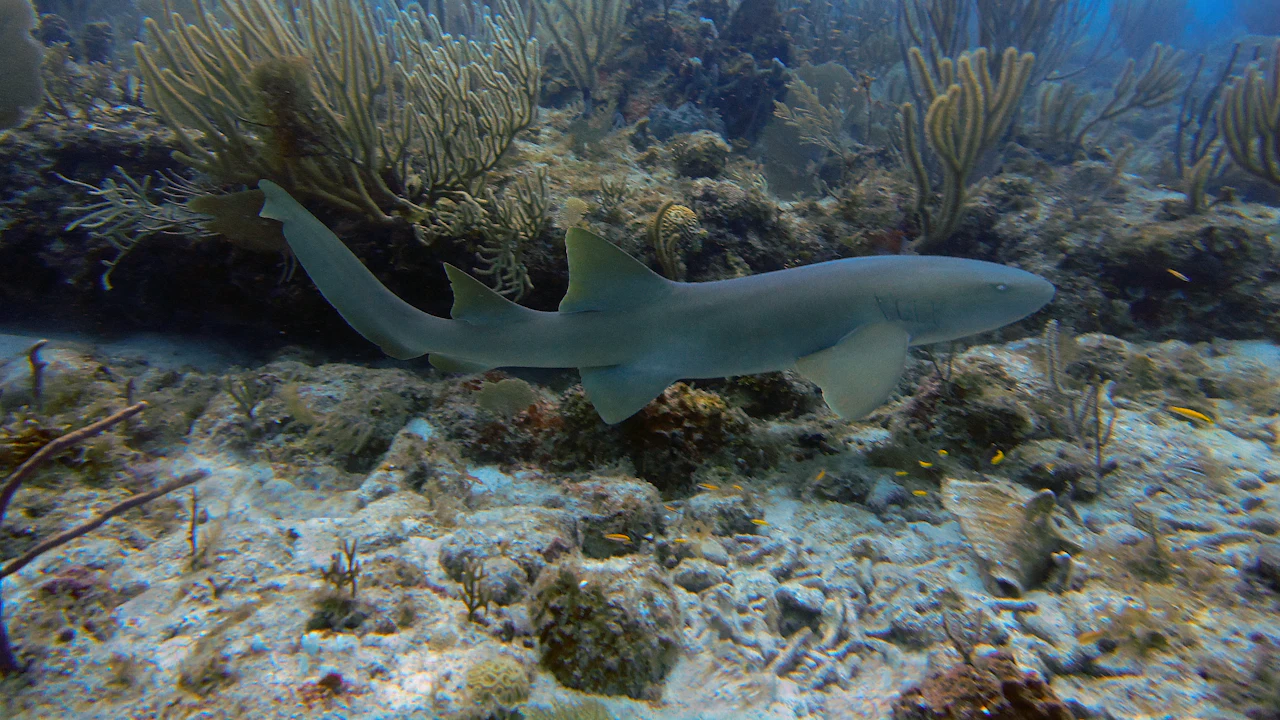
Nurse sharks are easier to identify than most reef animals, mainly because they often stay still long enough for a good look. National Geographic describes them as gray-brown, with a tail fin that can reach a quarter of the shark’s total length.
- Color: plain gray-brown, with no bold markings.
- Size: National Geographic lists a typical length of 7.5 to 9.75 feet, with some reaching about 14 feet.
- Tail: long, with a large upper lobe that sweeps slowly from side to side.
- Where it sits: on or just above the bottom, often on sand or near the base of the reef.
One detail surprises people. Most shark skin feels like sandpaper, but in its list of shark facts from NOAA Fisheries, the agency notes that nurse shark skin is fairly smooth. That is a fact to read about, not to test: touching is off the table for reasons we cover below.
Why nurse sharks rest on the bottom
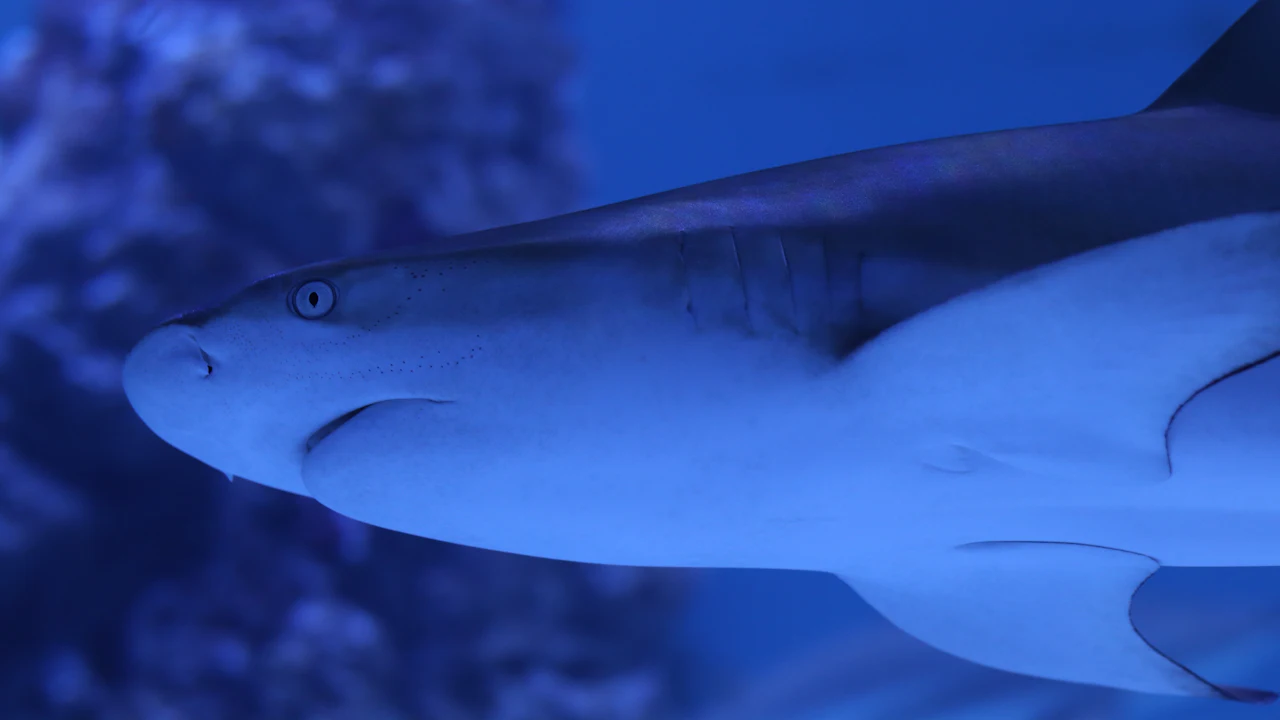
Seeing a shark lying motionless on the sand can look strange if you have heard that sharks must keep swimming to breathe. NOAA Fisheries explains that most sharks do have to keep moving to push water over their gills. Some species, though, have a spiracle, a small opening just behind the eyes that pulls water in while the shark is at rest.
NOAA names nurse sharks as one of the bottom-dwelling sharks that use the spiracle to breathe while resting on the seafloor. So a still nurse shark is not sick or asleep in the way we sleep. It is simply doing what its body is built for.
What nurse sharks eat
National Geographic describes nurse sharks as slow-moving bottom-dwellers with strong jaws and thousands of tiny serrated teeth. They can crush shellfish and even coral, but prefer fish, shrimp and squid. When they hunt prey hidden in the sand, they make a sucking sound.
None of that menu includes people. Their feeding style is built around the seafloor, which is one reason they pay little attention to snorkelers floating at the surface.
Are nurse sharks dangerous?
The honest answer is: rarely, and almost always because a person did something they should not. National Geographic calls nurse sharks mostly harmless, but warns they may bite defensively if stepped on or bothered. It adds that divers who assume the species is docile can get bitten.
NOAA Fisheries makes the same point in its page of NOAA Fisheries answers about which sharks are dangerous. It describes the nurse shark as extremely sluggish, with poorly developed teeth, yet known to bite people when excited or disturbed. Calm animal, calm visitor, and the encounter stays calm.
| Situation | What the authorities say | What you should do |
|---|---|---|
| Shark resting on the sand | Nurse sharks breathe at rest using a spiracle (NOAA Fisheries) | Watch from above and let it rest |
| Shark swimming near you | Slow-moving bottom-dweller, mostly harmless (National Geographic) | Stay relaxed, keep arms in, give it room to pass |
| Standing in shallow water | May bite defensively if stepped on (National Geographic) | Float or swim, and avoid putting feet down on sand |
| Reaching out to touch | Known to bite when excited or disturbed (NOAA Fisheries) | Never touch, grab or ride a shark |
| Offering food | Bites happen when sharks are excited or disturbed (NOAA Fisheries) | Never feed sharks or any other marine life |
Snorkeling with nurse sharks at Shark Ray Alley
Hol Chan Marine Reserve is known for its docile nurse sharks, according to the Belize Tourism Board, and Shark Ray Alley is one of the reserve’s zones. Our trip list includes a Hol Chan and Shark Ray Alley snorkel, and a one-tank Hol Chan dive that pairs with a Shark Ray Alley snorkel. Park tickets are not included.
Our guide to snorkeling Hol Chan and Shark Ray Alley covers the snorkel trip, and our page on the Hol Chan Marine Reserve dive for certified divers covers the dive. New to a mask and fins? Start with our snorkeling tips for first-time snorkelers.
How to behave around nurse sharks
Good conduct protects you and the animal. These habits follow directly from what NOAA Fisheries and National Geographic say about when nurse sharks bite.
- Keep your hands to yourself. No touching, poking, grabbing or riding.
- Never feed a shark, and never hold food in the water.
- Float rather than stand, so you never step on an animal resting on the sand.
- Move slowly and avoid splashing or chasing.
- Give a resting shark space, and do not block its path when it swims.
The same manners apply to coral, turtles and fish. Our page on reef etiquette for divers and snorkelers goes through them in more detail.
Other animals you may meet alongside nurse sharks
Our homepage sums up diving here as time spent with sharks, turtles, rays and eels. Rays are the animals most often confused with each other, so we wrote a separate guide to spotted eagle rays and the other rays divers see, with tips on telling them apart.
For a wider picture, see our overview of marine life you can see on Ambergris Caye, and our guide to scuba diving on Ambergris Caye for the trips we run. No animal is ever guaranteed on any trip, and that is part of what makes each sighting special.
Snorkel and dive with Elbert
White Sands Dive Shop is a 5 Star PADI Dive Facility on the beach in San Pedro, owned and operated by Elbert Greer, PADI IDC Staff Instructor. Local dive and snorkel trips leave at 9:00, with pickup at the dock of your hotel.
Vivake K. Bhalla wrote of Elbert: “He was very friendly and fun, but equally very strict about safety”. You can read more in our letters from students Elbert has taught, and find trips and current prices on our Water Sports page of dives and PADI courses.
Nurse sharks, Belize: your questions answered
Are nurse sharks dangerous to snorkelers?
National Geographic describes nurse sharks as mostly harmless, but they may bite defensively if stepped on or bothered. Do not touch, feed or stand near them and the risk stays very low.
Why do nurse sharks lie still on the bottom?
NOAA Fisheries explains that nurse sharks use a spiracle, a small opening behind the eyes, to pull water in and breathe while resting on the seafloor. Most other sharks have to keep swimming.
Can I touch a nurse shark?
No. NOAA Fisheries notes that nurse sharks have bitten people when excited or disturbed, so look but never touch, grab or ride one.
Will I definitely see nurse sharks on a snorkel trip?
No one can promise it. The Belize Tourism Board says Hol Chan Marine Reserve is known for docile nurse sharks, but they are wild animals and sightings vary from day to day.
How big do nurse sharks get?
National Geographic lists a typical length of 7.5 to 9.75 feet and a weight of 200 to 330 pounds, with some growing to about 14 feet.
Ask us about snorkeling and diving with sharks
Nervous about your first shark encounter, or planning a family snorkel? Email Elbert at elbertgreer@fastmail.fm or phone 011 (501) 226 2405. Tell us your dates and experience, and we will help you choose the right trip.