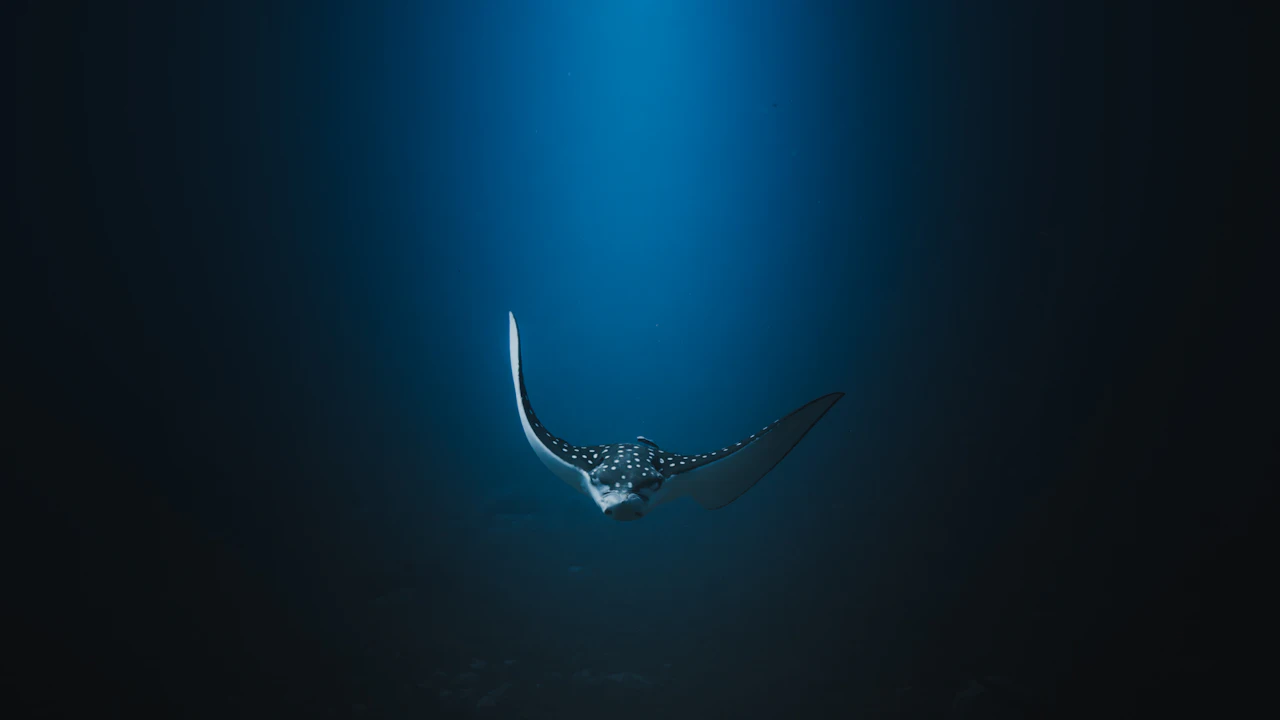
Few sights on a dive stop conversation on the boat like a spotted eagle ray gliding past, wings beating slowly, back covered in white spots. If you are searching for spotted eagle rays Belize information before a trip, this guide explains how to recognize them, how they behave, and how they compare with the other rays you may meet.
It is written for divers and snorkelers who want to know what they are looking at. We use facts from National Geographic and NOAA Fisheries only, and we never promise a sighting: rays are wild animals that travel where they please.
How do you recognize spotted eagle rays in Belize?
Quick answer: Look for a dark back covered in vivid spots and a ray that swims by flapping its pectoral fins like wings. National Geographic says spotted eagle rays often gather in groups near the surface and sometimes leap from the water. NOAA Fisheries lists their size at 5 to 10 feet, larger than a southern stingray.
What is a spotted eagle ray?
Rays are close relatives of sharks. NOAA Fisheries explains that sharks, rays, sawfish and skates are all elasmobranchs, fish whose skeletons are made of cartilage rather than bone. National Geographic notes that rays, the flattened fish of the group, have cruised the seas for about 150 million years.
The spotted eagle ray is one of the most striking of them. Its name comes from the spots on its back and the way it seems to fly through the water rather than swim.
Identification tips
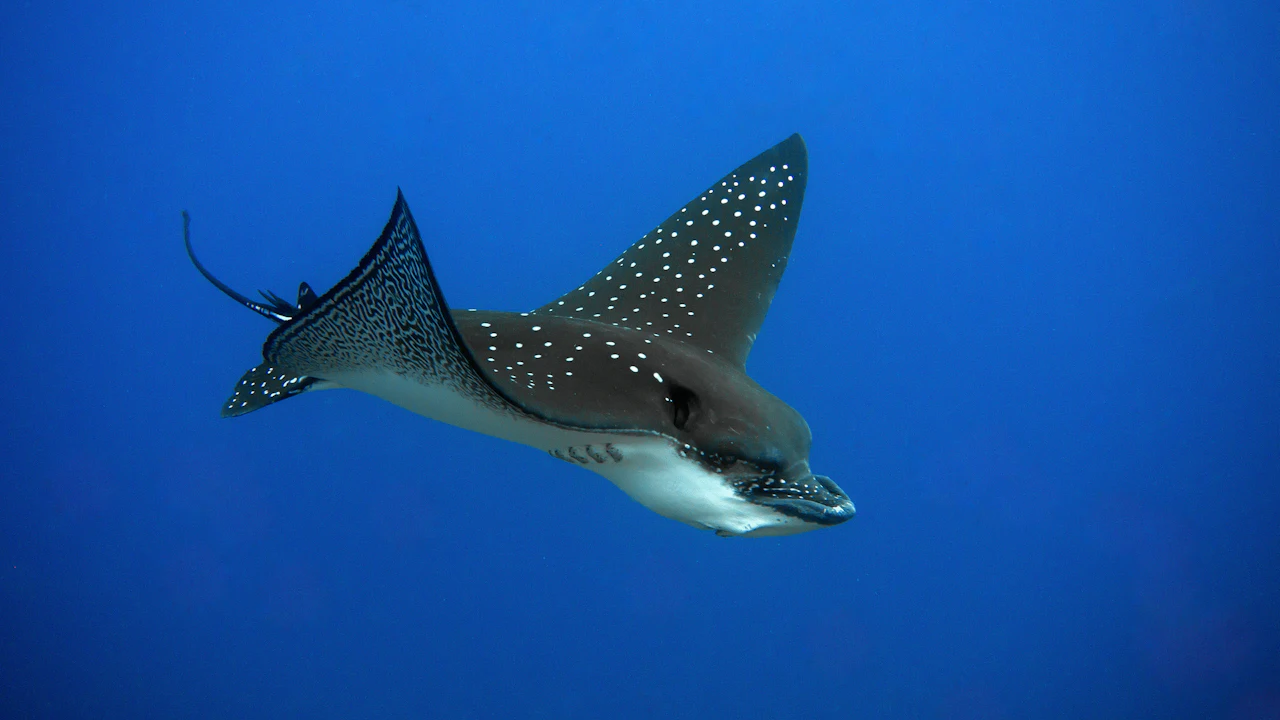
- Back pattern: National Geographic describes a signature pattern of vivid spots on the back.
- Swimming style: it flaps its pectoral fins like wings instead of rippling the edges of its body.
- Size: NOAA Fisheries’ ray identification guide lists 5 to 10 feet.
- Position in the water: usually up in the water column, not lying on the sand.
How spotted eagle rays behave
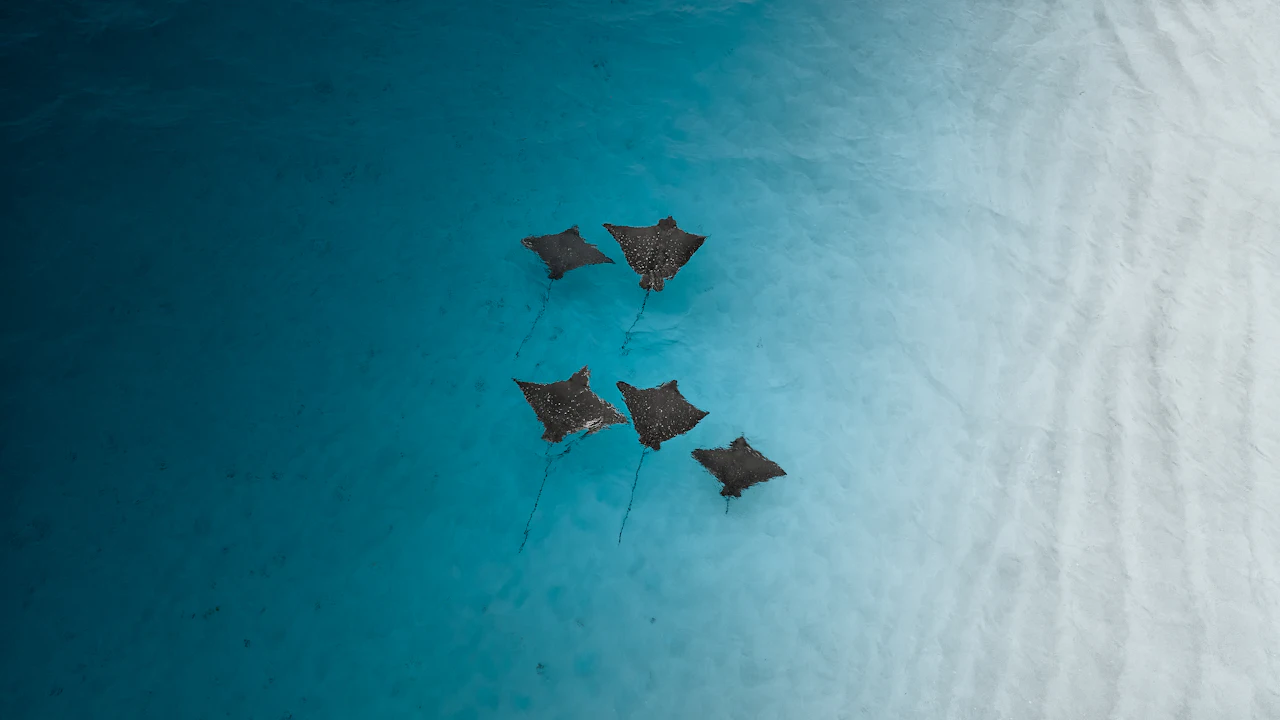
In its gallery of National Geographic’s photo guide to ocean rays, the magazine shows a school of spotted eagle rays and says the species is often seen gathering in groups near the surface. They move by flapping their pectoral fins, and sometimes even leap clear of the water like porpoises.
That habit of swimming up in open water is the key difference from a stingray, which spends much of its time on the bottom. When you see a ray cruising with steady, deep wing beats, you are probably looking at an eagle ray.
Eagle ray diving: where divers tend to meet them
Because eagle rays travel through open water, divers often spot them by looking up and out, away from the reef, rather than down at the sand. Snorkelers floating at the surface can be well placed too, since National Geographic notes they often gather near the surface.
Our homepage sums up diving here as time spent with sharks, turtles, rays and eels. Our guide to scuba diving on Ambergris Caye lists the local reef dives we run, and the full-day atoll trips described on our Turneffe Atoll dive trip from San Pedro page include three dives. No trip can promise a ray: some days you see a squadron, some days none.
Rays of the Caribbean reef compared
Three rays come up most often in questions from divers: the spotted eagle ray, the southern stingray and the manta. NOAA Fisheries places all three in one identification guide, and National Geographic fills in how stingrays and mantas live.
| Ray | Size (NOAA Fisheries guide) | How to spot it | Typical behavior |
|---|---|---|---|
| Spotted eagle ray | 5 to 10 feet | Vivid spots on the back | Swims by flapping its fins, often in groups near the surface, sometimes leaps (National Geographic) |
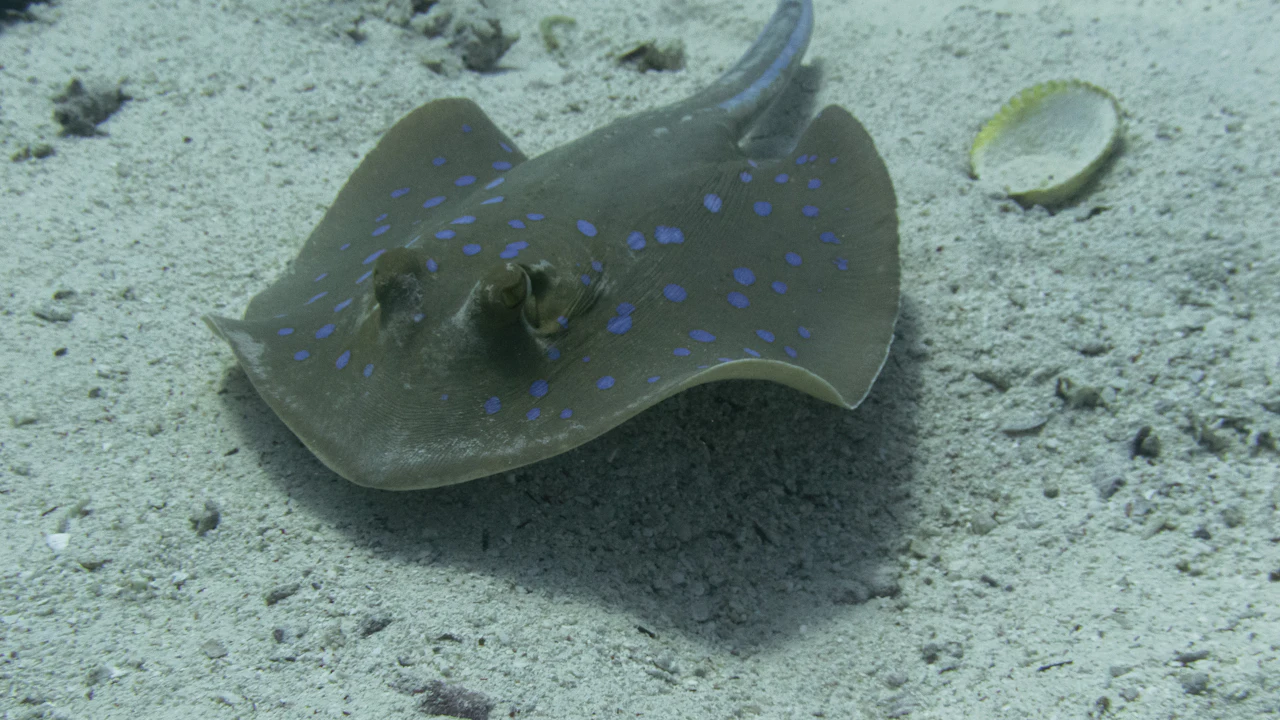
| Southern stingray | 4 to 5 feet | Plain body colored to match the seafloor | Stingrays spend most of their time partly buried in sand; the tail carries a barb (National Geographic) |
| Giant manta ray | 13 to 16.5 feet on average, up to 26 feet | Black back with white shoulder patches in a T shape | Filter feeds on zooplankton and visits cleaning stations on reefs (NOAA Fisheries, National Geographic) |
Stingrays: look where you put your feet
National Geographic explains that stingrays are colored to match the seafloor, which hides them from predators. Their eyes sit on top of the body, while the mouth and gills are underneath. The barb on the tail has serrated edges, and its venom can be dangerous to people. NOAA Fisheries lists stingrays among the animals that can injure swimmers and waders.
Mantas: giant filter feeders
Mantas are the giants of the family. According to National Geographic’s manta ray facts, they swim with their mouths open to sift zooplankton and krill, and they visit reef cleaning stations where small fish pick off parasites. NOAA Fisheries lists the giant manta ray as threatened under the Endangered Species Act.
How to behave around rays
Rays are shy, and the best encounters happen when you stay calm and let them decide how close to come. NOAA Fisheries advises people to observe mantas from a safe distance and never entice them to approach, and the same courtesy suits every ray.
- Hold your position and breathe slowly; chasing a ray only sends it away.
- Never touch, grab or feed a ray.
- Keep good buoyancy so your fins stay off the sand, where a stingray may be hidden.
- Point the animal out to your buddy with a calm hand signal rather than swimming toward it.
Rays often share the reef with nurse sharks, and our guide to nurse sharks and how to snorkel safely beside them covers that encounter. For more neighbors, see our overview of marine life you can see on Ambergris Caye, and our buoyancy control tips for divers to keep your fins off the bottom.
Diving the reef with Elbert
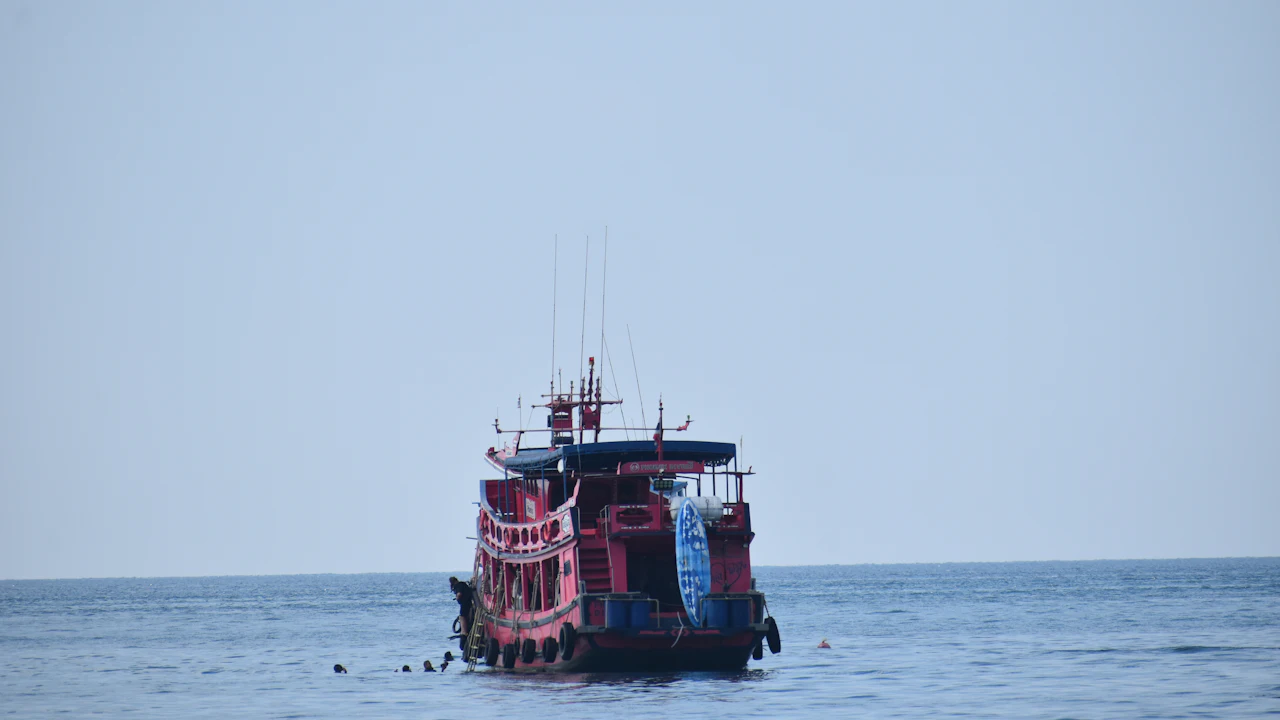
White Sands Dive Shop is a 5 Star PADI Dive Facility on the beach in San Pedro, owned and operated by Elbert Greer, PADI IDC Staff Instructor. Local dive and snorkel trips leave at 9:00, with pickup at the dock of your hotel.
One student, Susan, wrote after her trip that “Eagle Ray to the Aquarium was also pretty cool,” but that her two dives with Elbert “were far more amazing” because “you pointed out so many cool things to look at, not to mention the manatee.” You can read her full note in our letters from students Elbert has taught, and find trips and current prices on our Water Sports page of dives and PADI courses.
Spotted eagle rays, Belize: your questions answered
How big are spotted eagle rays?
The NOAA Fisheries ray identification guide lists spotted eagle rays at 5 to 10 feet, larger than the southern stingray at 4 to 5 feet.
What is the difference between an eagle ray and a stingray?
Spotted eagle rays have vivid spots and swim up in the water by flapping their fins like wings. National Geographic says stingrays spend most of their time partly buried in sand, colored to match the seafloor.
Do spotted eagle rays really jump out of the water?
Yes. National Geographic notes that they sometimes leap porpoise-like into the air.
Can I see spotted eagle rays on every dive?
No. Rays are wild animals that move through open water, so sightings are never guaranteed on any trip.
Is it safe to swim near rays?
Stay calm, keep your distance and never touch or feed them. Stingrays carry a barb whose venom National Geographic says can be dangerous, so keep your fins and feet off the sand.
Ask us about diving with rays
Hoping to see rays on your trip? Email Elbert at elbertgreer@fastmail.fm or phone 011 (501) 226 2405. Tell us your dates and experience, and we will help you plan your dives.