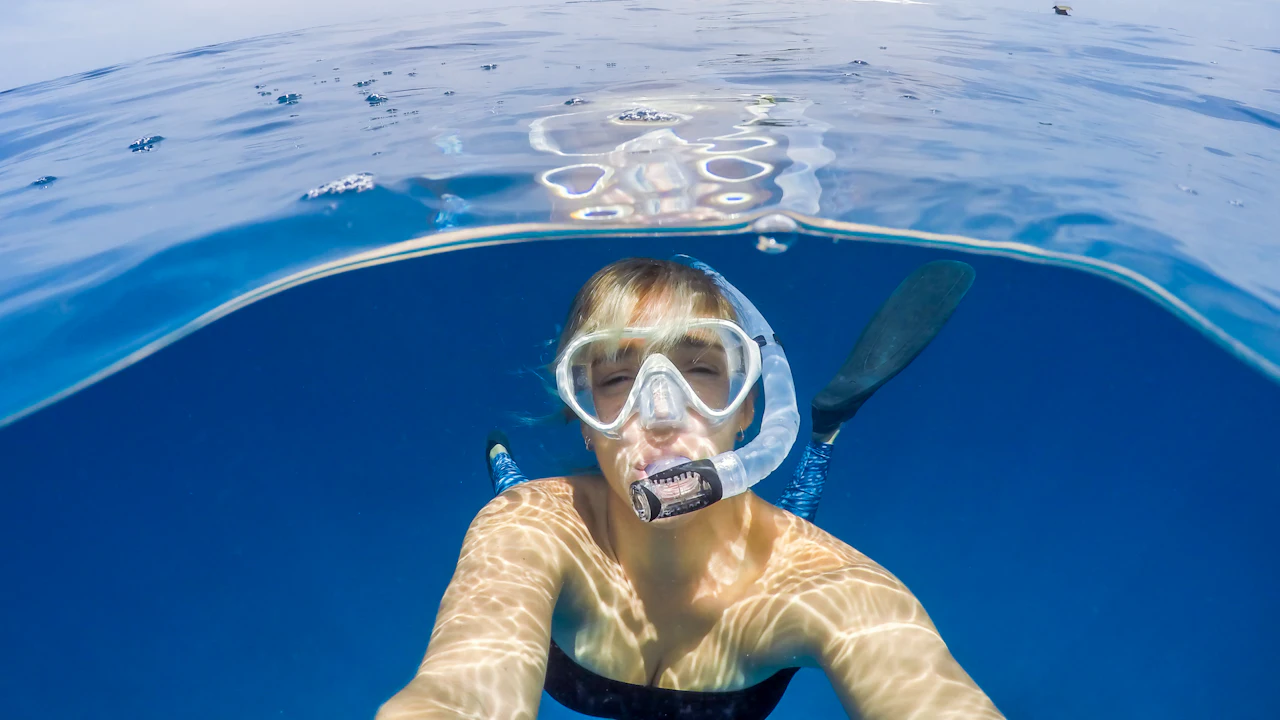
If you wear glasses, you can still learn to dive and see the reef clearly. What you cannot do is wear your everyday glasses under a dive mask, because the arms break the seal and let water in. Scuba diving with glasses simply means choosing another way to correct your vision underwater.
This guide is for glasses wearers planning a first dive, a course or a dive trip. We compare the four usual options, explain what the Divers Alert Network says about each, and list what to bring so poor vision never gets in the way of a good dive.
Is scuba diving with glasses possible?
Quick answer: Not with regular glasses, because their arms stop the mask from sealing. Instead, glasses wearers dive with a prescription mask, stick-on lenses inside a standard mask, or contact lenses under the mask. Some mildly nearsighted divers manage without correction. Ask your eye doctor which option suits your prescription before you travel.
Why clear vision matters on a dive
Seeing the fish is the fun part, but vision is also a safety tool. You need to read your gauges or dive computer, follow your instructor’s hand signals and keep track of your buddy.
The Divers Alert Network (DAN) puts it plainly in its article on prescription dive masks from Divers Alert Network: accurate vision is essential to dive safety. Not being able to read your gauges, or to find the boat after getting separated from the group, can be hazardous.
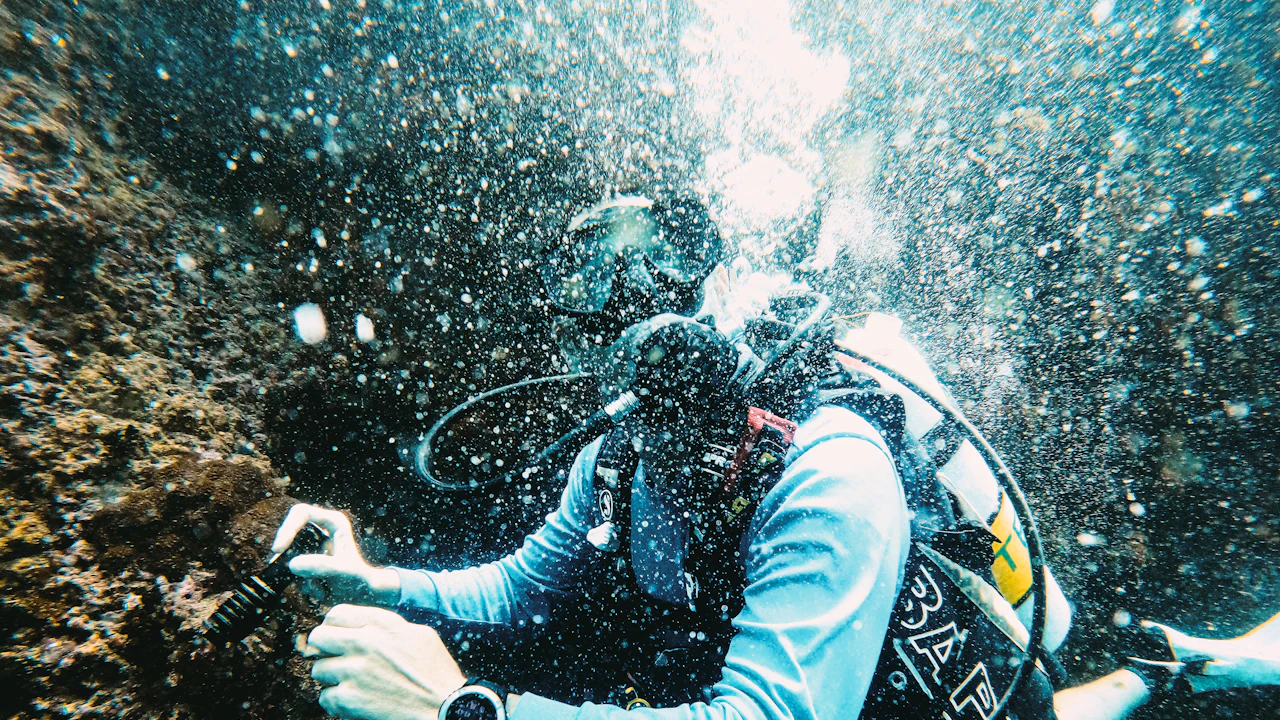
Prescription dive mask options
A prescription dive mask puts corrective lenses where the flat glass would be. You see clearly from the moment the mask goes on, and there is nothing to lose in the water. DAN describes several types.
Stock-lens and drop-in masks
Stock lenses are premade and correct the basic sphere part of a prescription, roughly 0 to -8.00 for nearsight and 0 to +4.00 for farsight, according to DAN. They are an excellent option for divers with mild astigmatism and no other vision issues. Some masks also take drop-in lenses, which cover a limited range, including some astigmatism correction.
DAN notes that buying a stock-lens mask at a dive store helps ensure a proper fit. Fit matters as much as the lenses, because a leaking mask is a problem with any prescription.
Custom lenses
If your prescription is outside the stock range, custom lenses are made to your exact prescription. DAN says laminated lenses are installed in a lab, can be applied to any dive mask and can correct any prescription. Divers with strong farsighted (high-plus) lenses should pick a mask with enough volume that the lenses do not touch the face.
Stick-on lenses for reading
Almost all divers develop presbyopia to some degree with age, which makes small numbers hard to read up close. DAN points out that over-the-counter stick-on reading lenses are sold at most dive stores. They go inside a normal mask and magnify the lower part of your view, so you can read a gauge while seeing normally straight ahead.
Contact lenses and scuba diving
Many divers simply wear contact lenses under a standard mask. DAN notes that contacts come in a wide range of prescriptions, including multifocal and astigmatism corrections, and give uninterrupted vision before, during and after a dive. That last point helps on the boat, where you still need to see clearly.
There are trade-offs. If water gets into your mask and reaches your eyes, DAN advises removing and cleaning your lenses after the dive. It also links a rare but serious eye infection, Acanthamoeba keratitis, to lens wearers who swim or dive in their lenses. PADI, citing DAN, favors soft lenses, because hard lenses do not let gas through and can blur your vision.
- Talk to an eye care professional before diving in contacts, as DAN recommends, and ask which lens type suits diving.
- Carry spare lenses if losing a pair would stop you diving.
- Keep a pair of glasses with you; DAN says contact lens wearers should always have them available.
- During mask skills, close your eyes while the mask is flooded or off, then open them once it is clear.
Comparing your options
What about diving with no correction at all? Water magnifies what you see, making objects look about a third bigger and nearer, so slightly nearsighted divers may not need contacts or a prescription mask. PADI advice for divers who wear contacts or glasses suggests a simple test: at your gear fitting, see whether you can read the air and depth gauges without your glasses.
Here is how the four choices stack up. Which one is right depends on your prescription, how often you dive and what your eye doctor advises.
| Option | Best for | Advantages | Watch out for |
|---|---|---|---|
| Prescription lenses in a mask | Regular divers and people who dislike contacts | Clear vision as soon as the mask is on; nothing to lose in the water | Stock lenses have a set range; you cannot see clearly once the mask is off |
| Stick-on lens inserts | Divers who only need help reading gauges up close | Fit inside a normal mask; sold at most dive stores | Correct near vision only, not distance |
| Soft contact lenses | Contact wearers and people with prescriptions masks cannot match | Wide range of prescriptions; clear vision before, during and after the dive | Lenses can be lost in a flooded mask; infection risk if water reaches the eyes |
| Diving without correction | Some mildly nearsighted divers | Nothing extra to buy or carry | You must still read gauges and see signals; check with your eye doctor first |
What to bring for your first dive
Sort your vision out at home, before the trip. Then pack with a backup in mind, since a lost lens far from your optician can end a dive day.
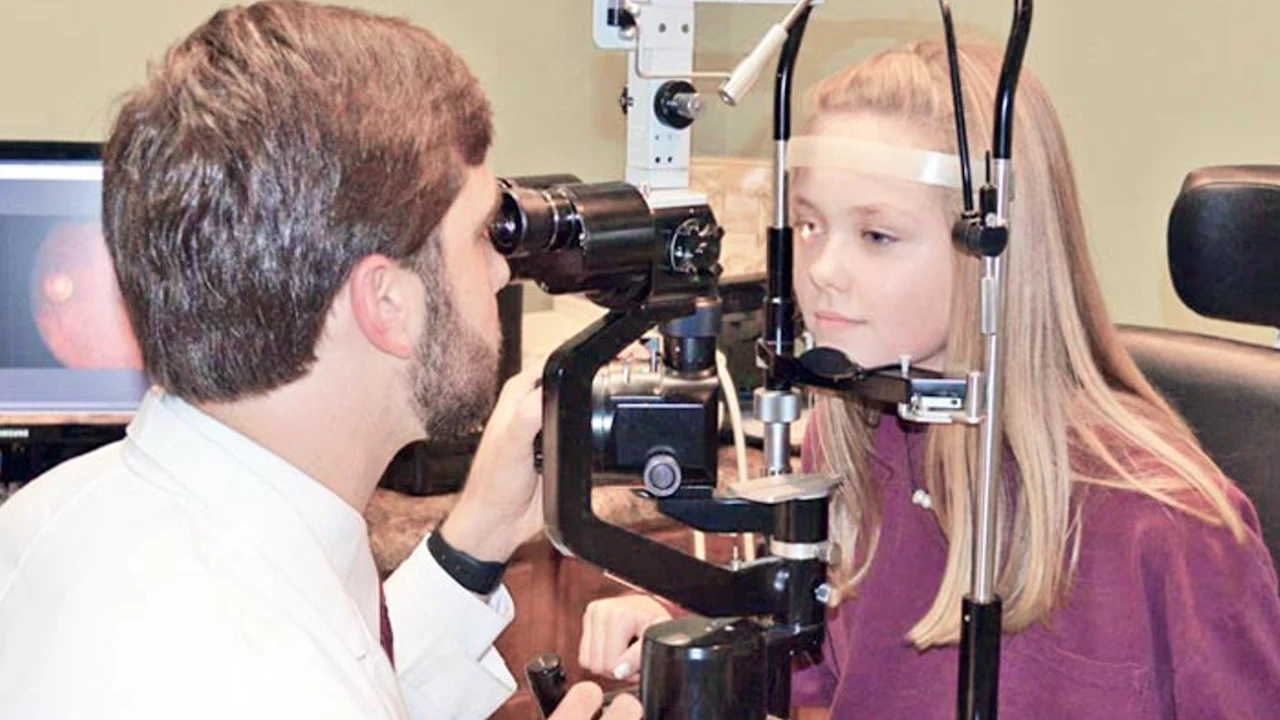
- Visit your eye doctor and ask which option fits your prescription and eyes.
- If you choose a prescription mask, buy it in person and try it on for fit.
- Pack your everyday glasses for the boat and the trip home.
- If you dive in contacts, pack spare lenses, a case and solution.
- Tell your instructor about your vision before the pool session, so mask skills hold no surprises.
We rent standard masks along with the rest of your scuba kit; our guide to scuba gear rental on Ambergris Caye explains what is available. Rental prices are on our Water Sports page with courses and prices.
Learning to dive when you wear glasses
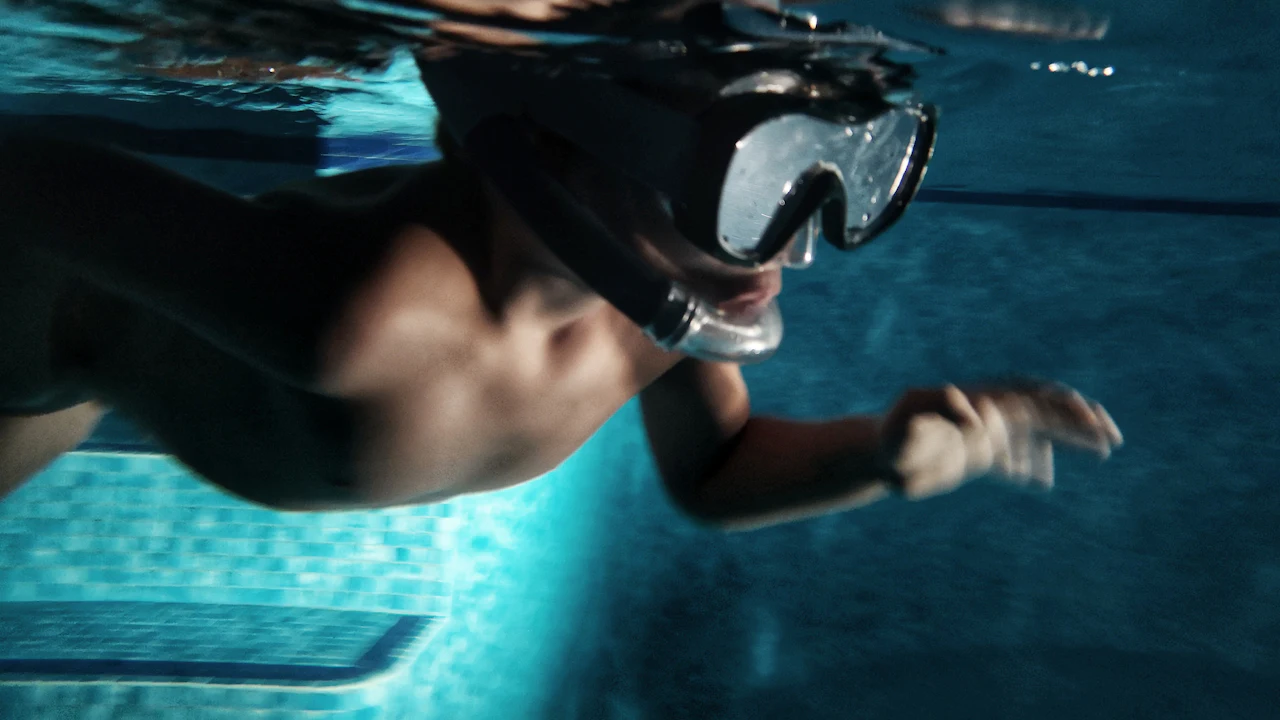
Glasses are no reason to skip a first dive. A Discover Scuba Diving experience on Ambergris Caye starts in the pool, which is a good place to see how your vision fix works. Our tips for your first open water dive and our guide to learning to dive on Ambergris Caye cover the next steps.
White Sands Dive Shop is a 5 Star PADI Dive Facility on the beach in San Pedro, owned and operated by Elbert Greer, PADI IDC Staff Instructor. Susan Bird remembered her first two dives with Elbert this way: “you pointed out so many cool things to look at, not to mention the manatee.” Read more in our letters from students Elbert has taught.
Scuba diving with glasses: your questions answered
Can I wear my regular glasses under a dive mask?
No. The arms of your glasses sit where the mask skirt needs to seal, so water leaks in. Use a prescription mask, stick-on lenses or contacts instead.
Can you wear contact lenses while scuba diving?
Many divers do. DAN recommends talking to an eye care professional first, carrying spare lenses and glasses, and removing and cleaning your lenses after a dive if water reached your eyes.
What if I only need reading glasses?
Stick-on reading lenses fit inside a standard mask and help you read gauges up close. DAN notes they are sold at most dive stores.
Can a prescription mask correct astigmatism?
According to DAN, stock-lens masks suit mild astigmatism, some drop-in lenses include astigmatism correction, and custom laminated lenses can correct any prescription.
Ask us before you travel
Wear glasses and want to plan a dive or course? Email Elbert at elbertgreer@fastmail.fm or phone 011 (501) 226 2405. Tell us how you correct your vision, and we will help you plan the rest.