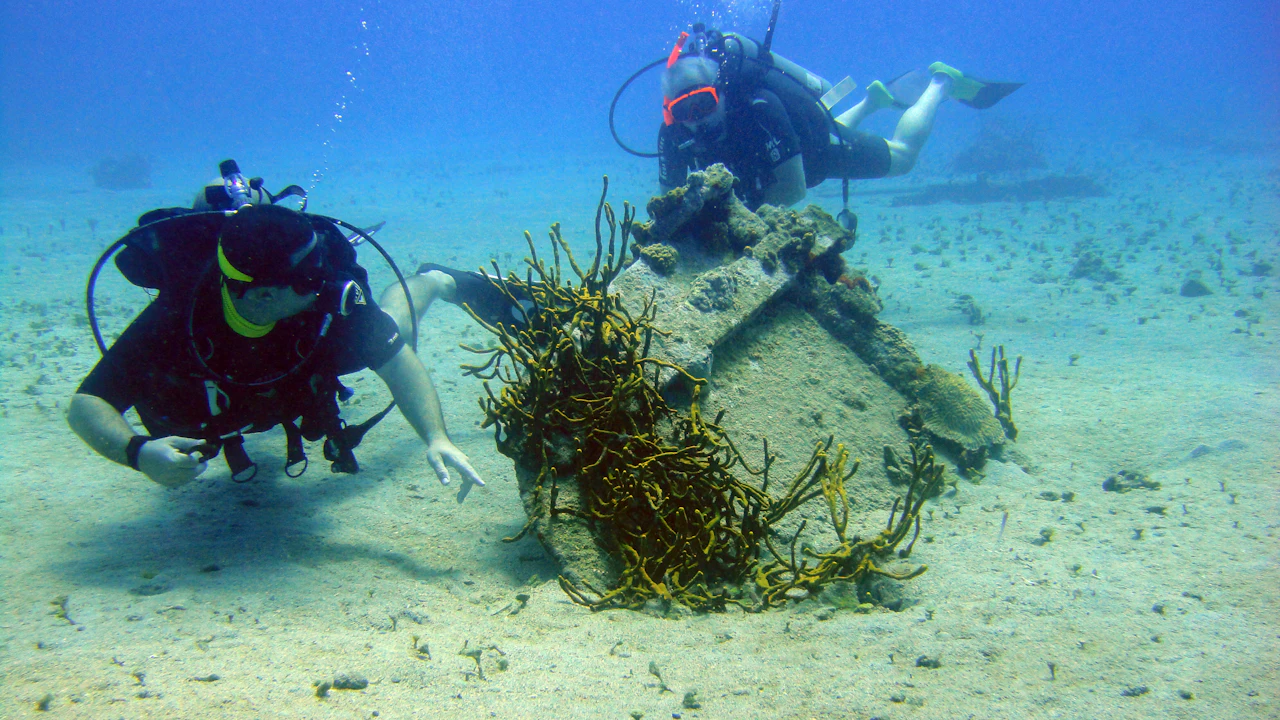
The scuba diving buddy system is the simplest safety tool in diving: two divers who plan the dive together, check each other’s gear and stay close enough to help. It costs nothing, needs no equipment and works on every dive, from your first training dive to a deep wall.
This guide is for student divers, newly certified divers and anyone who will be paired with a stranger on a dive boat. We cover what a buddy actually does, how close to stay, the standard lost-buddy procedure and why solo diving is a separate qualification.
What is the scuba diving buddy system and how does it work?
Quick answer: Two divers share responsibility for each other’s safety. They plan the dive together, agree on hand signals, do a pre-dive check, stay close, watch each other’s depth, time and air, and follow the same plan if separated: search for about a minute, then make a safe ascent and reunite at the surface.
How the scuba diving buddy system works
PADI describes the buddy system as clear communication plus a shared responsibility for each other’s safety and fun. Each diver keeps an eye on the other’s depth, time and gas, and each is ready to help with a problem such as a cramp, an entanglement or running low on air.
According to PADI’s guide to why you should always dive with a buddy, diving in pairs is usually considered best practice for recreational divers. Groups of three or more are harder to keep track of, especially in poor visibility, and can raise the chance of separation.
Dive buddy responsibilities, step by step
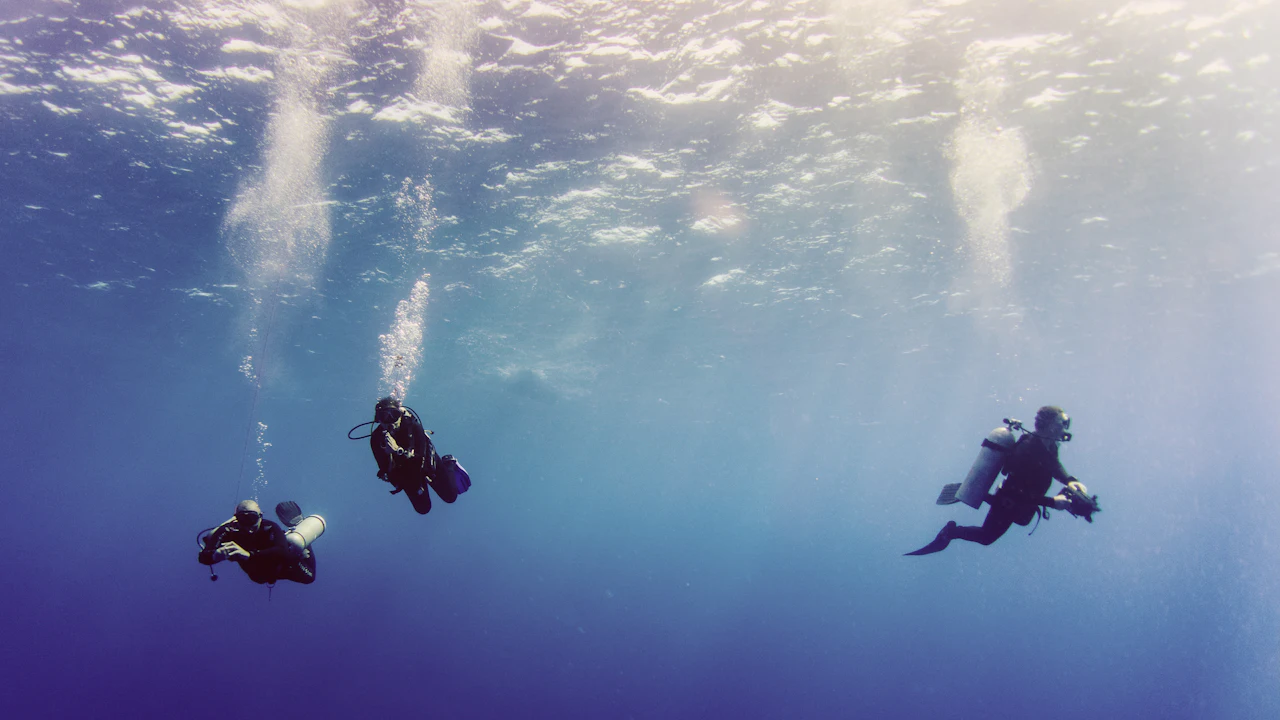
A good buddy is responsible, capable and willing to help. In practice the job splits into three parts: before the dive, in the water and after you surface.
Before the dive
- Agree on the dive plan: maximum depth, dive time, the air pressure at which you turn around, and who leads.
- Review hand signals, especially “OK”, “low on air”, “out of air” and “something is wrong”.
- Agree what you will both do if you get separated.
- Do a full pre-dive check on each other’s gear, every dive, even if the same gear worked yesterday.
Our pre-dive safety check guide walks through the full buddy check, including where your buddy’s alternate air source and weight releases are. Knowing where those are before you descend is what makes the buddy system work in an emergency.
In the water and after the dive
Underwater, you stay close, check in with an “OK” signal often and compare air pressure at intervals. Stick to the plan and limits you agreed on, and never pressure your buddy into something they are not comfortable with. After the dive, help each other on the boat and talk through anything that felt wrong.
How close should you stay to your dive buddy?
Close enough to reach your buddy quickly, but not so close that you kick each other. One PADI rule of thumb is to stay no more than about two seconds apart. In clear tropical water it is tempting to drift farther, but distance is the enemy if your buddy suddenly needs air.
Pick a position and keep it, such as side by side or one slightly behind the other, so you always know where to look. Since you cannot talk underwater, our guide to scuba diving hand signals covers the signals buddies use most, from “OK” to “share air”.
| Setup | Who it suits | Training needed | Main drawback |
|---|---|---|---|
| Buddy pair | Most recreational divers, students and new divers | Any entry-level certification | You depend on a partner you may have just met |
| Team of three | Odd-numbered groups, some technical and cave teams | Same as a pair, plus a clear plan for roles | Harder to keep track of each other, more chance of separation |
| Solo diving | Experienced divers with backup gear | A separate solo or self-reliant certification | No one nearby to share air or help |
The buddy separation procedure
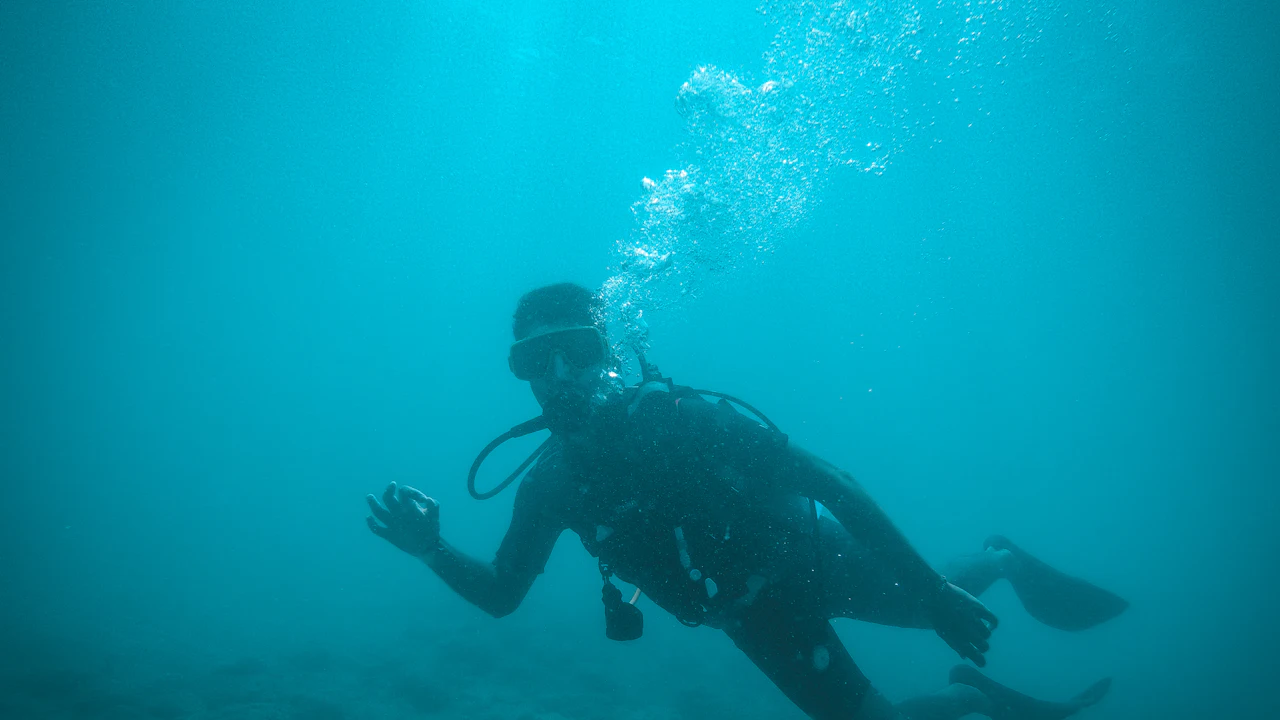
Even careful buddies lose sight of each other, usually when one stops for a photo or a turtle. PADI’s scuba refresher questions give the standard lost-buddy procedure in one line: remain calm and search for your buddy for about one minute before making a safe ascent to the surface.
- Stop, stay calm and check your depth and air.
- Turn slowly and look all around, including above, behind and below you.
- If you have not found your buddy after about a minute, make a safe, slow ascent.
- Reunite at the surface, where your buddy should be doing the same thing.
The procedure only works if both of you follow it, which is why you agree on it before the dive. On a guided dive, tell the guide too. A group guide is watching the whole group, so the guide is not a substitute for your own buddy.
When your buddy matters most: air emergencies
The biggest reason to stay close is air. If one diver runs out, the nearest source of air is the buddy’s alternate air source, the spare second stage on a standard scuba setup. That only helps if your buddy is a few kicks away and already knows where to find it.
Our guide to out of air emergency procedures explains the options in the order training agencies teach them, and how good habits keep you from needing any of them.

Can you dive without a buddy?
Solo diving is a separate skill with its own training. PADI notes that experienced divers can dive solo with the right equipment and training, such as the PADI Self-Reliant Diver specialty. That course is built for divers who want to plan and carry the backup gear to handle problems on their own.
For everyone else, and certainly for anyone on vacation who dives a few times a year, PADI says the safest and more rewarding choice is to always dive with a buddy. If you are traveling alone, ask your dive operator before the trip how buddies are paired on the boat.
Practice buddy skills with Elbert
White Sands Dive Shop is a 5 Star PADI Dive Facility on the beach in San Pedro, owned and operated by PADI IDC Staff Instructor Elbert Greer. Our overview of learning to dive on Ambergris Caye explains each PADI course, from a first try-dive to the Rescue Diver course, where helping a buddy in trouble is the whole point.
Students notice the safety focus. Vivake K. Bhalla described Elbert as “very friendly and fun, but equally very strict about safety”, and you can read more in the letters from Elbert’s dive students. Course details and current course prices are on our Water Sports page.
Scuba diving buddy system: your questions answered
What does a dive buddy do?
A dive buddy plans the dive with you, checks your gear before you descend, stays close, watches your depth, time and air, and helps if something goes wrong, such as running low on air.
What should I do if I lose my dive buddy?
PADI’s procedure is to remain calm, search all around, including above, behind and below you, for about one minute, then make a safe ascent and reunite at the surface.
How close should I stay to my buddy?
Stay close enough to reach each other quickly. A common PADI rule of thumb is no more than about two seconds apart.
Is a group of three a good buddy team?
PADI says pairs are usually best practice for recreational divers. Groups of three or more are harder to keep track of and can raise the chance of separation, so agree on clear roles if you dive as a trio.
Can I scuba dive alone?
Only with the right training and equipment, such as the PADI Self-Reliant Diver specialty. For most recreational divers, PADI recommends always diving with a buddy.
Questions about diving with a buddy? Ask Elbert
If you are traveling alone or are unsure about buddy skills, tell us before your trip and we will talk it through with you. Email Elbert at elbertgreer@fastmail.fm or call 011 (501) 226 2405.