
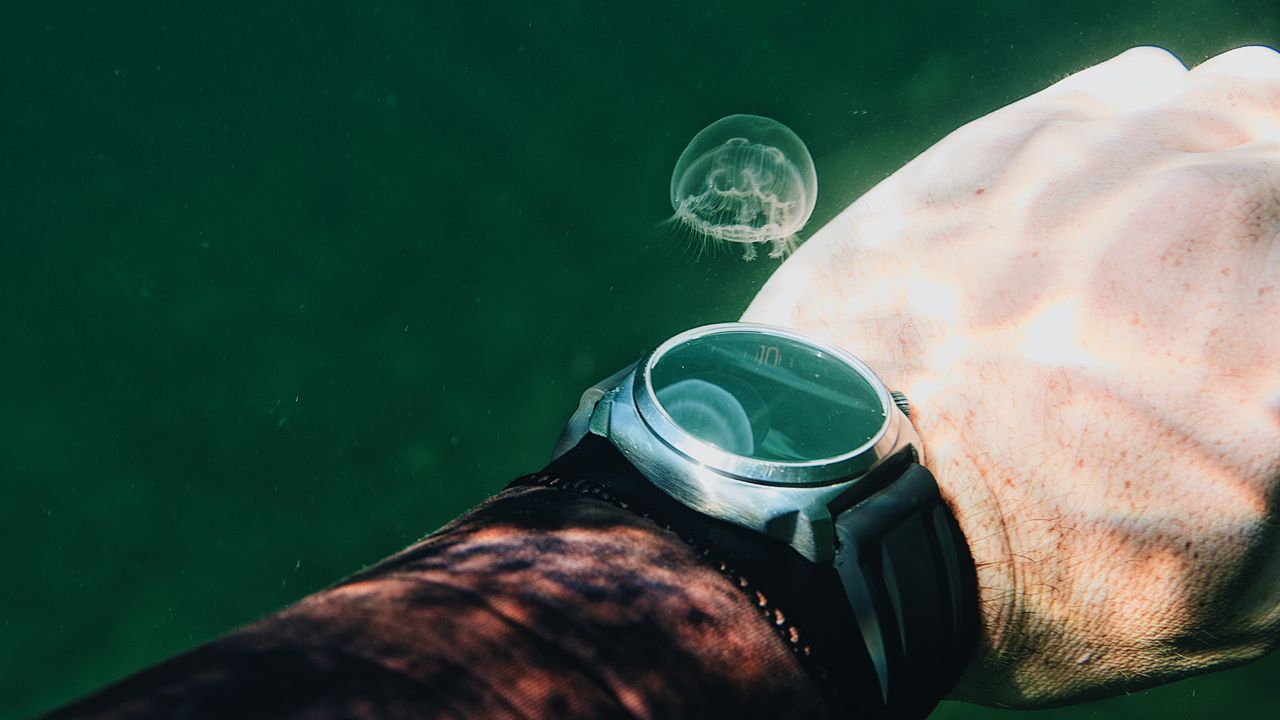
At the end of almost every recreational dive, divers pause in shallow water for a few minutes before they surface. That pause is the safety stop in scuba diving: a short, planned hover that adds a margin of safety to a dive that was already within its limits.
This guide is for student divers, new divers and anyone returning after a break. We explain what a safety stop is, the depth and time the Divers Alert Network (DAN) describes, why it lowers decompression stress, how it differs from a decompression stop, how to hold it steady, and what DAN says if you miss one. We are a dive shop, not doctors: any symptom after a dive belongs with a doctor.
What is a safety stop in scuba diving, and how long does it last?
Quick answer: A safety stop is a short pause near the end of the ascent, which DAN describes as three to five minutes at 15 or 20 feet. It is done to lower the risk of decompression sickness on a dive where that risk is already low. DAN calls it generally a good idea, but not strictly necessary.
What a safety stop is
On a dive, your body takes up nitrogen from the air you breathe. Dive tables and dive computers set no-decompression limits (NDLs), the depth and time you can stay and still ascend directly to the surface. A safety stop is an extra pause on the way up, added even though the dive stayed inside those limits.
In an Alert Diver article on safety stops and decompression stops, DAN describes a typical stop as a single three- to five-minute stop at 15 or 20 feet. Most divers know it simply as the stop they make before the boat.

Why divers do a safety stop
DAN explains that safety stops are done to minimize the risk of decompression sickness (DCS), in a setting where the risk is already very low. In other words, the stop is a buffer, not a rescue. Our guide to decompression sickness symptoms divers should know covers what DCS is and why it matters.
DAN also notes that DCS is probabilistic: risk rises the closer you dive to your NDL. A diver can stay “within the limits” and still carry more decompression stress, or inert gas load, if they hover near the edge dive after dive. A few relaxed minutes in shallow water gives the body more time on the way up.
How long is a safety stop
Three minutes is the common baseline. DAN reports that some dive computers extend safety stops from three minutes to five minutes or more, especially when a diver comes within five minutes of the NDL or dives deeper than 100 feet. It adds that the more risk factors you have, such as cold water, exertion and deep dives, the longer your safety stops should be.
Your computer will count the stop for you. Our guide to choosing a dive computer for beginners explains what a computer tracks during a dive.
Safety stop vs decompression stop
The two terms sound alike, but DAN draws a firm line between them. A safety stop is optional but wise. A decompression stop is required, because the dive went past its no-decompression limit.
| Point | Safety stop | Decompression stop |
|---|---|---|
| When it applies | Dives within no-decompression limits | Dives that exceed no-decompression limits |
| Required? | Generally a good idea, not strictly necessary | Obligatory |
| Purpose | Lower an already low DCS risk | Keep DCS risk at an acceptably low level |
| Typical stop | Three to five minutes at 15 or 20 feet | Set by the dive plan or computer |
| Who makes it | Any recreational diver, as a habit | Only for divers trained in decompression diving |
| If missed | Review why the plan was not followed | Abort later dives and watch for symptoms |
DAN states that dives requiring mandatory decompression should be done only by those trained in decompression diving. Recreational divers plan to stay well inside their limits, so the safety stop is the only stop on a normal dive.

How to hold a steady safety stop
A good stop is calm and level, not a bobbing struggle. Three tools help.
- Buoyancy: vent a little air from your BCD as you rise and use slow, steady breaths to fine tune your depth. Our buoyancy control tips for divers cover the technique.
- Ascent line: in DAN’s article on diving in currents, divers are told to use the ascent line during the safety stop to keep from being swept away.
- Surface marker buoy (SMB): if you miss the line or make a free ascent, DAN advises deploying your SMB when appropriate, so the boat crew can follow your position during the stop.
Keep your body flat and your fins still while you hover. Our guide on how to choose scuba fins that fit explains why a comfortable pair makes small, controlled movements easier. If a current pushes you into an unexpected ascent, DAN says to try to stop it as quickly as possible and make a safety stop if you can.

If you miss a safety stop: what DAN says
Missed stops happen, usually from a runaway ascent, low air or a lost buddy. DAN separates the two cases clearly. If a deco stop is missed, the diver should abort later dives and be monitored for any unusual symptoms.
For a missed safety stop, DAN says those steps are generally not necessary. Instead, it advises the diver and buddy to review why the dive plan was not followed and how to prevent the same error next time. That review is good practice after any dive that did not go as planned.
This is general information, not advice for your case. If you feel unwell after any dive, see a doctor or contact DAN without delay.
Learn good ascent habits with Elbert
White Sands Dive Shop is a 5 Star PADI Dive Facility on the beach in San Pedro, owned and operated by Elbert Greer, PADI IDC Staff Instructor. Our guide to learning to dive on Ambergris Caye walks through the PADI courses, from a first try to full certification.
Student Vivake K. Bhalla wrote that Elbert “was very friendly and fun, but equally very strict about safety”. Read more in our letters from students Elbert has taught, and see courses and current prices on our Water Sports page of dives and PADI courses.
Safety stop in scuba diving: your questions answered
How long is a safety stop?
DAN describes a typical safety stop as three to five minutes at 15 or 20 feet. Some dive computers extend it to five minutes or more after deeper dives or dives close to the no-decompression limit.
Is a safety stop mandatory?
DAN calls a safety stop generally a good idea but not strictly necessary. A decompression stop, by contrast, is obligatory.
Why do divers do a safety stop?
DAN explains that safety stops are done to minimize the risk of decompression sickness, on dives where that risk is already very low.
What should I do if I miss a safety stop?
DAN says the steps for a missed deco stop are generally not necessary after a missed safety stop. Review with your buddy why the plan was not followed, and see a doctor if you feel unwell.
How do I stay at the right depth during a safety stop?
Fine tune your buoyancy, use an ascent line when one is available, and deploy a surface marker buoy if you are making a free ascent, as DAN advises.
Ask us before your dive
Have a question about ascents, safety stops or getting back in the water after a break? Email Elbert at elbertgreer@fastmail.fm or phone 011 (501) 226 2405. Tell us your dates and experience, and we will help you plan.