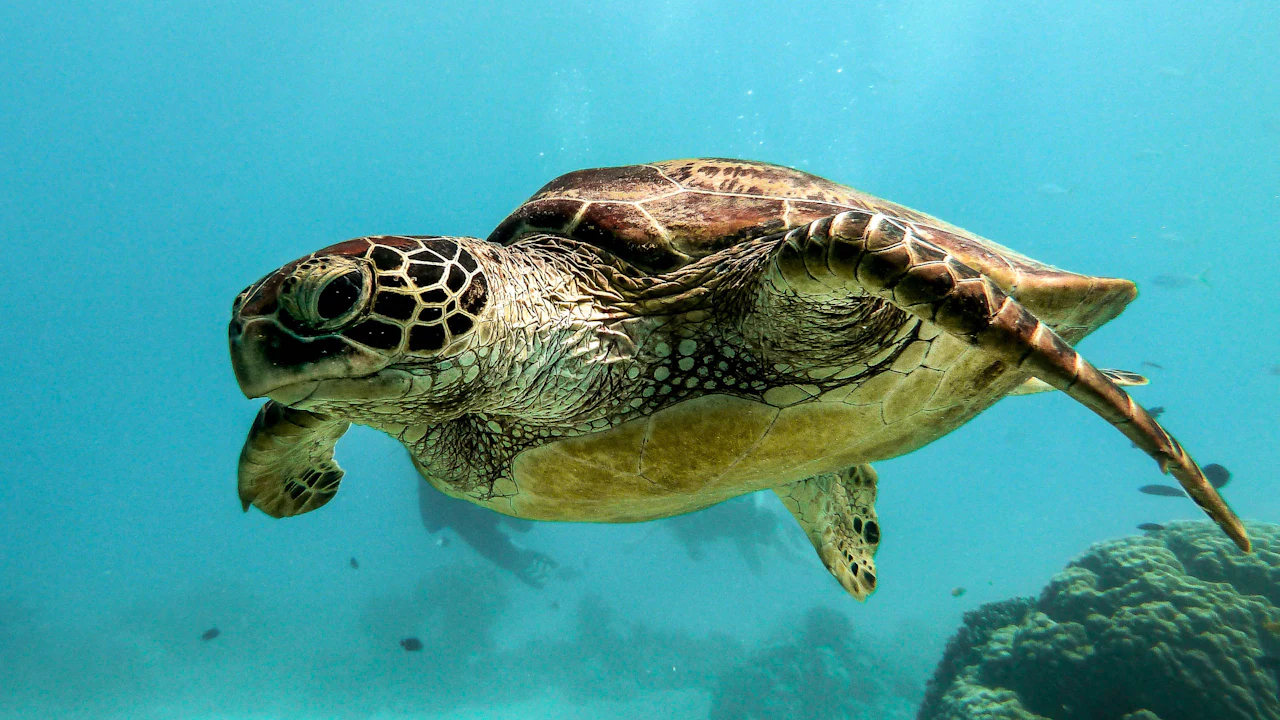
Watching a turtle glide over the coral is one of the moments divers and snorkelers talk about long after a trip. If you are reading up on sea turtles in Belize before you travel, you probably want to know which kinds live on the reef, how to tell them apart, and how to behave when one swims past.
This guide is for first-time snorkelers, new divers and anyone curious about reef wildlife. We have kept it to facts from NOAA Fisheries and the Belize Tourism Board, plus what we know from running dive and snorkel trips from San Pedro. If it is your first time in a mask, start with our snorkeling tips for beginners.
Which sea turtles in Belize are you likely to meet on the reef?
Quick answer: Divers and snorkelers on Caribbean reefs mostly meet three species: the hawksbill, the green turtle and the loggerhead. The Belize Tourism Board lists green and loggerhead turtles among the endangered species of Hol Chan Marine Reserve. All three are protected, so look, never touch, and let the turtle set the distance.
Turtle species on a Caribbean reef
Sea turtles are reptiles that breathe air, so every one you see will rise to the surface for a breath sooner or later. Each species has its own diet, which is why you tend to find them in slightly different places on the same stretch of reef.
Hawksbill turtle
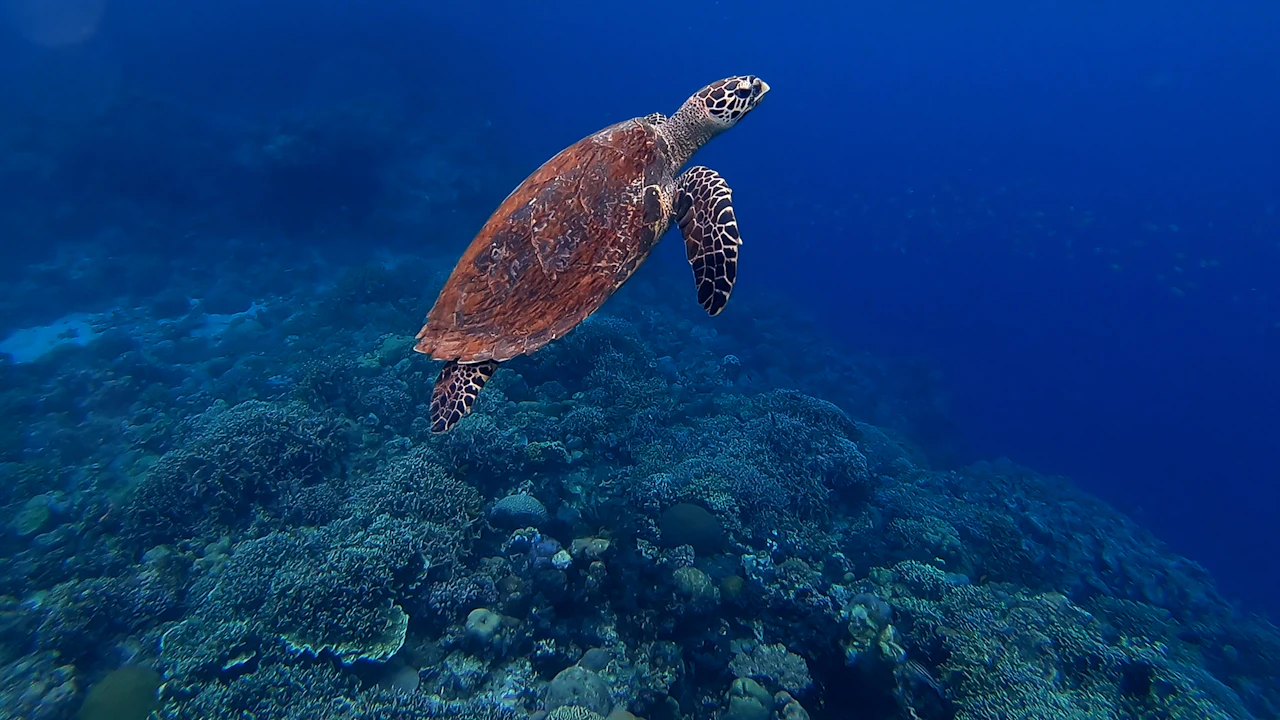
The NOAA Fisheries hawksbill turtle profile describes a head that tapers to a point and a sharp, birdlike beak it uses to reach food in tight crevices. The shell is mottled amber, orange, brown and black, with overlapping plates and a jagged rear edge. Adults are about 2 to 3 feet long.
Hawksbills prefer healthy coral reefs, and in many areas their favorite food is sponges. NOAA notes that the largest hawksbill populations are in the Caribbean, which makes this the reef turtle many divers meet first.
Green turtle
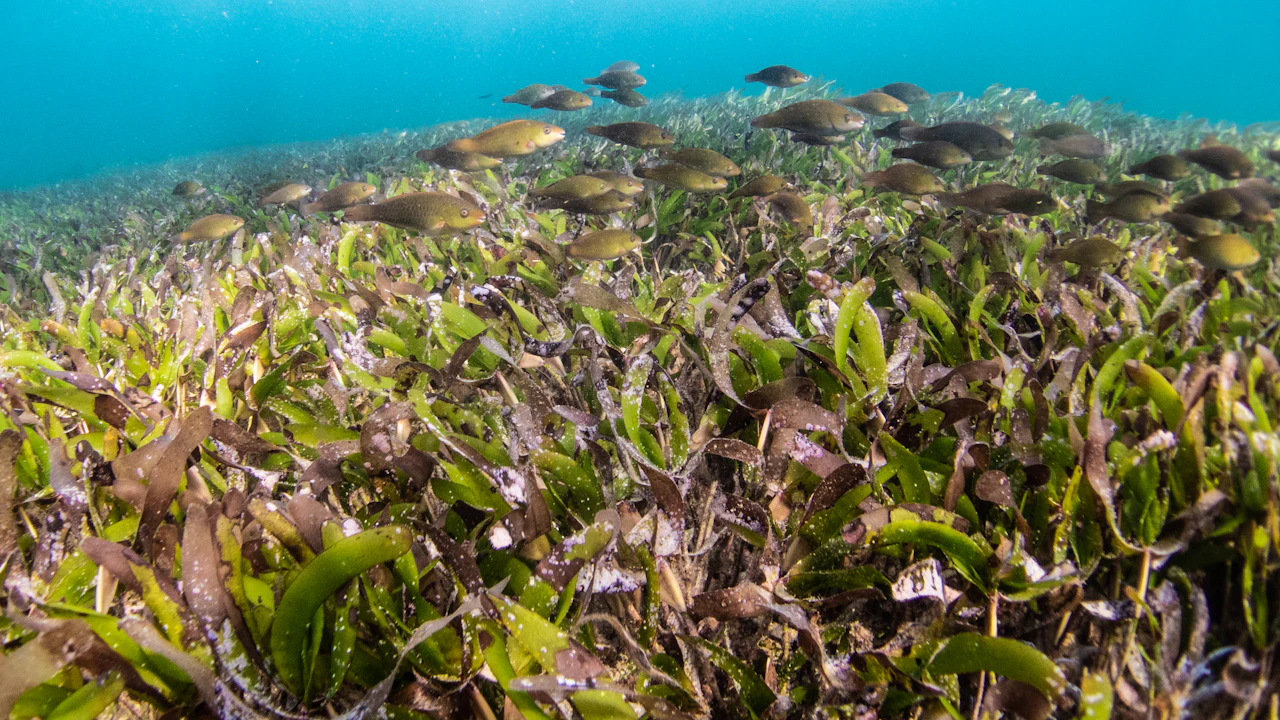
The green turtle is the largest hard-shelled sea turtle, at about 3 to 4 feet, yet it has a small, rounded head. Its name comes from the color of its fat, not its shell, which is usually brown, gray or olive. According to the NOAA Fisheries green turtle profile, it is the only sea turtle that eats mainly plants, grazing on seagrass and algae.
Loggerhead turtle
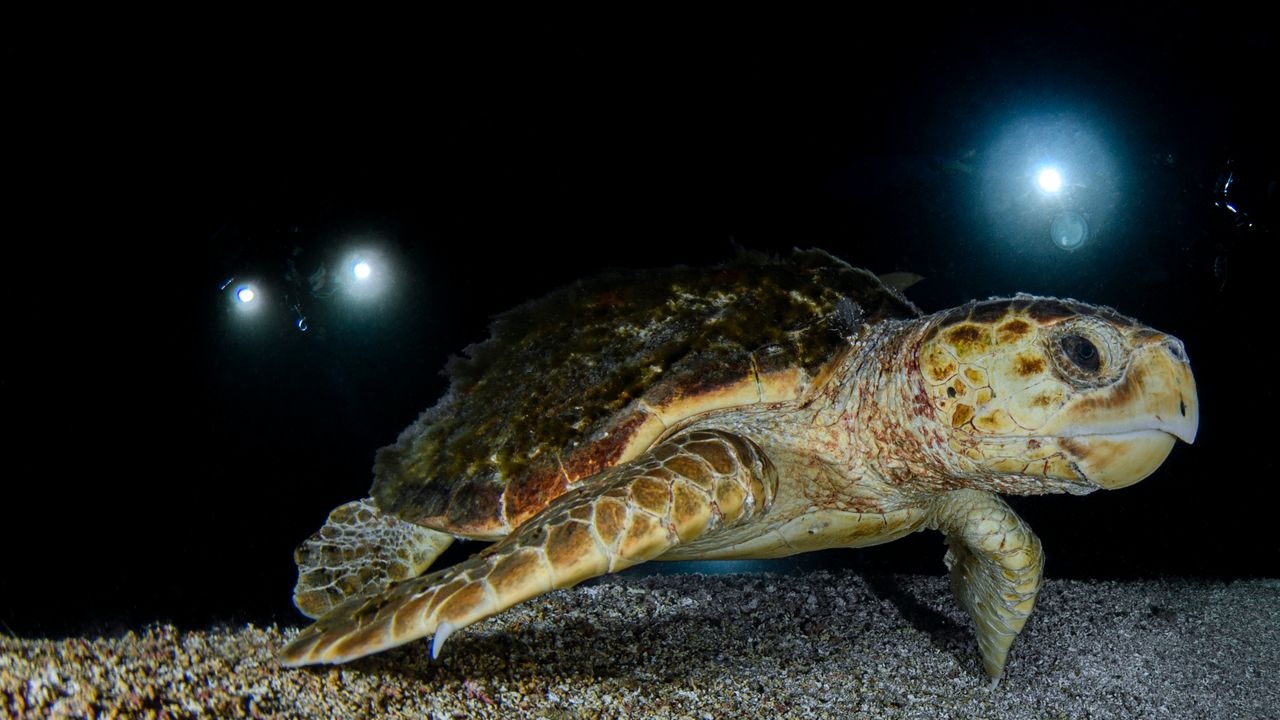
Loggerheads have a big, broad head and powerful jaws built for crushing hard-shelled prey such as conch and crabs. Their shell is reddish brown and roughly heart shaped. Adults run about 2.5 to 3.5 feet long and can weigh 200 to 350 pounds.
How to tell reef turtles apart
In the water you rarely get a long look, so focus on the head first, then the shell. Young green turtles have patterned shells and are often mistaken for hawksbills, so the head shape is the more reliable clue.
| Species | Head | Shell | Main food | Where you may see it |
|---|---|---|---|---|
| Hawksbill | Narrow, pointed, hawklike beak | Mottled amber and brown, overlapping plates, jagged rear edge | Sponges, plus algae and other reef life | Poking into coral heads on the reef |
| Green turtle | Small and rounded | Smooth, brown, gray or olive | Seagrass and algae | Grazing on seagrass beds and sandy patches |
| Loggerhead | Very large and broad, strong jaws | Reddish brown, heart shaped | Conch, crabs and other shelled prey | Resting under ledges or crossing sand |
Turtles share the reef with eels, rays, sharks and a great many reef fish. Our guide to marine life you can see around Ambergris Caye covers the other animals worth watching for.
Snorkeling with sea turtles and diving near them
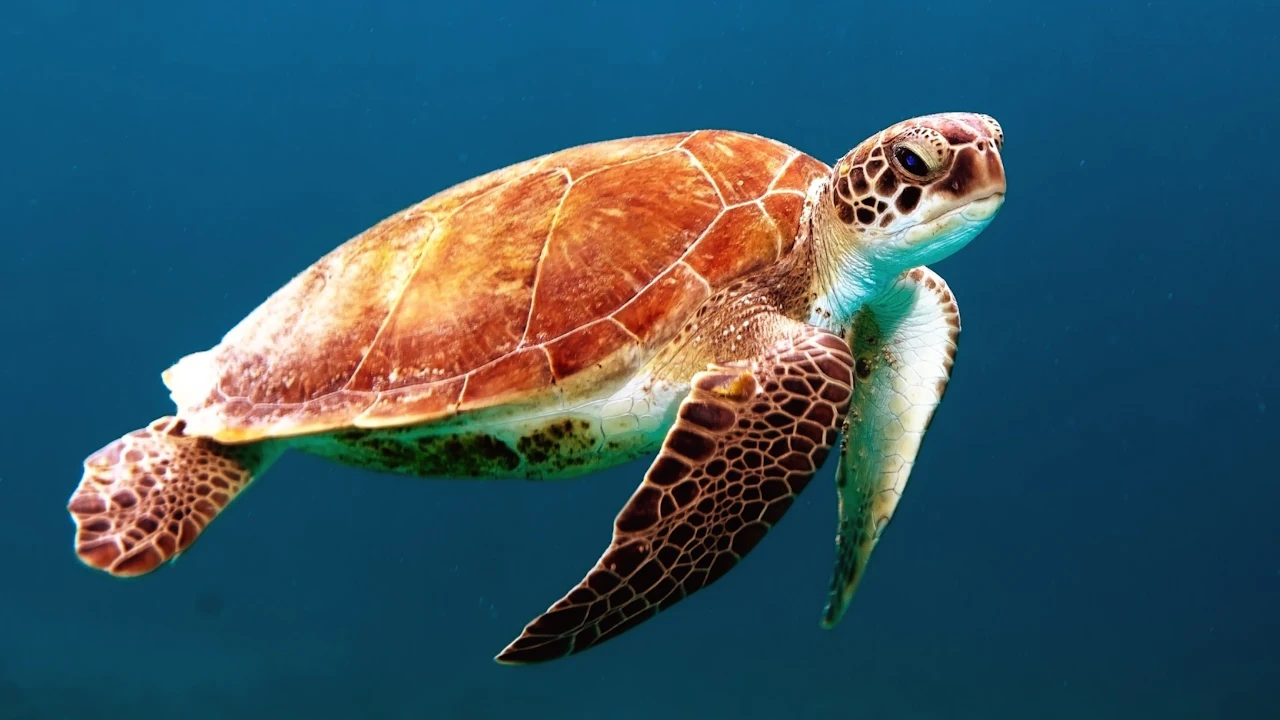
The Belize Tourism Board names green and loggerhead turtles among the endangered species found in Hol Chan Marine Reserve, one of the local reef trips we run from San Pedro. We run a Hol Chan Marine Reserve dive with a Shark Ray Alley snorkel, and non-divers can join the Hol Chan and Shark Ray Alley snorkeling trip.
Turtles are also part of everyday reef diving here: our homepage describes diving with sharks, turtles, rays and eels. Local trips leave at 9:00, with pickup at the dock of your hotel. See our guide to scuba diving on Ambergris Caye for the full range of reef dives.
Turtles are wild, though, and no trip can promise one. Some days you will see several, and some days none. Current trip and course prices are on our Water Sports page with PADI courses and prices.
Why sea turtles are protected
All three reef species are at risk. NOAA Fisheries lists the hawksbill as endangered under the US Endangered Species Act, and it is also on Appendix I of CITES, the treaty that controls trade in wildlife. The North Atlantic green turtle and the Northwest Atlantic loggerhead are both listed as threatened.
NOAA names the same main threats again and again: getting caught in fishing gear, harvest of turtles and eggs, lost nesting beaches, boat strikes, and plastic and fishing line that turtles swallow or get tangled in. Divers cannot fix all of that, but we can make sure we are never part of the problem.
How to behave around a sea turtle
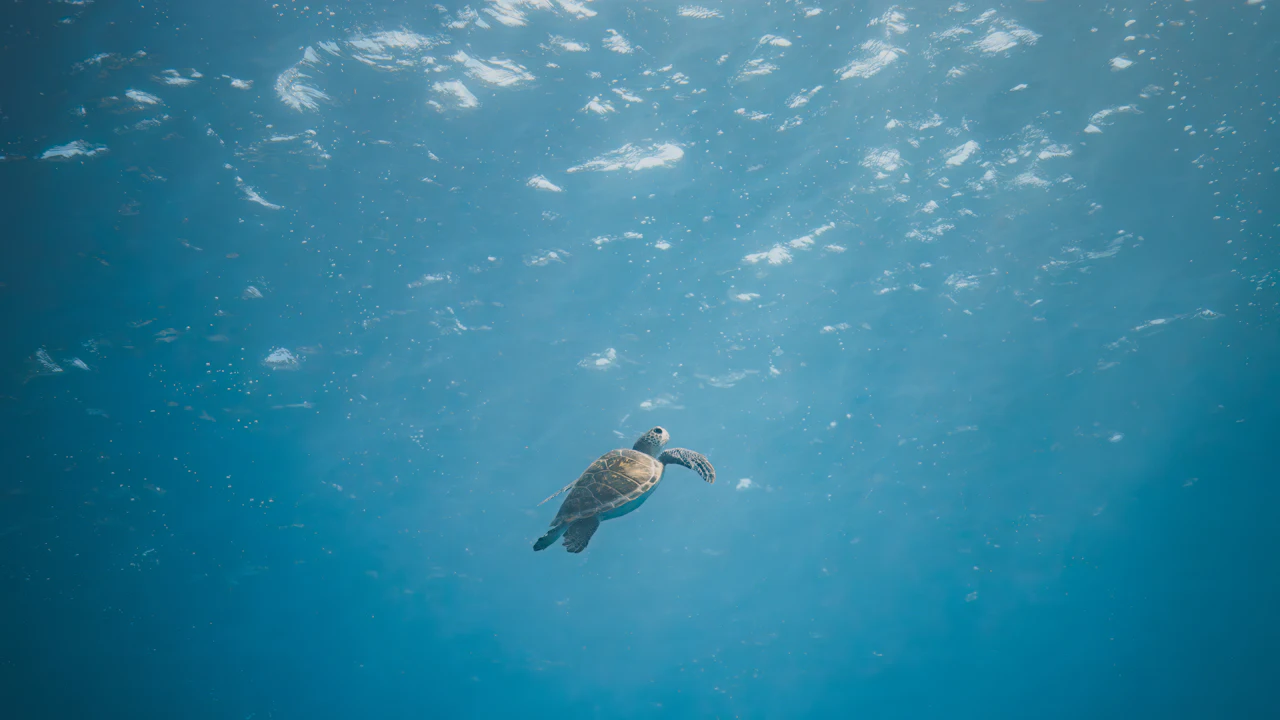
NOAA’s advice is simple: never feed or try to feed a sea turtle, and never touch one, because both change its natural behavior. On top of that, a few reef habits make every encounter better for you and the turtle.
- Stay to the side and slightly behind, never directly above or in its path.
- Never block a turtle heading up to breathe. It needs a clear route to the surface.
- Do not chase. If it swims away, let it go and enjoy the view.
- Keep your fins off the coral and your buoyancy steady, so you can hover and watch calmly.
- Give it space when other snorkelers gather, so the turtle is never surrounded.
Our guide to reef etiquette for divers and snorkelers explains these habits in more detail, and they apply to every animal you meet underwater.
Diving with a guide who knows the reef
White Sands Dive Shop is a 5 Star PADI Dive Facility on the beach in San Pedro, owned and operated by Elbert Greer, PADI IDC Staff Instructor. A good guide sees more than you will alone, and knows when to hang back so a turtle stays relaxed.
Vivake K. Bhalla summed up Elbert’s style in a few words: “He was very friendly and fun, but equally very strict about safety– perfect balance for and instructor.” You can read more in our letters from students Elbert has taught.
Sea turtles in Belize: your questions answered
What kinds of sea turtles live in Belize?
Divers and snorkelers on Caribbean reefs mostly meet the hawksbill, the green turtle and the loggerhead. The Belize Tourism Board lists green and loggerhead turtles at Hol Chan Marine Reserve.
Can you snorkel with sea turtles near Ambergris Caye?
Turtles do live on the reef here, and snorkelers sometimes see them at Hol Chan Marine Reserve. They are wild animals, so no trip can promise a sighting.
Is it OK to touch a sea turtle?
No. NOAA Fisheries advises never to touch or feed sea turtles, because it changes their natural behavior. Watch from the side and let the turtle choose the distance.
How do you tell a hawksbill from a green turtle?
Look at the head. A hawksbill has a narrow, pointed beak, while a green turtle has a small, rounded head. Young green turtles can have patterned shells, so the shell alone can fool you.
Are sea turtles endangered?
NOAA Fisheries lists the hawksbill as endangered and the North Atlantic green turtle and Northwest Atlantic loggerhead as threatened under the US Endangered Species Act.
Plan your reef trip with us
Want to spend a morning on the reef looking for turtles and everything else that lives there? Email Elbert at elbertgreer@fastmail.fm or phone 011 (501) 226 2405, and we will help you choose the right dive or snorkel trip for your skills.