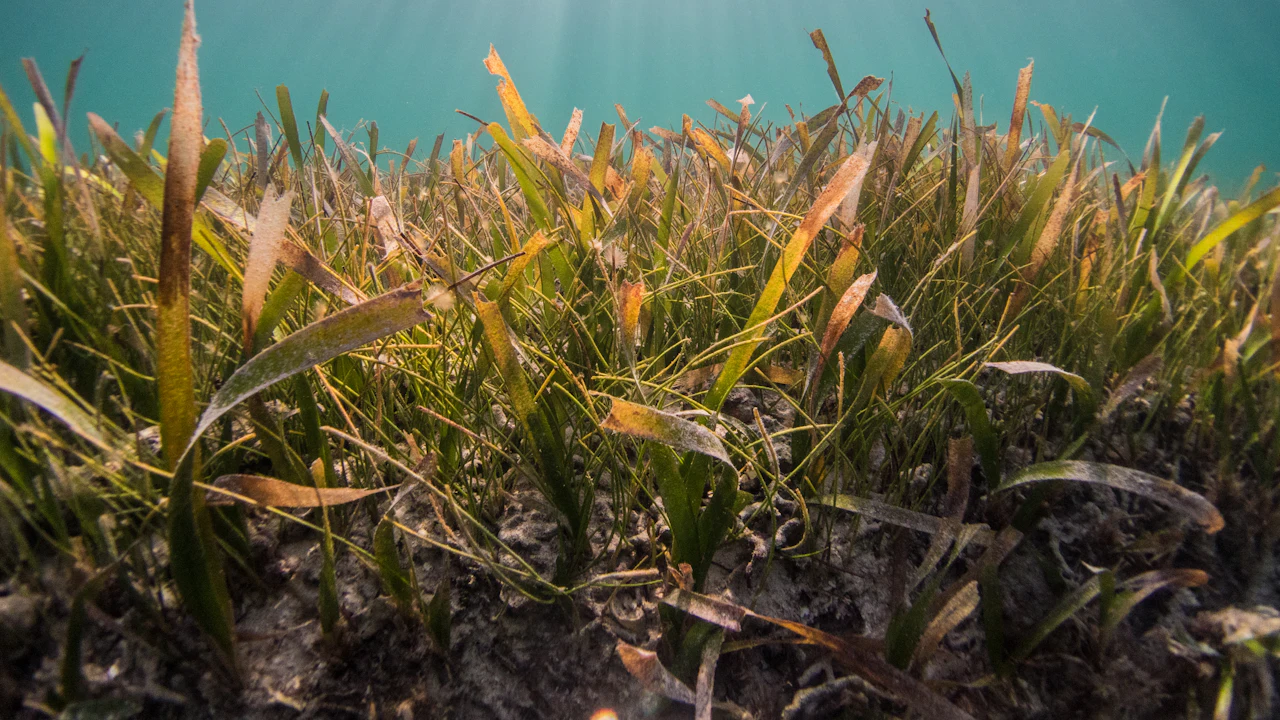
Swim out from almost any beach on the cayes and the sand soon gives way to soft green meadows waving in the current. Seagrass beds in Belize are easy to overlook on the way to the reef, but they are one of the most important habitats in the sea, and plenty of the animals visitors hope to see depend on them.
This seagrass beds Belize guide is for snorkelers, divers and curious travelers who want to know what that “grass” is, why it matters and how to enjoy it without harming it. The science comes from the National Oceanic and Atmospheric Administration (NOAA), the US ocean and coastal agency.
What are the seagrass beds in Belize, and why do they matter?
Quick answer: Seagrass beds are underwater meadows of rooted flowering plants, not seaweed. NOAA says they give many animals habitat, shelter and feeding grounds, protect shorelines by calming waves, release oxygen and store carbon. Green turtles and manatees graze on seagrass, and NOAA has pictured turtle grass on the Mesoamerican Reef in Belize.
What is seagrass?
Seagrass looks like a lawn, but it is not grass in the garden sense. In a NOAA Ocean Podcast episode on seagrass, a NOAA scientist describes seagrasses as rooted flowering plants that live entirely underwater, in water from slightly salty to full seawater.
They have roots, stems and leaves, and they make their food from sunlight just as land plants do. NOAA explains that they evolved from land plants that returned to the sea many millions of years ago. Despite the name, they are more closely related to lilies and ginger than to land grasses.
There are 72 species of seagrass around the world, according to NOAA. They grow on every continent except Antarctica, mostly in shallow, sheltered water with sandy or muddy bottoms where enough light reaches the seafloor. Some meadows are big enough to be seen from space.
Turtle grass in the Caribbean
Two Caribbean seagrasses appear in NOAA’s material by their common names: turtle grass and manatee seagrass. NOAA’s own photo of a spotted eagle ray gliding over turtle grass was taken on the Mesoamerican Reef in Belize. The names are a good hint about who eats it.
Seagrass vs seaweed: what is the difference?
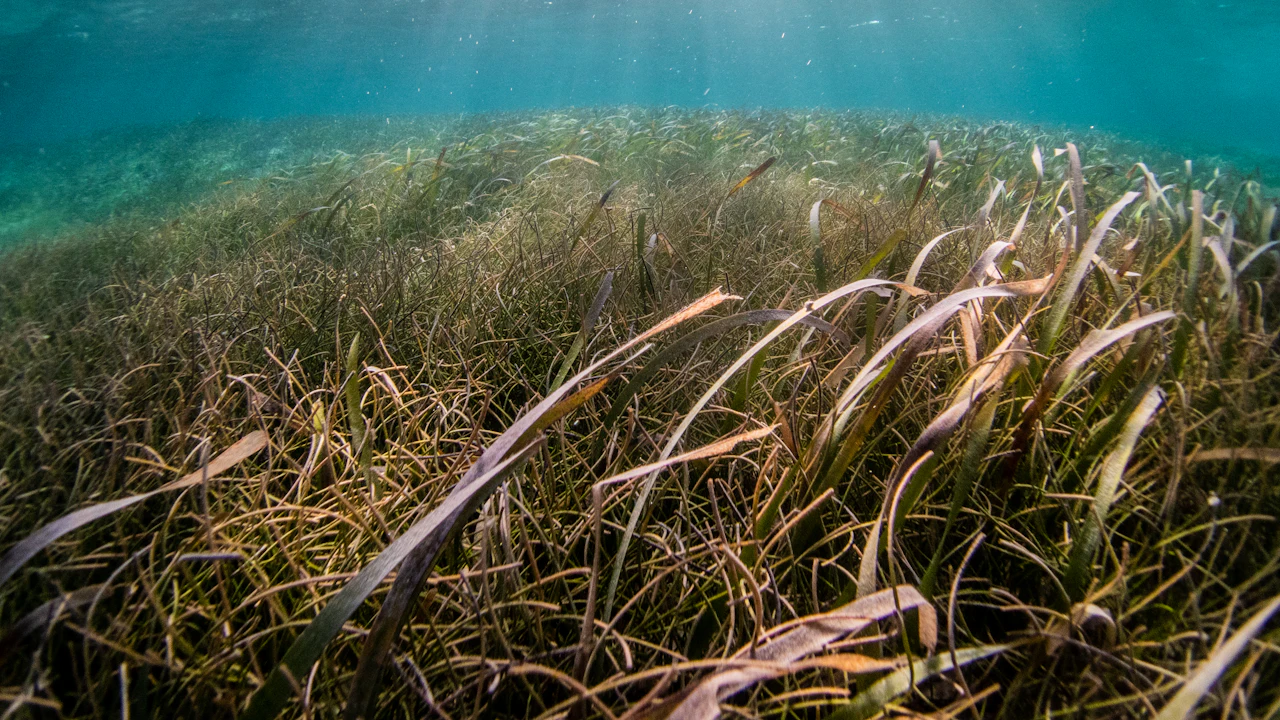
Many visitors call any green growth in the water “seaweed”. NOAA uses “seaweed” as a loose common name for countless marine plants and algae, while seagrasses are a specific group of true flowering plants. The table shows how to tell them apart on a snorkel.
| Feature | Seagrass | Seaweed |
|---|---|---|
| What it is | A rooted flowering plant | A loose name for many marine plants and algae |
| Structure | Roots, stems and leaves | Varies widely, from microscopic to giant kelp |
| Where it grows | Shallow, sheltered water with sand or mud | Almost anywhere in the sea, and some float free |
| How it looks to a snorkeler | Dense green meadows of narrow blades | Clumps, fronds, mats or loose drifting pieces |
| Who grazes it | Green turtles and manatees, as NOAA notes | Many marine animals, which use it as food and habitat |
Why seagrass matters for the reef and the coast
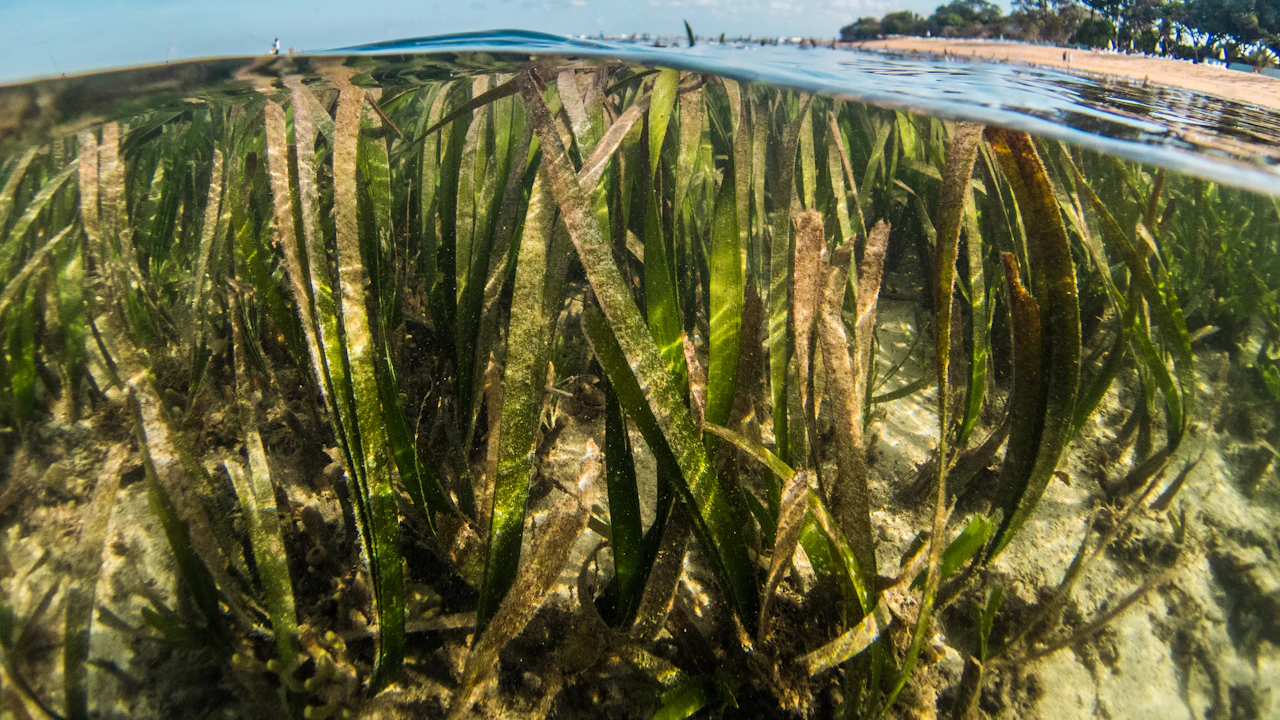
NOAA calls seagrass ecosystems some of the most productive in the world, providing habitat for hundreds of species. They give many animals habitat, refuge and feeding areas, including crabs, scallops, shrimp and flounder that people catch for food.
- Shelter and food: the blades hide small animals and feed grazers, which is why NOAA describes the meadows as critical habitat.
- Shoreline protection: the canopy slows waves and tides and traps fine sediment, which helps protect the shore from erosion during storms.
- Cleaner water: seagrasses recycle nutrients from the water and sediment and release oxygen, which is why they are sometimes called the “lungs of the sea”.
- Carbon storage: NOAA says seagrass beds, salt marshes and mangroves capture and store large amounts of carbon dioxide.
Seagrass works together with the coast’s other habitats. Our guide to mangrove forests in Belize covers the tangled shoreline trees that store carbon alongside the meadows, and our guide to coral bleaching in Belize explains the pressures facing the reef just offshore.
Animals of the seagrass beds in Belize
Sea turtles
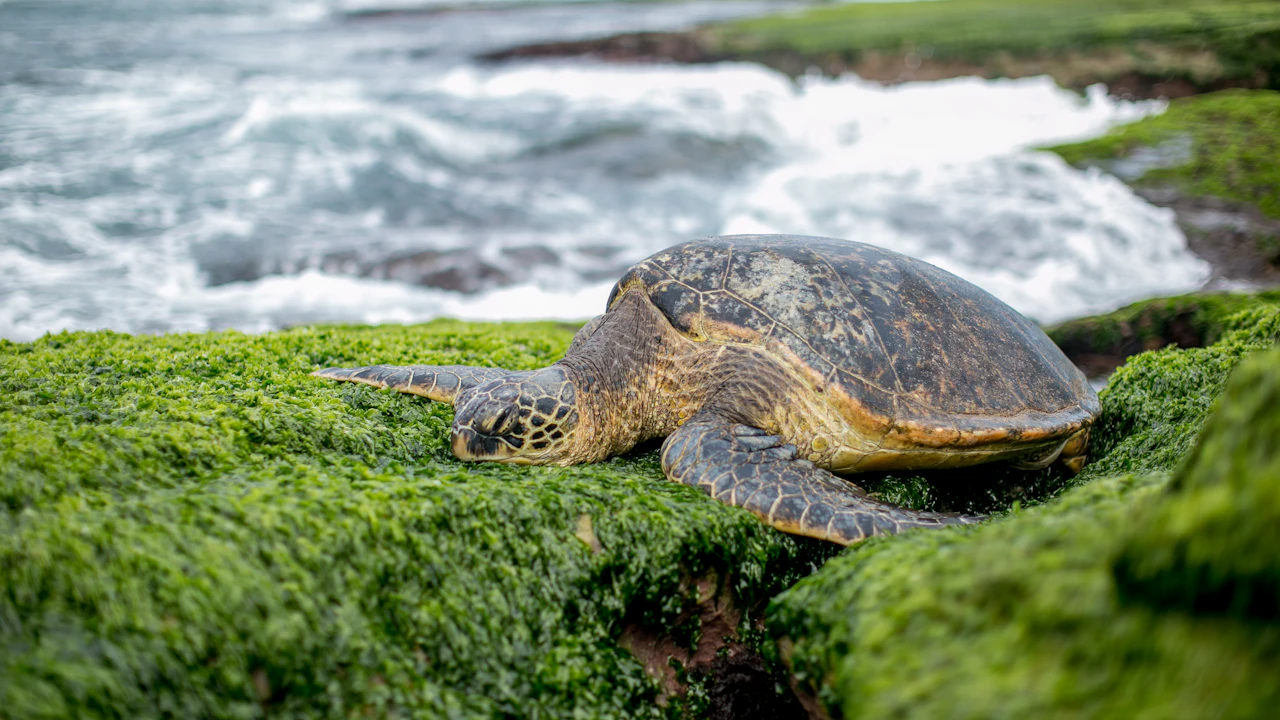
NOAA explains that adult green turtles are herbivores that eat plants such as seagrasses and algae. That plant diet is thought to give them the greenish fat that their name comes from. Adults feed in coastal areas, so a turtle grazing in a meadow is a classic snorkel sighting; our guide to sea turtles in Belize covers the species and how to watch them respectfully.
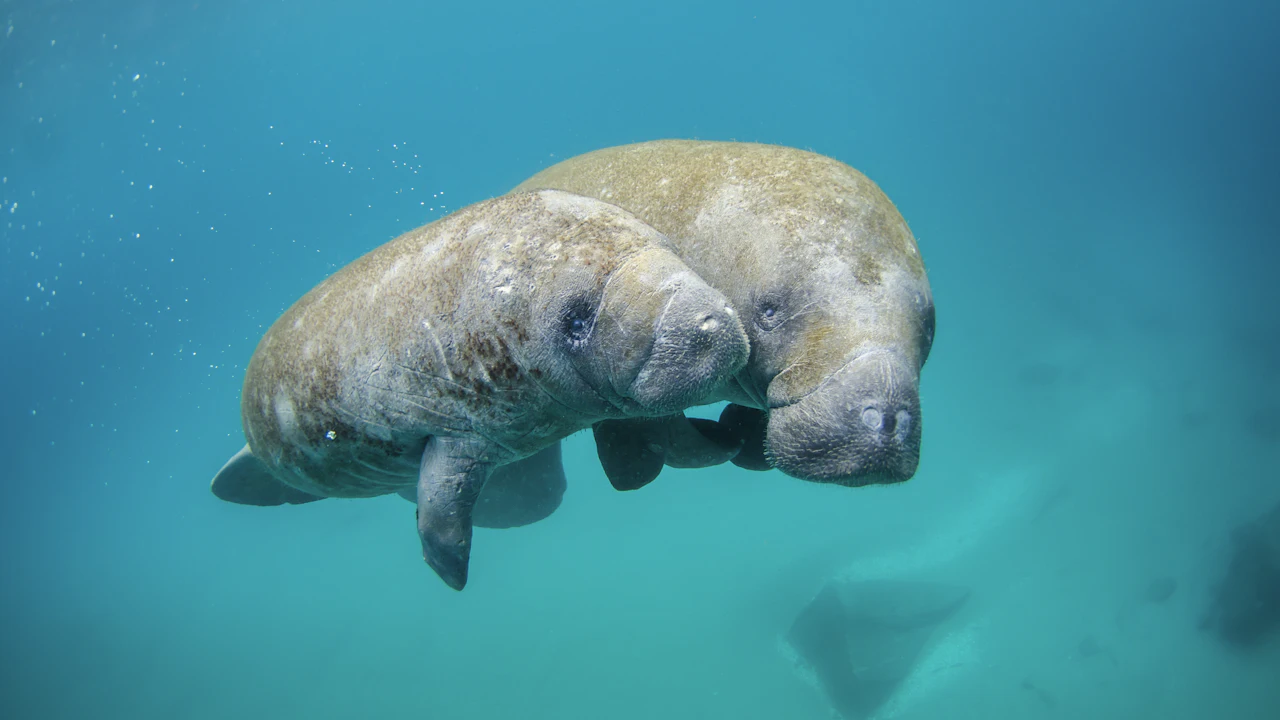
Manatees
Manatees graze on seagrasses too, as NOAA scientists note in a podcast on algal blooms. A healthy meadow is part of what keeps these slow, gentle animals fed. Read our guide to manatee watching in Belize for how to see them without disturbing them.
Rays, conch and smaller life
Rays cruise over the meadows, as NOAA’s eagle ray photo shows, and small crabs and shrimp shelter among the blades. For one of the best-known shells you may spot on a snorkel, see our guide to the queen conch in Belize.
Threats to seagrass, and how snorkelers can help
NOAA says coastal habitats such as seagrass beds are being lost quickly worldwide, largely to coastal development, and that damaged meadows can release the carbon they stored. Pollution is another threat. NOAA explains that excess nutrients from sewage and fertilizer runoff feed algae that block sunlight, and the low-oxygen water that follows can kill fish and seagrass.
You can do your part on every swim. These simple habits keep a meadow intact:
- Float, do not stand: stay horizontal at the surface instead of standing or walking on the blades.
- Keep your fins up: kicking close to the bottom stirs up sediment that clouds the water and blocks the light the plants need.
- Look, do not take: leave shells, plants and animals where you find them.
- Give wildlife room: watch grazing turtles and manatees from a distance and never chase or touch them.
- Mind what goes down the drain: at home, go easy on fertilizers, since runoff carries nutrients to the sea.
Snorkeling and diving with Elbert
White Sands Dive Shop is a 5 Star PADI Dive Facility on the beach in San Pedro, owned and operated by Elbert Greer, PADI IDC Staff Instructor. We offer daily diving, SCUBA instruction and snorkeling, and our guide to scuba diving on Ambergris Caye describes the barrier reef trips we run.
A good guide makes the quiet corners of the sea come alive. One student, Susan, wrote that Elbert “pointed out so many cool things to look at, not to mention the manatee.” Read more in our letters from students Elbert has taught, and find trips and current prices on our Water Sports page of dives and PADI courses.
Seagrass beds, Belize: your questions answered
Is seagrass the same as seaweed?
No. NOAA describes seagrasses as rooted flowering plants with roots, stems and leaves, more closely related to lilies and ginger than to land grasses. Seaweed is a loose name for many marine plants and algae.
What is turtle grass?
Turtle grass is one of the Caribbean seagrasses, and NOAA has pictured it on the Mesoamerican Reef in Belize. It grows in shallow meadows where NOAA notes that green turtles and manatees find seagrass to graze.
Why does seagrass matter?
NOAA says seagrass beds provide habitat, refuge and feeding areas for many animals, calm waves and trap sediment that would erode shorelines, release oxygen and store carbon.
Do manatees eat seagrass?
Yes. NOAA scientists note that manatees graze on seagrasses, so healthy meadows matter for them.
Can I snorkel over seagrass beds?
Yes, and NOAA mentions snorkeling in seagrass beds as one of the ways people enjoy them. Float flat, keep your fins off the bottom and never stand on the blades.
Plan your snorkel or dive
Curious about the meadows and the reef beyond them? Email Elbert at elbertgreer@fastmail.fm or phone 011 (501) 226 2405. Tell us your dates and experience, and we will help you plan.