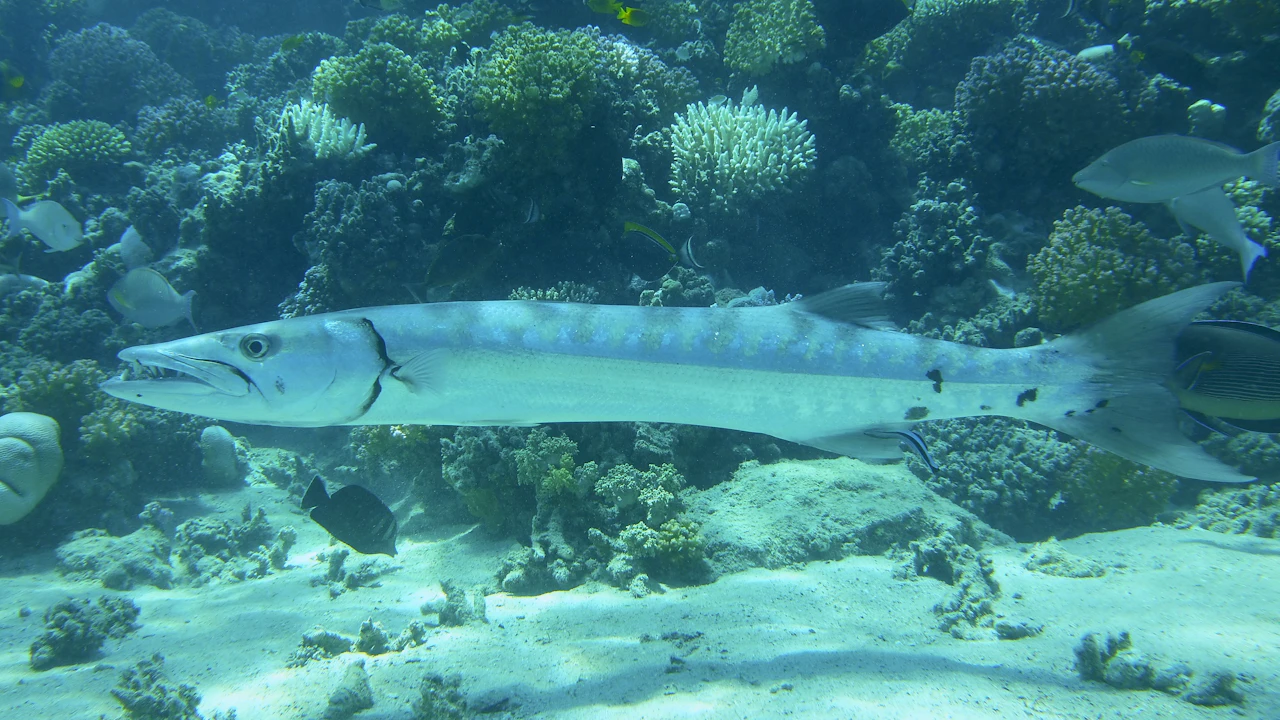
Sooner or later on a Caribbean reef, a long silver fish with a jutting jaw will hang in the water and watch you. That is a great barracuda, and the first question most new snorkelers ask us back on the boat is simple: are barracuda dangerous? The short answer is that bites are rare, but the fish deserves respect.
This guide is for snorkelers, new divers and anglers who want the facts without the movie myths. We explain how great barracuda behave, when a bite can happen, why you should think twice before eating a big one, and how to act when one follows you around the reef.
Are barracuda dangerous to snorkelers and divers?
Quick answer: Rarely: great barracuda are curious predators that often follow swimmers but seldom bite. National Geographic notes they are drawn to shiny objects and may mistake jewelry for food, though this is rare. The bigger risk is eating large barracuda, which can carry ciguatera toxins. Leave jewelry ashore, and keep a respectful distance.
Meet the great barracuda
There are more than 20 species of barracuda, and the great barracuda is the one you are most likely to meet on a tropical reef. According to the National Geographic profile of the barracuda, it can grow to more than six feet long. Large adults usually live alone, while smaller species travel in groups called shoals.
Barracuda prefer warm coastal water less than 330 feet deep, often close to coral reefs, shorelines and continental shelves. That is exactly where snorkelers and recreational divers spend their time, which is why sightings are so common.
Built for speed
The body is long and torpedo shaped, with silver sides and darker coloring on top that helps the fish blend into the water. The mouth holds sharp, dagger-like teeth, and some of them face backward to grip slippery prey. National Geographic says a barracuda can accelerate from a standstill to 36 miles per hour in seconds.
Barracuda behavior: why they follow you
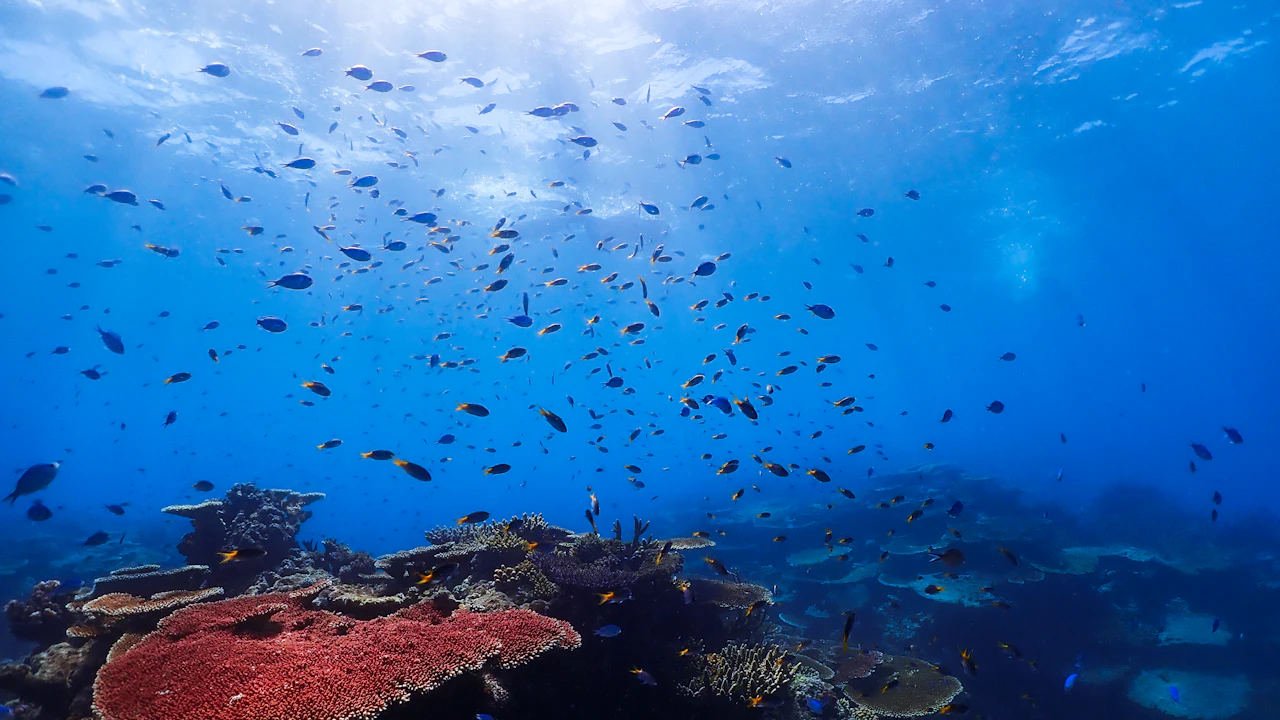
Barracuda are ambush predators. They hang still, use their excellent eyesight to watch for passing fish, and then strike in a burst of speed. That habit of hovering and watching is what makes them look menacing to people.
When a barracuda drifts along behind a group of snorkelers, it is usually curious or keeping an eye on the small fish that gather around people. National Geographic describes how great barracuda can take prey almost as big as themselves, holding it in their jaws and biting repeatedly. Their food is fish, not swimmers.
Barracuda are also prey themselves. Adults can be eaten by sharks, dolphins, orcas and groupers, so they are not the top of the food chain the movies suggest. You can read about the other animals you may meet in our guide to marine life you can see on Ambergris Caye.
When can a barracuda bite?
Bites on people are uncommon. The cause most often given is mistaken identity: barracuda hunt silvery fish, so a flash of something shiny can look like a meal. National Geographic puts it plainly, saying barracuda are attracted to shiny objects and may mistake jewelry for food, although this is rare.
Divers commonly add a few more situations to avoid. In cloudy water a fish sees less detail, so a mix-up becomes more likely. Carrying a speared or hooked fish near a barracuda invites it to try for the catch. Cornering or chasing one is never a good idea with any wild animal.
| Situation | Risk level | What to do |
|---|---|---|
| Barracuda hovering or following at a distance | Low | Keep swimming calmly and enjoy the view |
| Wearing rings, bracelets or a shiny watch | Higher | Leave jewelry ashore or cover it |
| Snorkeling in cloudy, stirred-up water | Higher | Stay close to your guide and avoid splashing |
| Holding a speared or hooked fish | Higher | Do not carry catch near barracuda in the water |
| Chasing, cornering or feeding the fish | Higher | Never feed or touch wildlife; give it space |
Great barracuda diving: how to behave
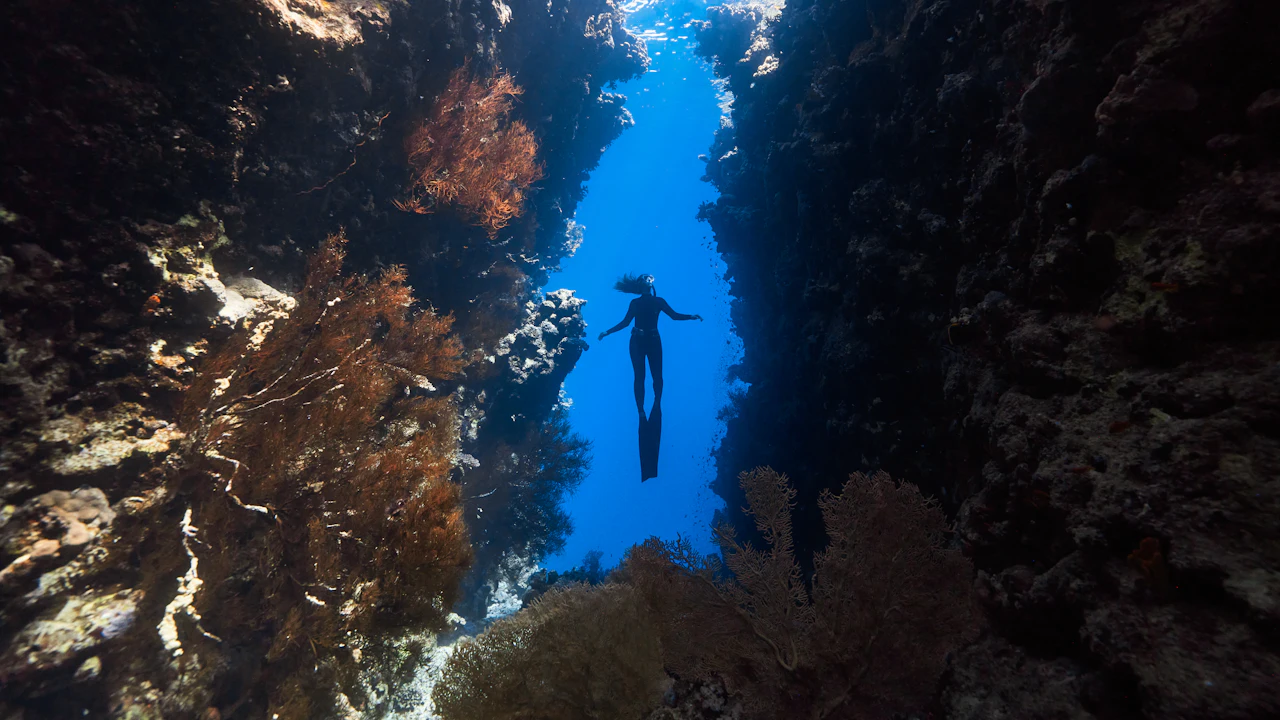
Good conduct around barracuda is the same good conduct that protects the whole reef. These habits keep encounters relaxed for you and for the fish.
- Leave the bling behind: take off rings, bracelets, necklaces and shiny watches before you get in.
- Stay calm: smooth, steady movement draws less attention than splashing and kicking.
- Keep your distance: watch and photograph from a respectful range, and never try to touch one.
- Never feed fish: feeding changes how wild animals behave around people.
- Follow your guide: your guide reads the water and the animals, so stay with the group.
National Geographic places barracuda near shorelines as well as reefs, so you may meet one in calm, shallow water close to land. Our guide to mangrove forests in Belize and why they matter explains the shoreline side of the reef system. For the diving itself, start with our overview of scuba diving and snorkeling trips on Ambergris Caye.
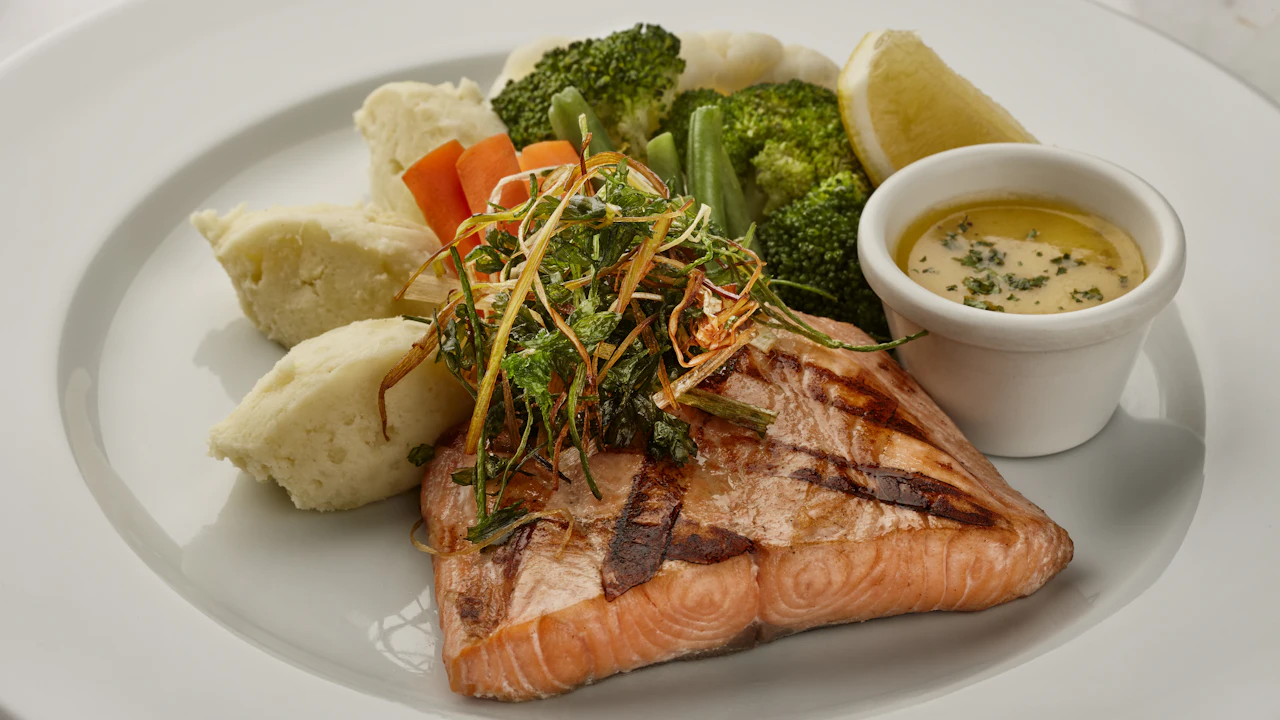
Is it safe to eat barracuda?
For most visitors, this is the real barracuda danger. National Geographic explains that eating large barracuda can be poisonous to people because of bioaccumulation: toxins taken in at the bottom of the food chain become more concentrated in the predators at the top.
The illness is called ciguatera. US public health guidance for travelers lists barracuda among the reef fish most likely to cause it, notes that cooking does not destroy the toxins, and says a contaminated fish looks, smells and tastes normal. It also advises against eating the liver, intestines, eggs or head of reef fish. If you feel unwell after eating fish, see a doctor promptly.
Barracuda on a fishing trip
Barracuda are a well-known catch in these waters. Our fishing page with reef, fly and deep sea trips says: “Snapper, barracuda, jacks and groupers are some of the common catches on a day trip.” If you would like to try it, read our guide to a reef fishing charter on Ambergris Caye, and ask your guide before keeping any fish for the table.
Snorkel and dive with Elbert
White Sands Dive Shop is a 5 Star PADI Dive Facility on the beach in San Pedro, owned and operated by Elbert Greer, PADI IDC Staff Instructor. Local dive and snorkel trips leave at 9:00, with pickup at the dock of your hotel.
Student Vivake K. Bhalla described Elbert as “very friendly and fun, but equally very strict about safety.” You can read more in our letters from students Elbert has taught, and find trips and current prices on our Water Sports page of dives and PADI courses.
Are barracuda dangerous: your questions answered
Why do barracuda follow snorkelers?
Barracuda are curious ambush predators that hover and watch. A barracuda following you is usually watching the area or the small fish around you, and it seldom means it plans to bite.
Should I take off my jewelry before snorkeling?
Yes. National Geographic notes that barracuda are attracted to shiny objects and may mistake jewelry for food, although this is rare, so leaving rings, bracelets and shiny watches ashore is a simple precaution.
How big do great barracuda get?
National Geographic says the great barracuda can reach more than six feet long. Most you see on a reef are smaller, but even a medium one looks impressive up close.
Can you eat barracuda?
Large barracuda can carry ciguatera toxins that cooking does not destroy, and health guidance for travelers advises avoiding or limiting barracuda. If you feel ill after eating fish, see a doctor.
What should I do if a barracuda comes close?
Stay calm, keep swimming smoothly and give it space. Never chase, touch or feed it, and stay with your guide.
Ask us about snorkeling and diving
Nervous about big fish, or just curious what you might see on the reef? Email Elbert at elbertgreer@fastmail.fm or phone 011 (501) 226 2405. Tell us your dates and experience, and we will help you plan your time in the water.