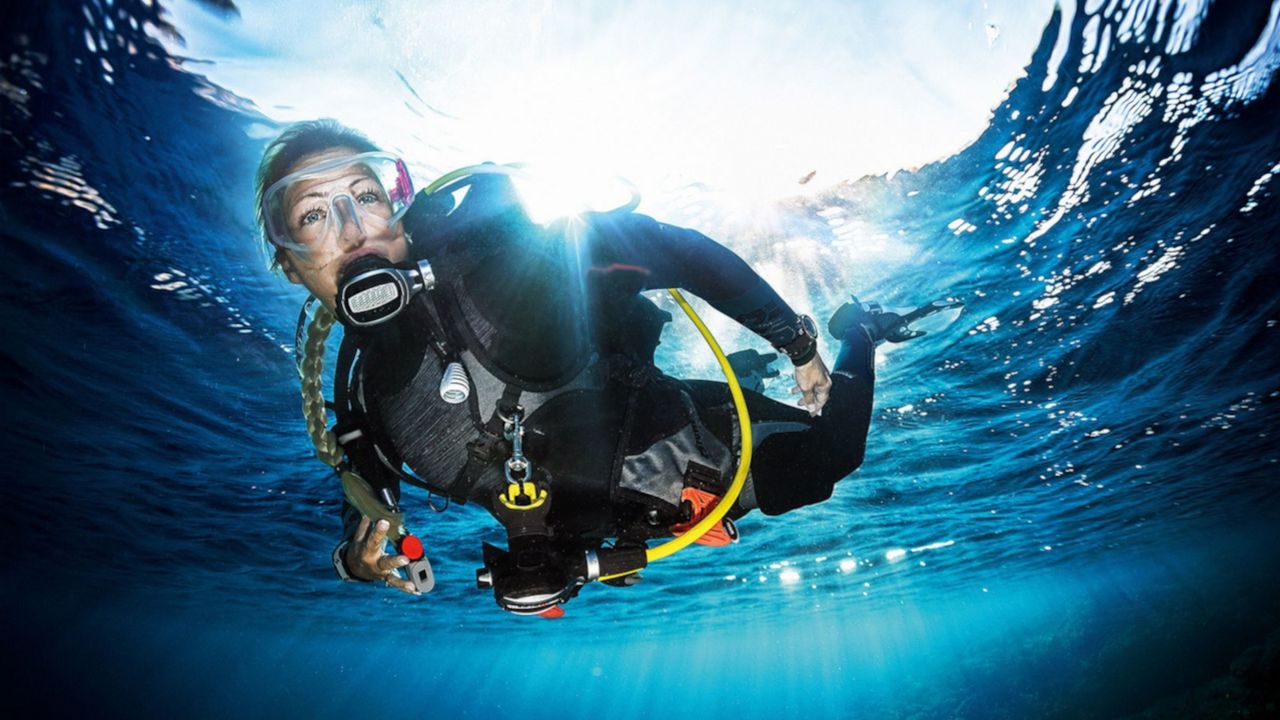
Out of air emergency procedures are the skills every diver learns and hopes never to use. Running out of breathing gas is rare when divers follow their training, but it is also serious, so it pays to know the options and, far more important, the habits that prevent the problem in the first place.
This guide is for student divers, newly certified divers and travelers who want to understand what happens if the air runs low. It is an overview, not a substitute for training. The skills only become reliable when you practice them with an instructor, in a pool first and then in open water.
What are the out of air emergency procedures in scuba diving?
Quick answer: Prevention comes first: check your gauge often and turn back with plenty of air. If you do run out, signal your buddy and breathe from their alternate air source while you ascend together. If no buddy is close, make a controlled emergency swimming ascent, exhaling all the way. A buoyant emergency ascent is the last resort.
Why running out of air matters
Divers Alert Network (DAN), the diving safety and medical research organization, calls running out of gas the most common dive incident and the number one cause of diving fatalities. Even skilled divers can make mistakes, which is why the response skills are drilled in every entry-level course.
The danger is less the empty tank than the reaction to it. In DAN’s review of emergency ascents, a rapid, uncontrolled ascent was common, and the biggest risk was lung injury from expanding air when a diver held their breath or shot to the surface. Calm, practiced responses are what keep an air problem from becoming an injury.
Prevention first: gauge checks and turn pressure
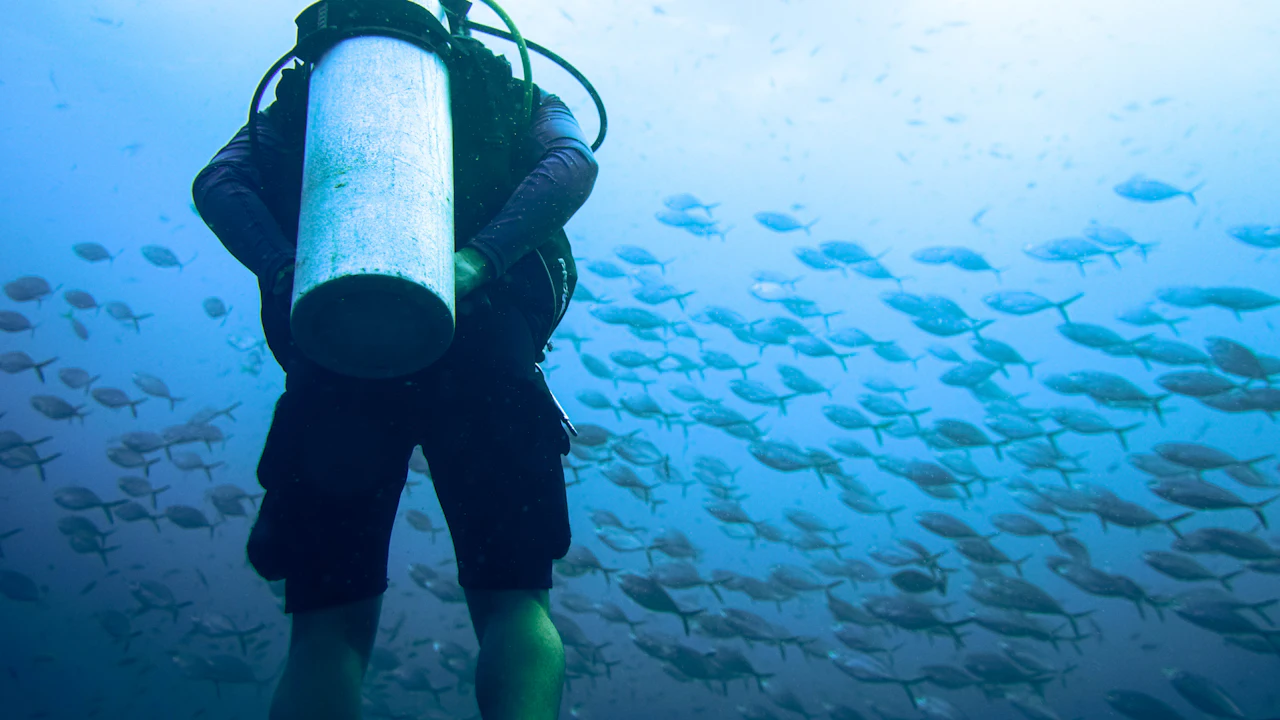
Almost every out-of-air situation is preventable. DAN’s safety tips to prevent out-of-air emergencies come down to a few habits:
- Open the tank valve fully, take a test breath and confirm the tank is full before you enter the water.
- Do a buddy check before you descend, so a partner catches what you missed.
- Decide your turn pressure before the dive. DAN’s example: start at 3000 psi, turn back at 1500 psi and reach the surface with 500 psi.
- Check your pressure gauge at regular intervals, and more often when you work hard or swim against a current.
- Stay within your training limits and fix buoyancy problems in shallow water, or end the dive.
Air lasts less at depth and when you breathe hard, so a tank that gave you an hour in the shallows will not at 80 feet. Our guide to how long a scuba tank lasts explains why, and our guide to how a scuba regulator works shows what the gauge and the alternate air source are connected to.
Out of air emergency procedures, in order
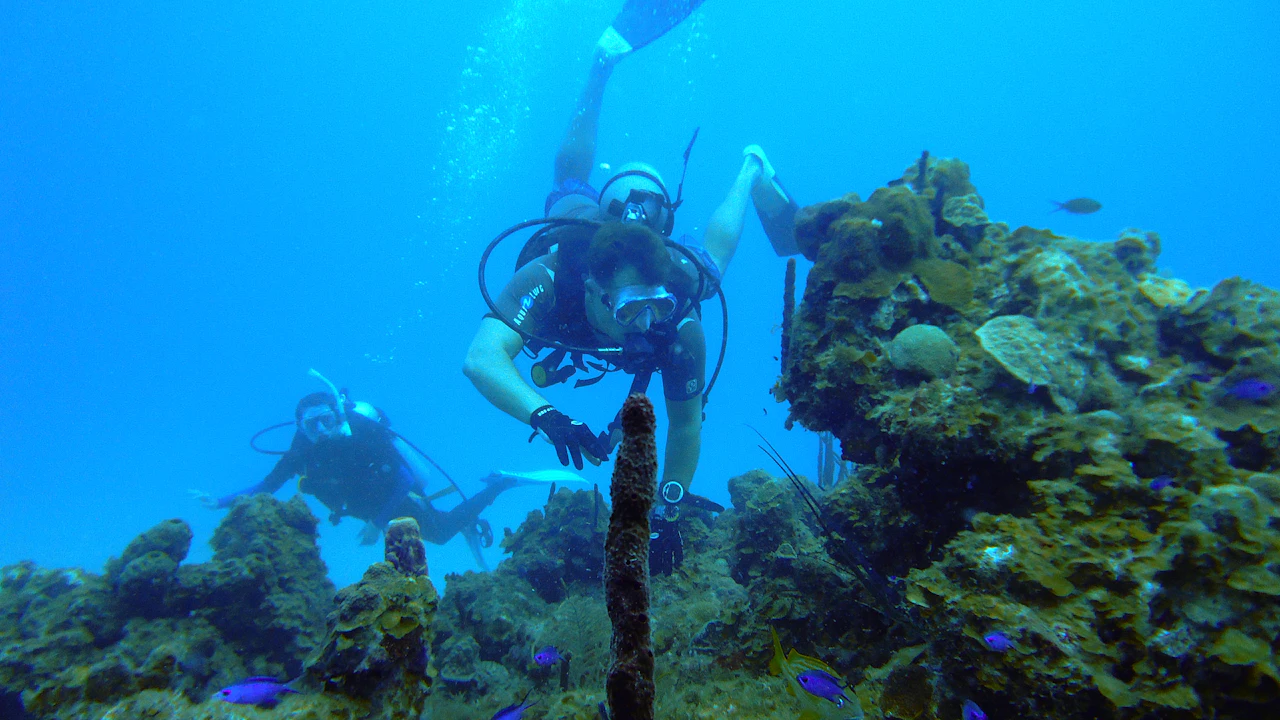
DAN’s article on managing the risks of emergency ascents sets out the order of choices. If you are low but still breathing, make a normal controlled ascent. If you are out, go to your buddy. Only if you cannot reach a buddy, or your buddy is also out, do you ascend on your own.
1. Your buddy’s alternate air source
An alternate air source is a spare second stage, often called the octopus, on your buddy’s regulator. Signal “out of air”, take the alternate, hold on to each other and make a slow ascent together while you both have a continuous supply of air. This is the first choice because you keep breathing the whole way up.
It only works if your buddy is close, which is the heart of the scuba diving buddy system. Knowing where your buddy’s alternate is, from the pre-dive check, saves precious seconds.
2. Controlled emergency swimming ascent
If no buddy is within reach, training agencies teach a controlled emergency swimming ascent, often shortened to CESA. You keep the regulator in your mouth and swim to the surface at a normal, slow rate while exhaling continuously. DAN notes that your lungs often hold enough air to reach the surface, so panic is the real hazard.
Exhaling is the key. As you rise, the air in your lungs expands. DAN explains that normal breathing lets it escape, while holding your breath or rising fast can tear lung tissue.
3. Buoyant emergency ascent
The last resort, when you doubt you can swim to the surface, is a buoyant emergency ascent: drop your weights and let your buoyancy carry you up, exhaling all the way. It is faster and harder to control, but DAN points out that dumping weight and risking an out-of-control ascent is still better than drowning.
| Option | When it is used | Main advantage | Main risk |
|---|---|---|---|
| Buddy’s alternate air source | Out of air with a buddy close by | You keep breathing all the way up | Fails if your buddy is far away or also low |
| Controlled emergency swimming ascent | No buddy within reach, still able to swim up | Controlled speed, no dependence on others | Lung injury if you hold your breath |
| Buoyant emergency ascent | Last resort, you doubt you can swim up | Reaches the surface fastest | Hard to control, fast ascent |

Practice these skills in training
Reading the steps is not the same as doing them. DAN lists the shared air ascent and the emergency swimming ascent among the skills to practice in confined water before diving in open water, and it advises a refresher after a year or so out of the water. DAN also found that most divers who died after an emergency ascent had not practiced these skills.
If you want to go further, the Rescue Diver course builds exactly this kind of calm response. Our page on the PADI Rescue Diver course in Belize explains it; our Water Sports page lists it with 12 rescue scenarios over about three days.

Train with Elbert Greer
White Sands Dive Shop is a 5 Star PADI Dive Facility on the beach in San Pedro, owned and operated by PADI IDC Staff Instructor Elbert Greer. Our overview of learning to dive on Ambergris Caye covers every course, and current course prices are on our Water Sports page.
Students remember the safety focus. Vivake K. Bhalla called Elbert “very friendly and fun, but equally very strict about safety”, and you can read more in the letters from Elbert’s dive students.
Out of air emergency procedures: your questions answered
What should I do first if I run out of air underwater?
Stay calm, signal out of air to your buddy and breathe from their alternate air source, then ascend slowly together. If no buddy is within reach, make a controlled emergency swimming ascent, exhaling all the way.
What is an alternate air source?
It is a spare second stage, often called an octopus, attached to a diver’s regulator so a buddy who is out of air can breathe from the same tank during the ascent.
Why must I exhale during an emergency ascent?
The air in your lungs expands as the water pressure drops on the way up. Holding your breath can injure the lungs, so you exhale slowly and continuously.
How do I avoid running out of air?
DAN advises opening the valve fully, checking that the tank is full, checking your gauge at regular intervals, setting a turn pressure before the dive and surfacing with a reserve.
Is reading about these procedures enough?
No. This guide is an overview, not training. The skills need to be practiced with an instructor, and DAN suggests a refresher if you have been out of the water for about a year.
Questions about dive safety? Ask Elbert
If you want to brush up on emergency skills before your trip, or have a question about a course, get in touch. Email Elbert at elbertgreer@fastmail.fm or call 011 (501) 226 2405.