
Sooner or later, someone on a dive boat brags about coming up with half a tank, and someone else asks how. The answer is often a habit called skip breathing. Dive boat folklore says that if you stretch the gap between breaths and hold each one a little, the air lasts longer. It sounds sensible, and it is a habit worth dropping.
This guide is for new and returning divers who want their air to last without cutting corners. We explain what Divers Alert Network (DAN) and PADI say about skip breathing, carbon dioxide and breath-holding, and what to do instead. It is general information from a dive shop, not medical advice.
Does skip breathing in scuba diving really save air?
Quick answer: No. DAN calls skip breathing to cut air use a misconception, because your lungs need steady breathing to clear carbon dioxide, and a buildup can bring on headaches. PADI’s first rule is never hold your breath. Slow, deep, relaxed breathing with good buoyancy is what makes a tank last.
What is skip breathing?
Skip breathing means deliberately stretching the time between breaths to make your air supply go further. The goal is fewer breaths per minute, so the gauge drops more slowly.
In DAN’s article on headaches and diving, Frans Cronje, M.D., writes that many divers boast about low air consumption or try to reduce it artificially by skip breathing. He calls the idea a misconception.
Skip breathing vs a natural pause
Divers argue online about where a relaxed rhythm ends and skip breathing begins. The useful test is intent: if you are holding your breath on purpose to save air, that is the habit DAN and PADI warn against. A calm, unforced cycle is what both describe as the goal.

Why skip breathing does not really save air
Breathing does two jobs. It brings in oxygen and it carries out carbon dioxide (CO2), the waste gas your body makes as it works. DAN compares clearing CO2 from the lungs to rinsing dye out of a carpet: it takes a steady flow, not a few quick splashes.
A DAN research summary on carbon dioxide explains that as CO2 rises, the body increases its breathing automatically. That is why DAN points to slow, deep breaths, not fewer of them, as the efficient way to keep CO2 down.

Carbon dioxide buildup and headaches
DAN lists gas toxicity, especially high CO2, among the possible reasons a diver gets a headache. In a DAN research summary on carbon dioxide and breathing resistance, divers exposed to raised CO2 reported nausea, dizziness, anxiety, headache and memory impairment. Some were not aware of the buildup at all.
That study focused on rebreather divers, but the lesson carries over: CO2 trouble can creep up quietly. If you often surface with a dull ache, our guide to the scuba diving headache and its causes walks through DAN’s full checklist.
DAN’s broader advice applies here too. It says abnormal symptoms after breathing compressed air should always prompt a suspicion of decompression illness, and that recurring headaches deserve a doctor’s evaluation. If something feels wrong after a dive, see a doctor and contact DAN rather than waiting it out.

The never-hold-your-breath rule
The PADI blog post How Do You Breathe While Scuba Diving? puts it plainly: the number one rule in scuba diving is that you always breathe, and you should never hold your breath. The reason is pressure. As depth changes, a held breath can cause your lungs to over-expand or contract.
As long as you keep breathing, PADI says, your lungs stay open and work normally. DAN also names breath-holding among the clues that should raise suspicion of decompression illness when a diver has symptoms after a dive. Skip breathing turns a short hold into a habit, which is the opposite of what both organizations teach.
| Question | Skip breathing | Slow, deep, continuous breathing |
|---|---|---|
| What you do | Hold or pause each breath on purpose | Breathe fully and easily without stopping |
| Carbon dioxide | Clears less well, DAN says | Removed more efficiently, DAN says |
| Lungs and pressure | Goes against PADI’s never-hold rule | Lungs stay open, as PADI teaches |
| Effect on your air | DAN calls the savings a misconception | PADI links it to lower air consumption |
| How you feel | Can lead to CO2 headaches | DAN says it helps you relax |

How to breathe efficiently instead
The good news is that the real fix also makes diving more enjoyable. PADI recommends a slow, rhythmic pattern: breathe fully and deeply, but keep it easy and relaxed. It says a slow yet deep pattern means lower air consumption and more time underwater. DAN agrees that slow, deep breaths relax you and clear CO2 better.
Relax and slow down
PADI notes that a relaxed diver moving with ease uses less air than one who is working hard. DAN’s list of solutions also includes reducing exertion and wearing adequate thermal protection. Our guide on how to breathe while scuba diving covers the basics step by step.
Fix your buoyancy
PADI explains that poor buoyancy leads to extra kicking, and extra kicking means heavier breathing to feed your muscles. Being neutrally buoyant lets you glide without effort. Our buoyancy control tips for divers cover the basics, and PADI adds that breathing in makes you rise slightly while breathing out makes you sink.
Use your mouth and your safety stop
PADI says the right way is to breathe in and out through your mouth, since breathing out through your nose can make your mask leak. DAN suggests spending three to five minutes at a safety stop of 3 to 5 meters (10 to 15 feet), which helps clear built-up carbon dioxide.
For a fuller picture of what drains a cylinder, see our guide on how long a scuba tank lasts. If you are planning reef dives on your trip, our guide to diving on Ambergris Caye is a good next read.
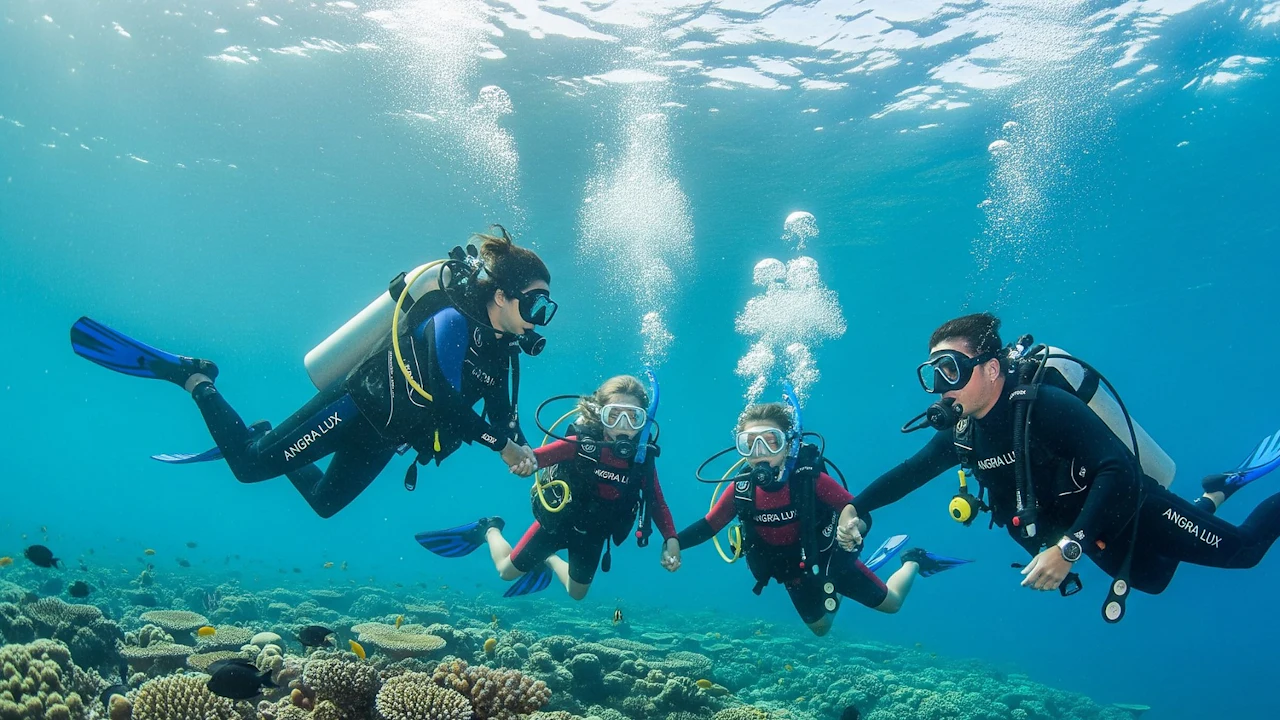
Learning to breathe well with Elbert
White Sands Dive Shop is a 5 Star PADI Dive Facility on the beach in San Pedro, owned and operated by PADI IDC Staff Instructor Elbert Greer. Courses, from refreshers onward, are listed with current course prices on our Water Sports page.
Minette Layne of Seattle wrote about her refresher with Elbert: “I was so panicked and you really calmed me down.” You can read her full note in the letters from Elbert’s dive students.
Skip breathing scuba diving: your questions answered
What is skip breathing?
It is deliberately holding or pausing each breath to make your air last longer. DAN calls the idea that it meaningfully reduces air use a misconception.
Is skip breathing dangerous?
PADI’s number one rule is to always breathe and never hold your breath, because pressure changes with depth can over-expand the lungs. DAN also links poor CO2 clearance to headaches.
What are signs of CO2 buildup when diving?
In a DAN research summary, divers with raised CO2 reported nausea, dizziness, anxiety, headache and memory impairment, and some noticed nothing. Any symptoms after a dive are a reason to see a doctor.
How can I make my air last longer?
PADI recommends slow, deep, relaxed breathing and good buoyancy so you kick less. DAN adds that reducing exertion helps.
Questions before your dive trip?
Want to work on your breathing and air use with an instructor? Email Elbert at elbertgreer@fastmail.fm or call 011 (501) 226 2405.